Living in Peace: La Paz, BCS (Part 2)

First and foremost, we have an introduction to make:
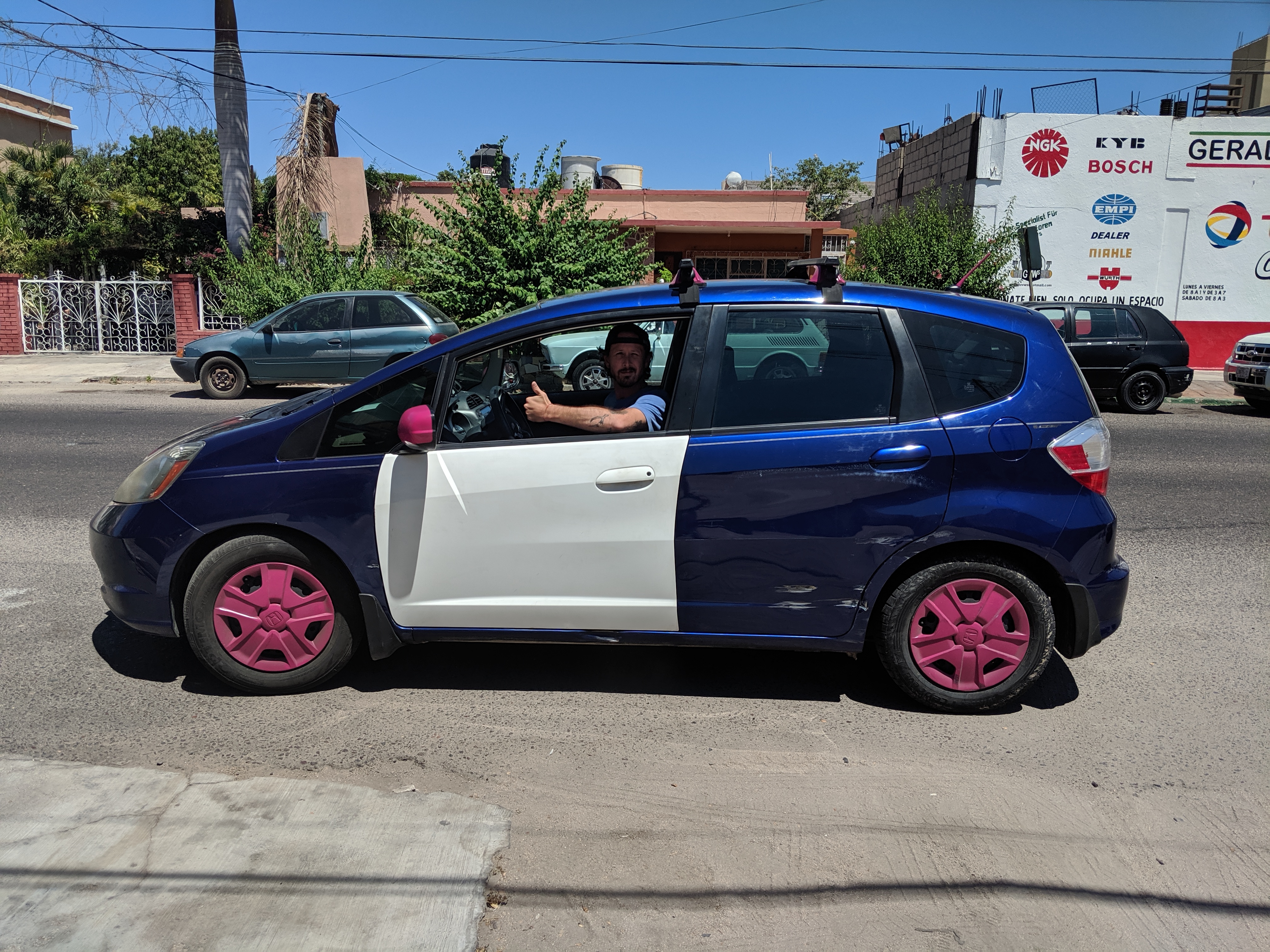
Yes, our dear Watermelon is now Watermelon 2.0. (Or Frankenmelon, if you prefer). With any luck, this will be her last non-elective surgery on this trip. Sean has made up a song that goes “el carro es azuuuul, but la puerta es blaaaanca…”

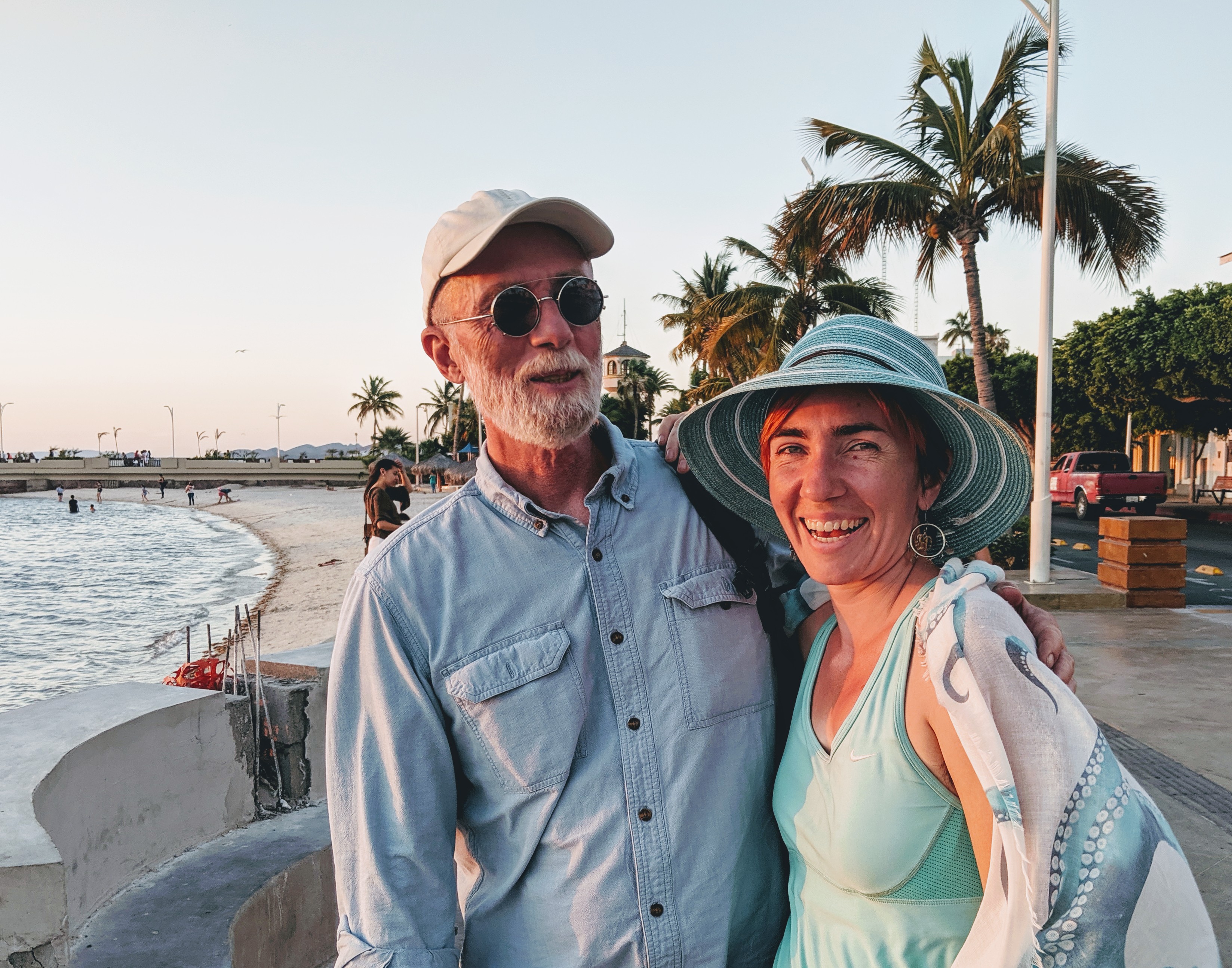
Fortunately, La Paz is a very walkable city, so there was plenty to do while we waited for the new door to arrive. Actually, do might be an overstatement — to be honest, my favorite activity in La Paz is just roaming up and down the malecon with a belly full of burritos, watching the sun go down.
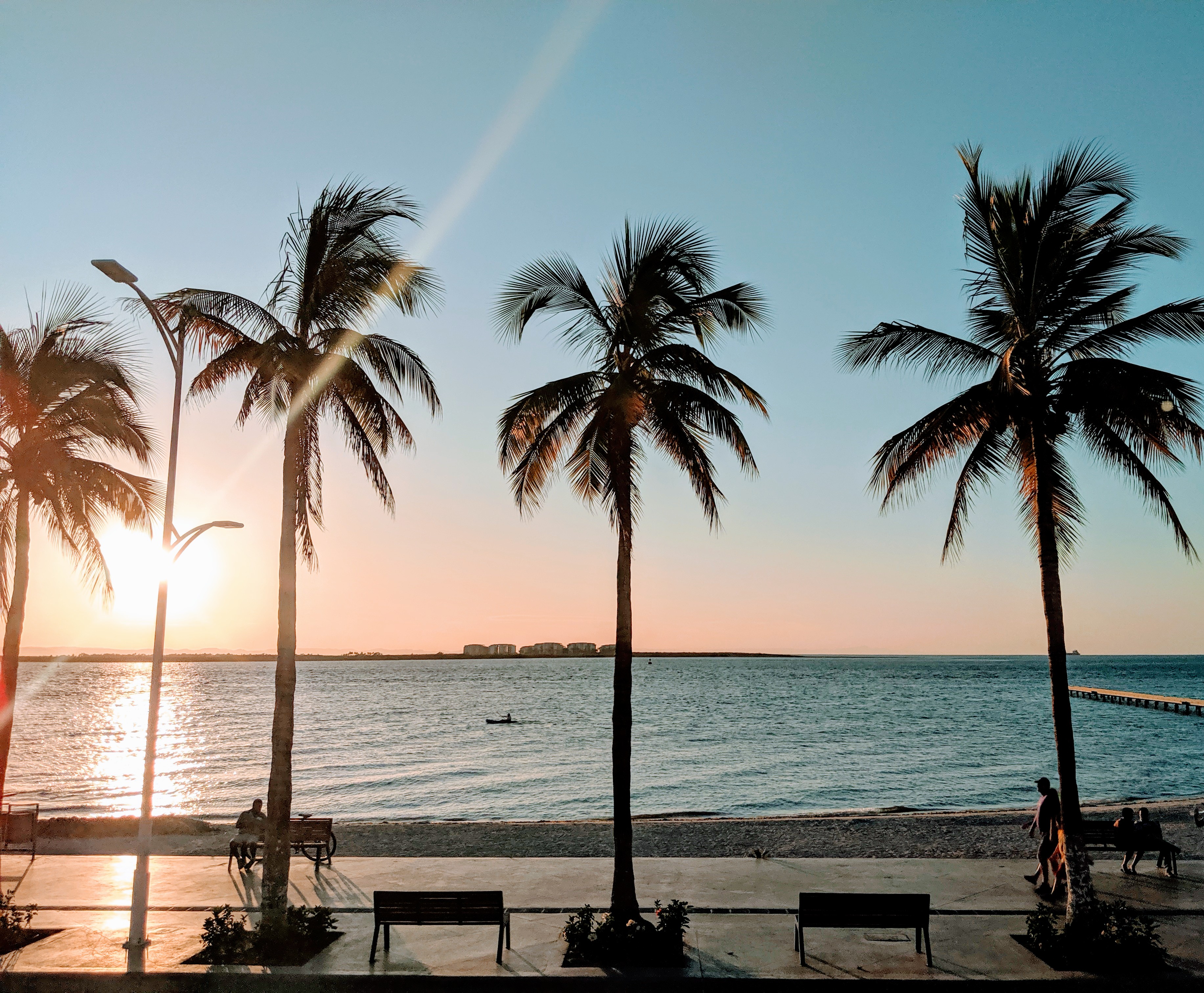
I’ve been coming to La Paz for about 3 years now, ever since my dad moved down here to fix up a sailboat in 2016. While it’s a far cry from the party havens of Cabos or Cancun, La Paz sees its fair share of foreign visitors — mostly tourists seeking glimpses of local wildlife, or a respite from that bane of all earnest travelers: other tourists.

Even in the high season, however, La Paz always feels amicable and relaxed, free of that peculiar tension that often arises — at least in the U.S. — between locals and visitors.
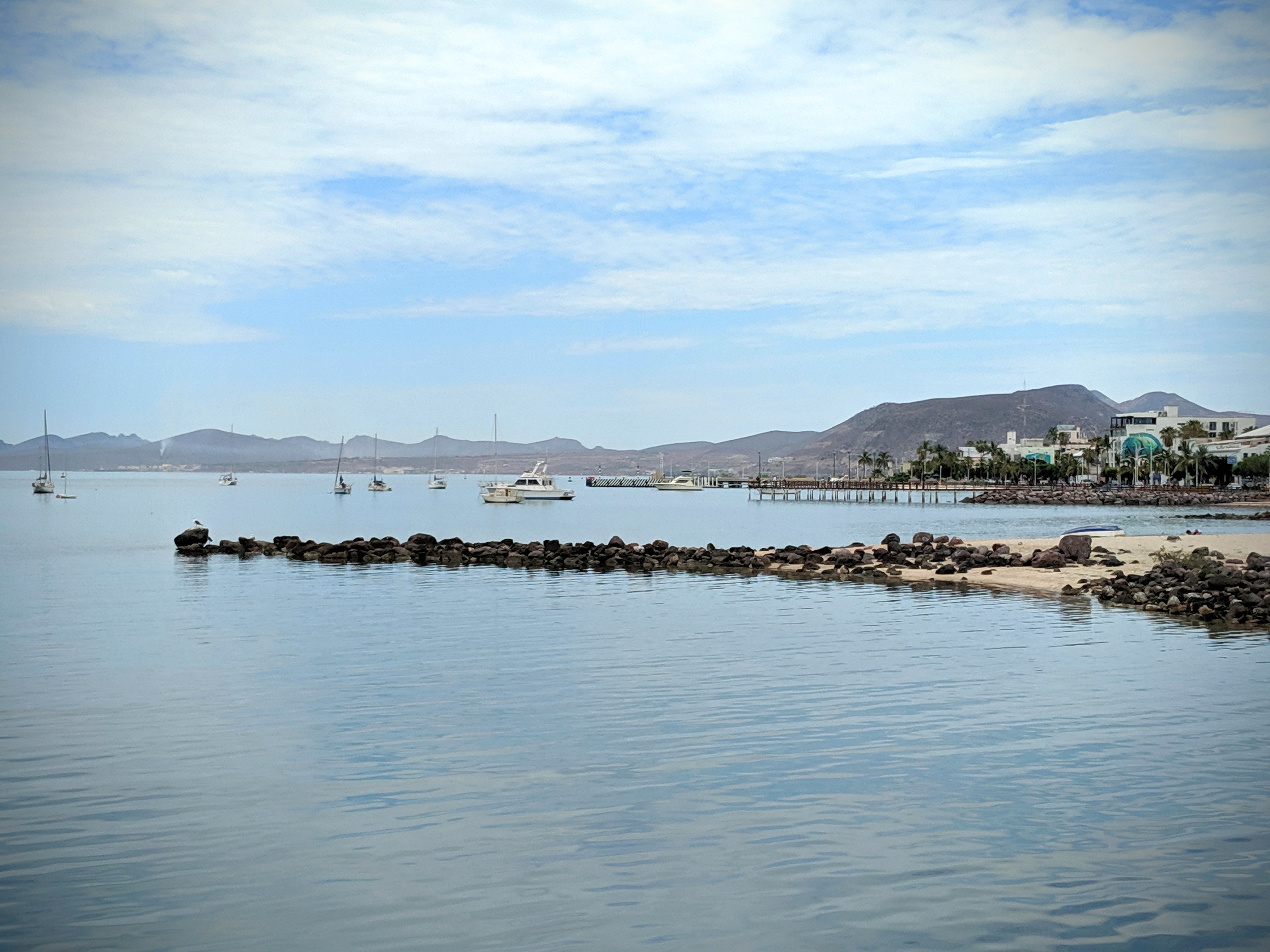
In the dead of summer, the streets are sparse in the daytime, everyone hurrying towards the promise of air conditioning on their midday errands. As the sun goes down, however, the beachside paths are teeming with bodies in motion: families out for a stroll, resolute joggers in Spandex and hip weights, young couples sharing ice cream, children zooming through a sea of legs on their toy cars and tricycles. Someone is always camped out under a thatch umbrella with a pair of speakers piping Mexico’s Top 40 into the night air. Someone is always watching their children splash into the water one last time before the sun goes down.
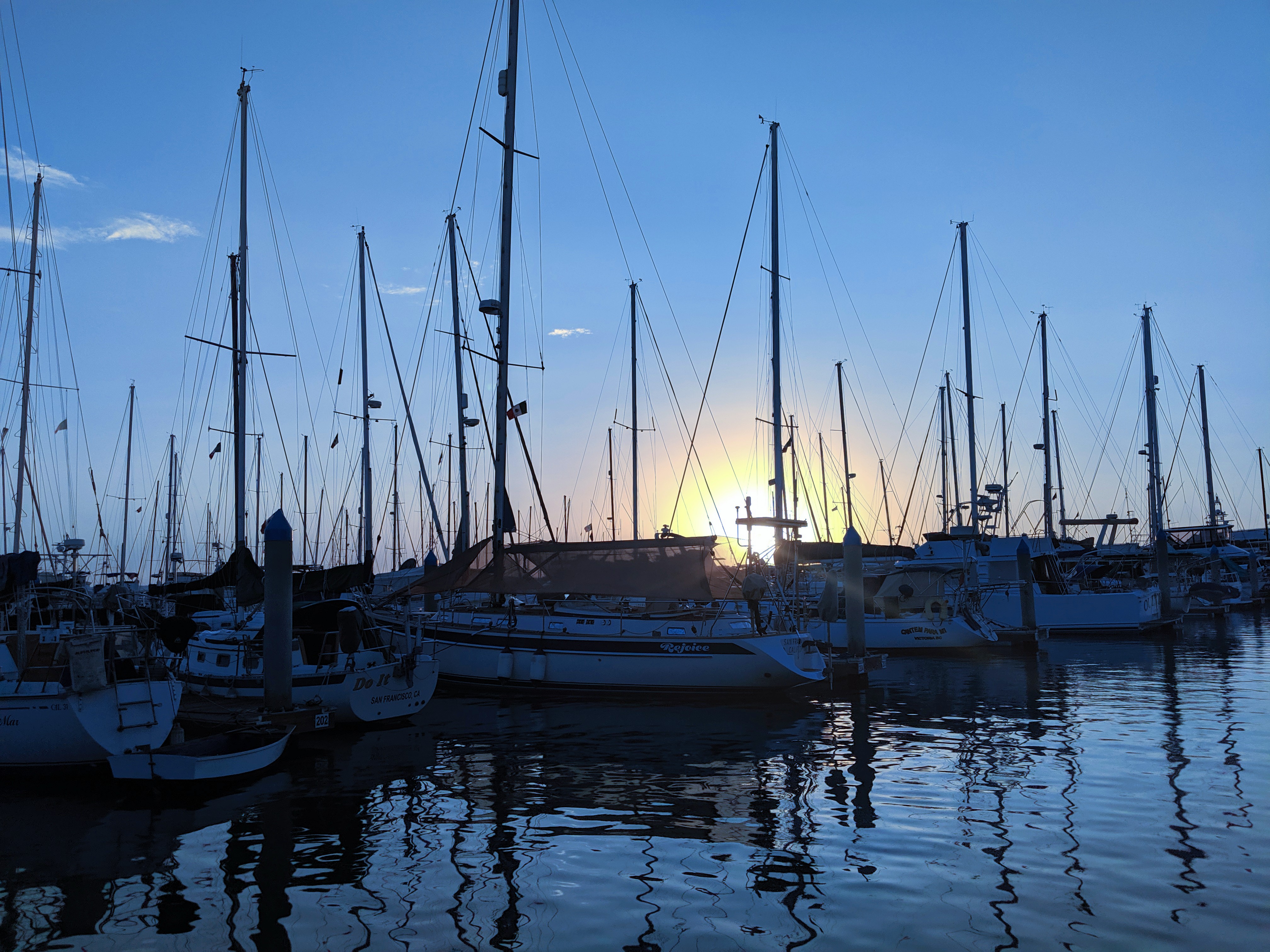
When I tell people my dad lives on a boat in Mexico, they often assume that he’s some sort of retired investment banker living on a yacht in Cancun. The reality is much less extravagant, but significantly more charming: the good ship Thinkabout is a 30-foot Westsail that “drinks six, eats four, and sleeps two.”
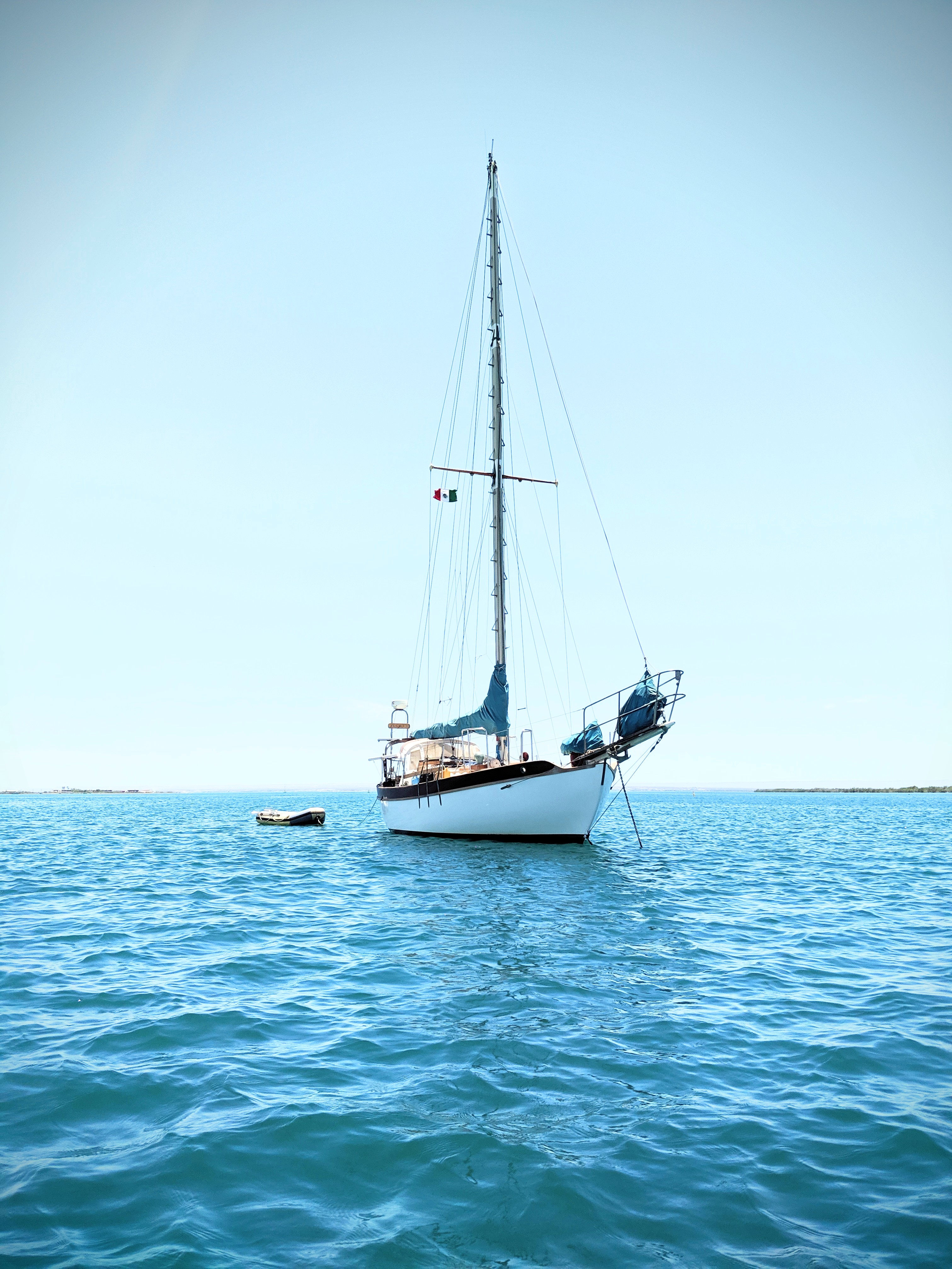
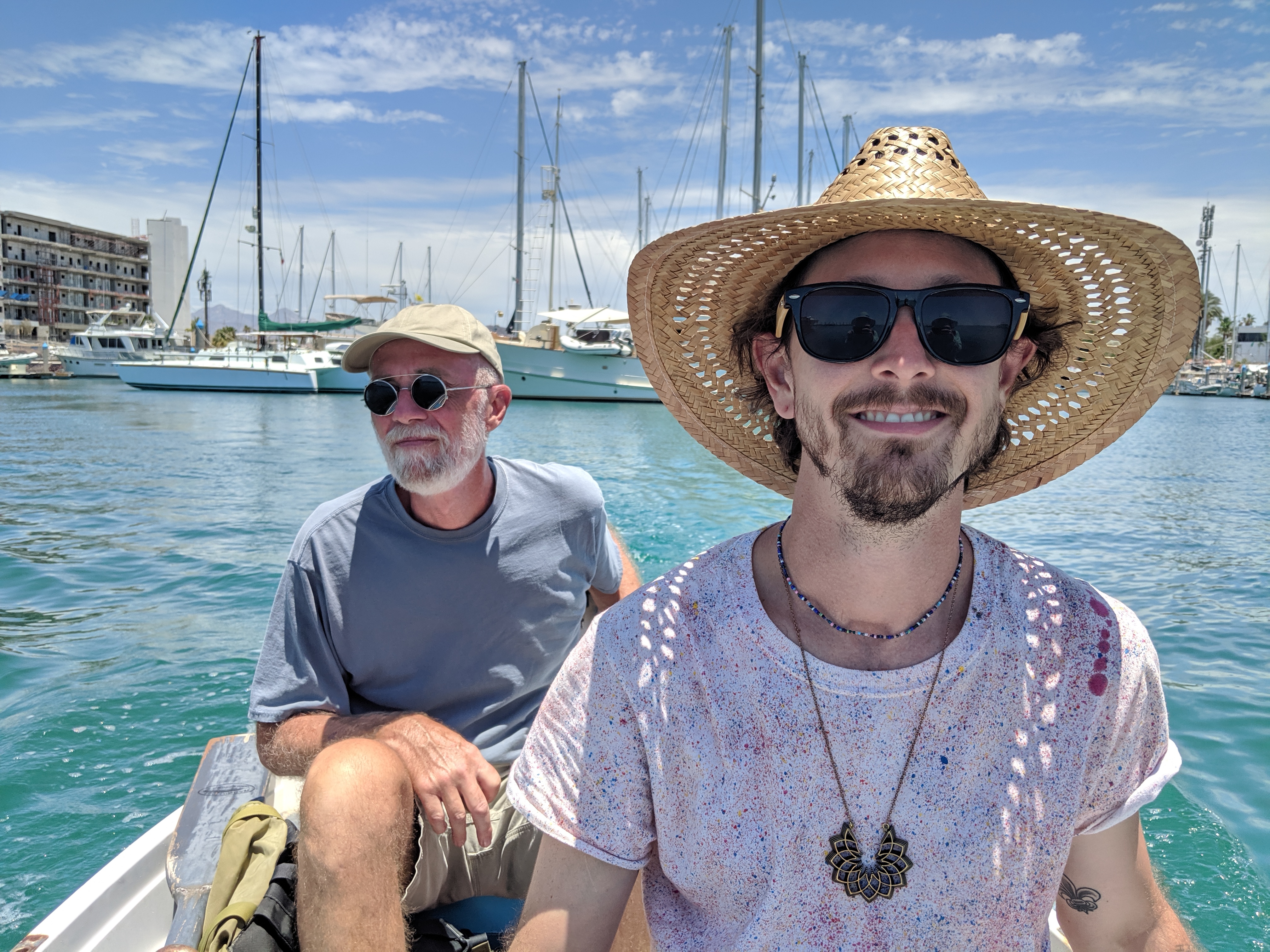
Once we’d gotten our bearings on land, Dad dinghied us out to the boat and gave Sean the grand tour. We went for a dip when the current died down, and within minutes a small band of dolphins passed by, just meters away. (Sean, who’d just been asking some friendly but urgent questions about the prevalence of sharks, did not react with immediate delight.) Dad told us there’d been a pod hanging around his boat for the past few weeks, some of them babies.

After three days of tense mountain driving (and the whole, uh, stop sign situation), Sean and I are more than ready to let the city of peace work its magic on us.
Boojums and Choques: La Paz, BCS (Part 1)

The journey from San Diego to La Paz, BCS took about three days of driving. (We could have done it in less, but the narrow mountain roads inspired a cautious pace.) We got off to a rough start, mainly because I misread my dad’s very specific instructions and drove past the office where we were supposed to buy our tourist visas. Once we realized this, we attempted to backtrack, but inevitably found ourselves funneled into the huge, crawling line to get back into the U.S.

It took about an hour for us to reach the border, inching forward while a wide variety of industrious street vendors offered us everything from tacos to crucifixes to Frida Kahlo aprons. When asked why we were entering the U.S., we explained that we were just trying to get to Mexico.

At long last, we managed to get back across the border, obtain the proper documents, and start making our way South. Most of our drive would take place on Highway 1, which meanders down the length of the peninsula and offers stunning views of both the Pacific Ocean and the dreamy blue-green Sea of Cortez.

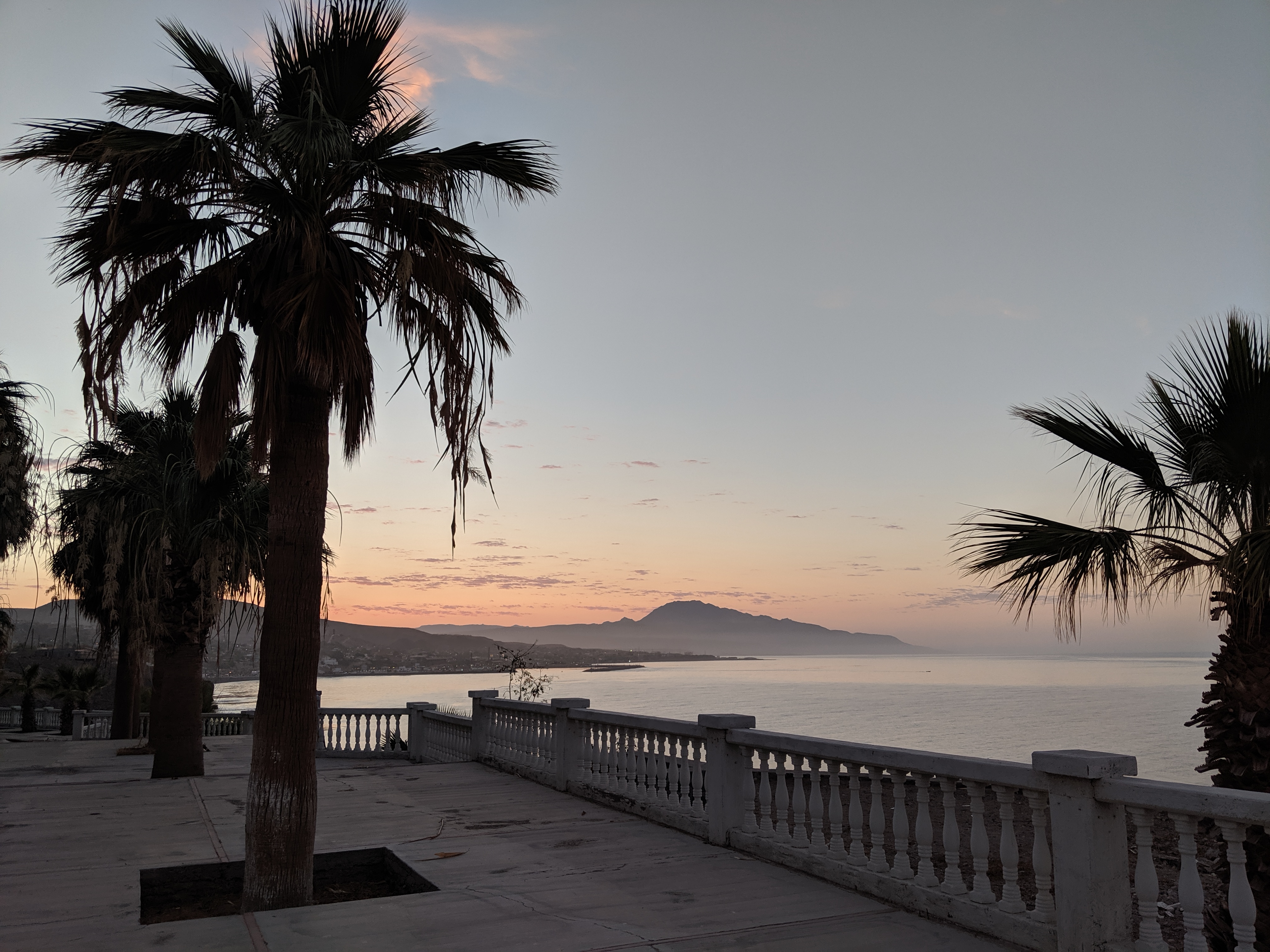
The view from Hotel El Morro in Santa Rosalia.

Aside from El Rosario and Santa Rosalia, where we spent our first and second nights, towns were few and far between. A couple times we saw signs for gas up ahead, only to realize that this referred to a truck parked by the side of the road with a few gas cans in the back.

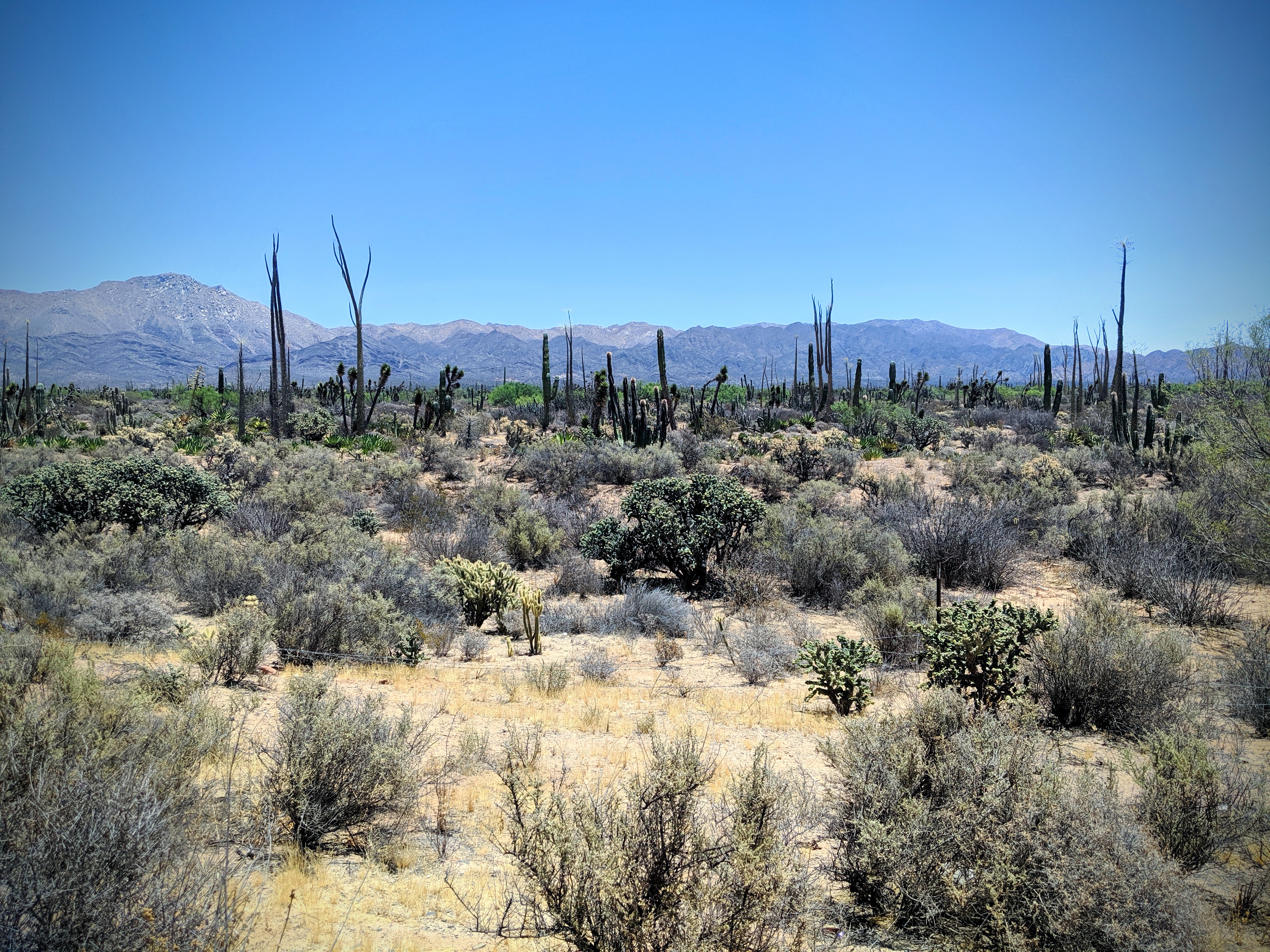
We drove through hundreds of miles of parched desert, surrounded by blue-grey mountains and towering saguaros, the occasional burst of forsythia. Further South, we encountered a new kind of tree, tall and skinny with stubby little branches and a single tuft of greenery on top — sort of like if trees went through an awkward teenage phase. I was delighted to learn that this tree is called a boojum, a reference to Lewis Carroll’s “The Hunting of the Snark.”

The roads down to La Paz were, to say the least, nail-biting. Each time a car flew past us in the opposing lane, I felt a flash of terror and saw us tumbling into the valley below. As a passenger, the best tactic seemed to be to keep one’s eyes closed and trust the driver and God, but our looping trajectory made me nauseous every time I took my eyes off the road. Instead, we both spent most of the three-day drive braced for impact.

It seemed especially ironic, then, when we got into a car accident two blocks from our hotel in La Paz.

As with any city, the traffic in La Paz has its own particular rhythm that doesn’t always reflect the exact letter of the law. People tend to roll through stop signs as long as the intersection is clear, and, perhaps because of their apparent insignificance, these stop signs are often tucked into the far corner of the street and obscured by trees or vehicles. Unfortunately, I missed one such stop just as another car was running their stop. The other driver slammed into our side, tearing a wide gash in the door and spraying safety glass across our laps.

After the initial shock, it was clear that no one was hurt, and the damage to poor Watermelon was mainly cosmetic. Dad was only a few blocks away, and before long someone stopped and offered to help us translate to the cops. The man who’d been driving behind me generously waited around in the hot sun to testify that he’d seen the other driver run the stop sign too.

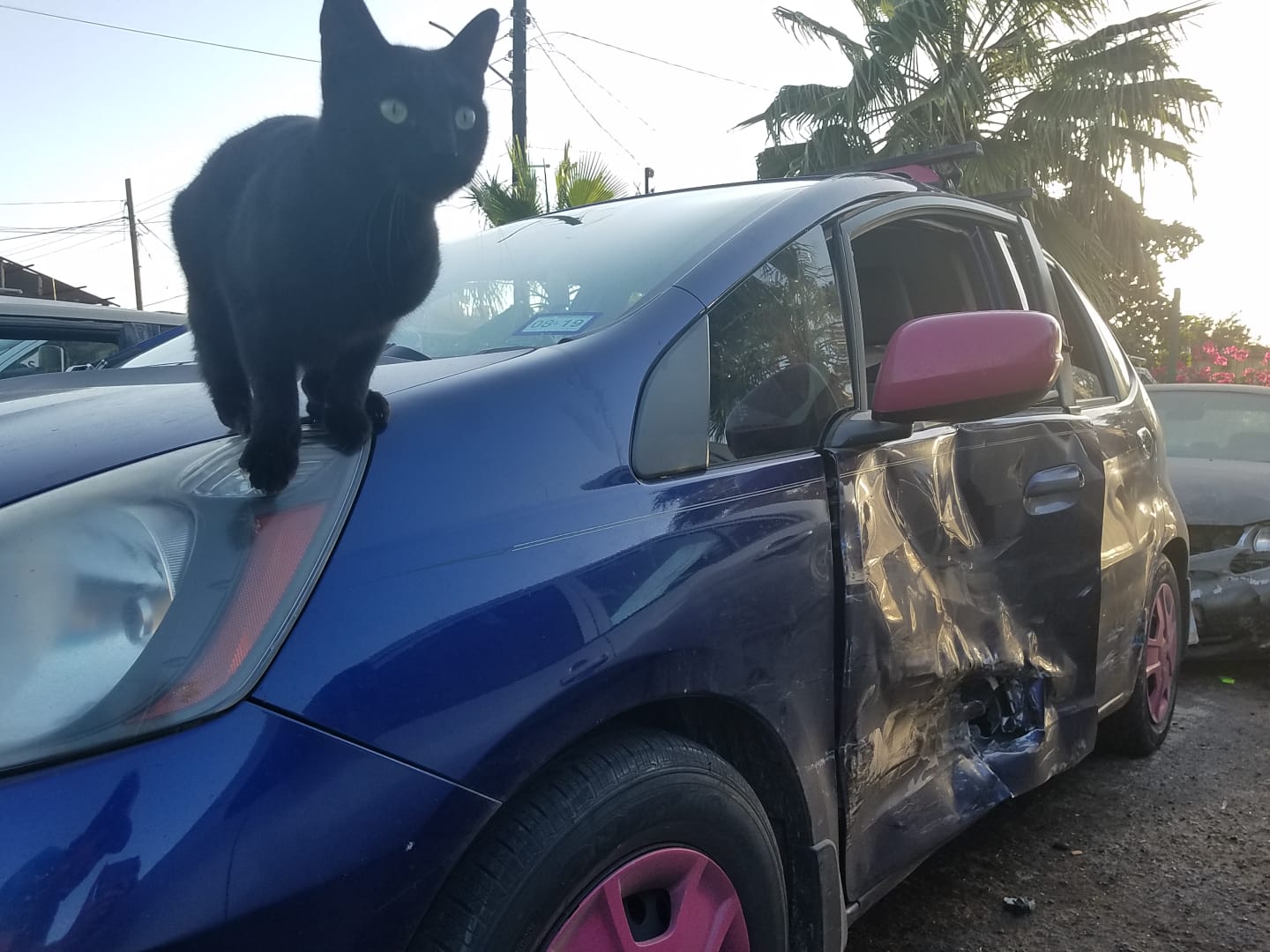
In the end, the cops determined that we’d both been at fault and would both pay for our own damages, which was probably the best case scenario considering all we needed was a new door. After a long, tense hour in the La Paz police station, waiting for the reports to be finalized, I happened to look out into the parking lot and saw what I thought was a piece of black plastic flapping on top of our car. Upon closer inspection, I realized it was a small black cat happily bathing herself on our roof.

Some might consider this a bad omen, but this little gato was a dead ringer for our own black cat, Phoebe, which we chose to take as a good sign. After all, if a choque was in our destiny, it happened in pretty fortunate circumstances. Replacing the door will be considerably cheaper here than in the U.S., and, as Sean pointed out, there’s always the chance that we’ll get a really cool mismatched door and Watermelon will look even more fly.

In the meantime, at least we’re in a beautiful place with one of my favorite people. Maybe destiny’s in our favor after all.