It’s a blessing and a curse to have a family as far-flung as mine. Not only do we occupy remote and disparate corners of the continent, our geographic history is all over the place: my dad grew up in Nevada, my mom in Ohio. They met in California, then moved to Virginia and later Iowa. Growing up, visiting the grandparents meant at least one full day in the car (sometimes three or more, if we were going to Grandpa’s).
Fortunately, a good portion of my extended family has at least managed to occupy the same time zone. Starting at my dad’s place down at the Southern tip of Baja, we could drive North in a more or less straight line and find my brother, uncle, and grandma in California, and eventually my aunt in Vancouver Island.
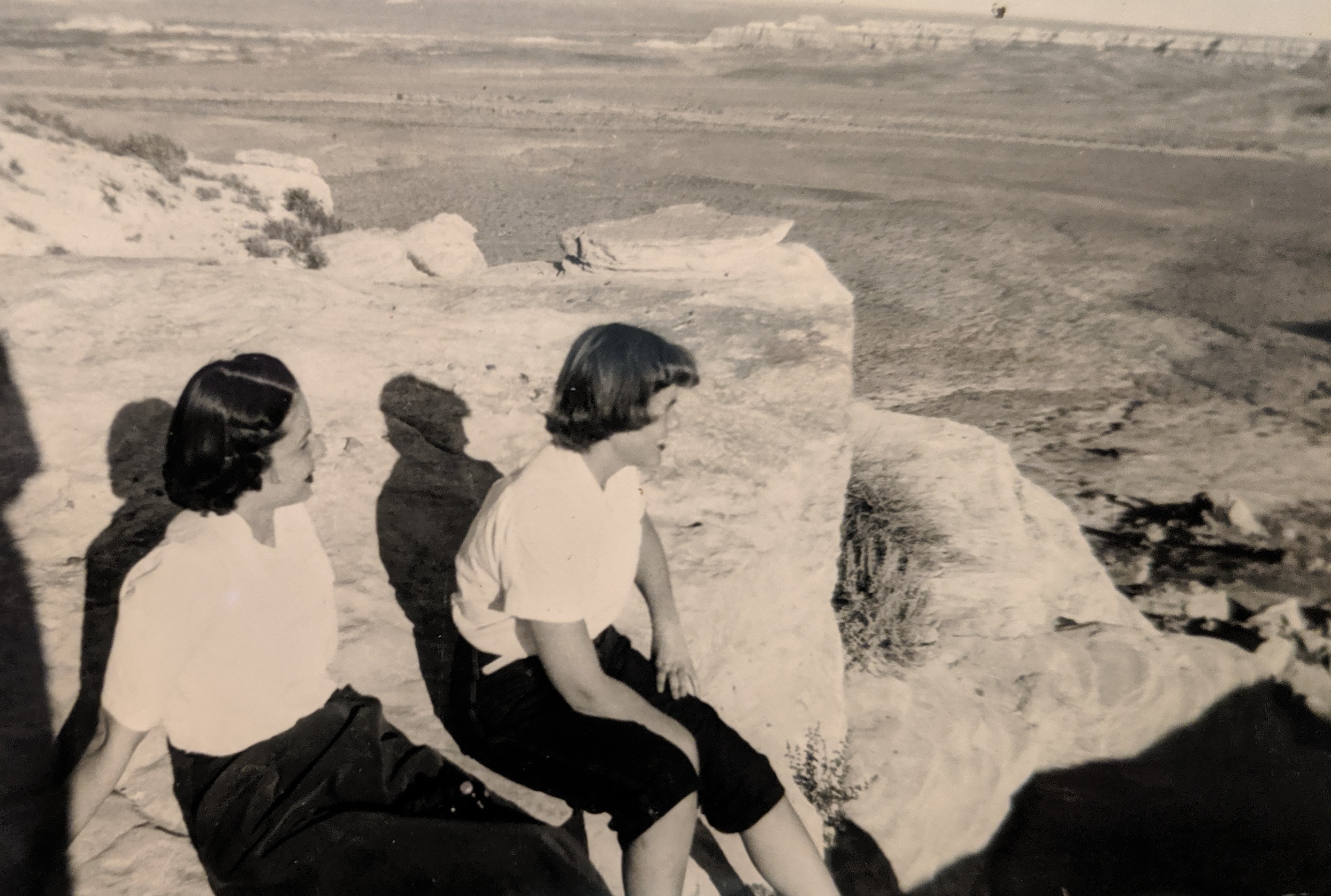
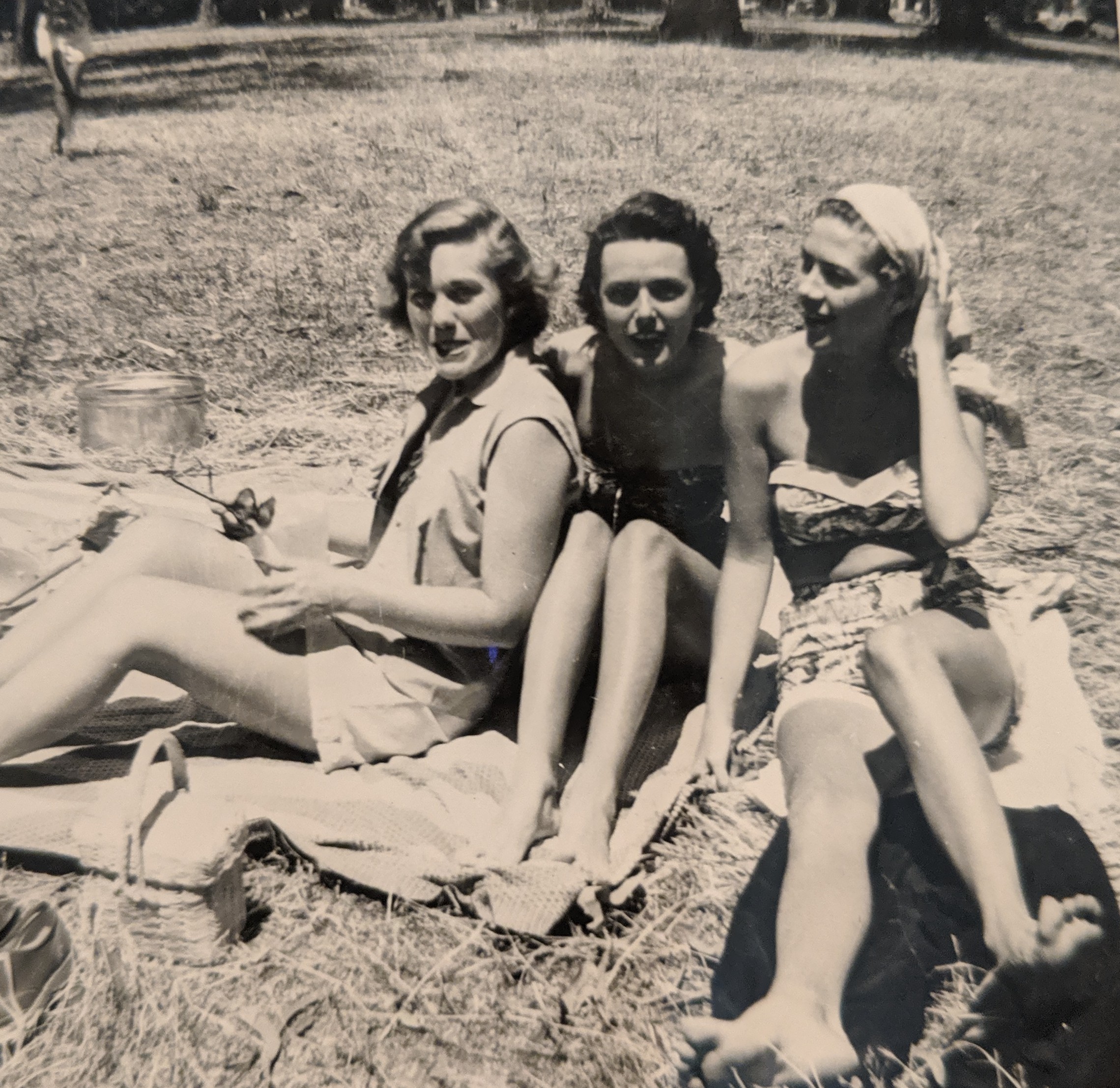
My grandma and uncle live in Chico, California, which is actually reasonably close to a halfway point between my family’s Mexican and Canadian outposts. When Sean and I arrived in Chico after visiting San Francisco, Grandma surprised me with some old photos of her own roadtrip to San Francisco back in the 50’s.
Grandma Carolyn taking in the Painted Desert on the way from Indiana to California.
I’ve often wondered what it would be like to share photos of my youth with any future generations that might be interested. Will I just direct them to my Facebook page? Will they be able to view my entire life story in photographs just by scanning my face with their brain chips? Quite possibly — but I think these generations will miss out on the satisfaction of holding real photographs (by the edges!) in their hands, turning the crackling pages of a leather-bound album inscribed with dates and names in tidy cursive.
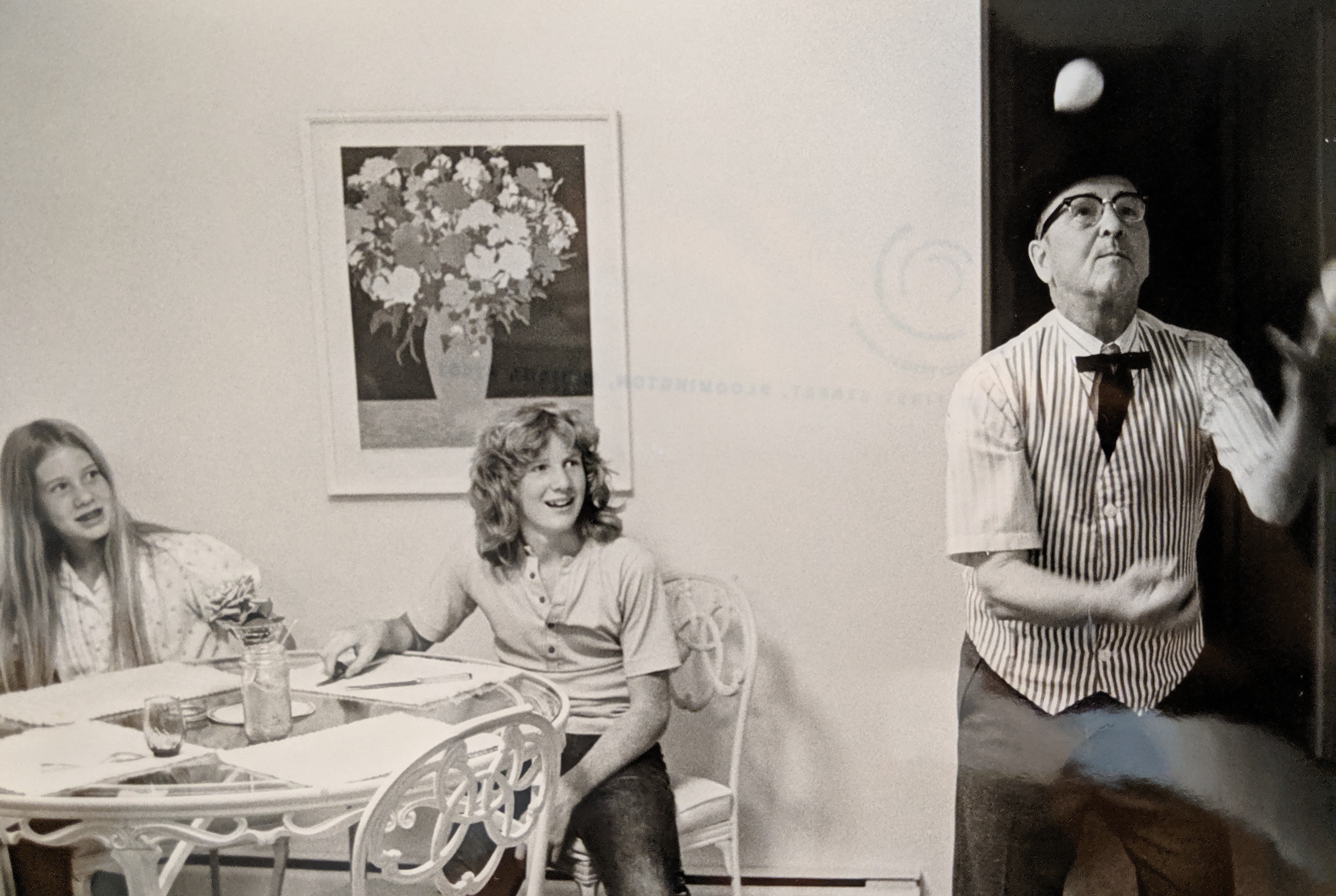
Great-grandpa Carl entertaining my aunt Holly and uncle Joel with his juggling skills.
We also went through some more recent photos, including a few shots of my childhood home that sent me on a visceral nostalgia trip. That house was bulldozed to make room for a hog farm several years ago (because, Iowa), but that obliteration is perhaps no less strange than having to see someone else living in the house you grew up in.
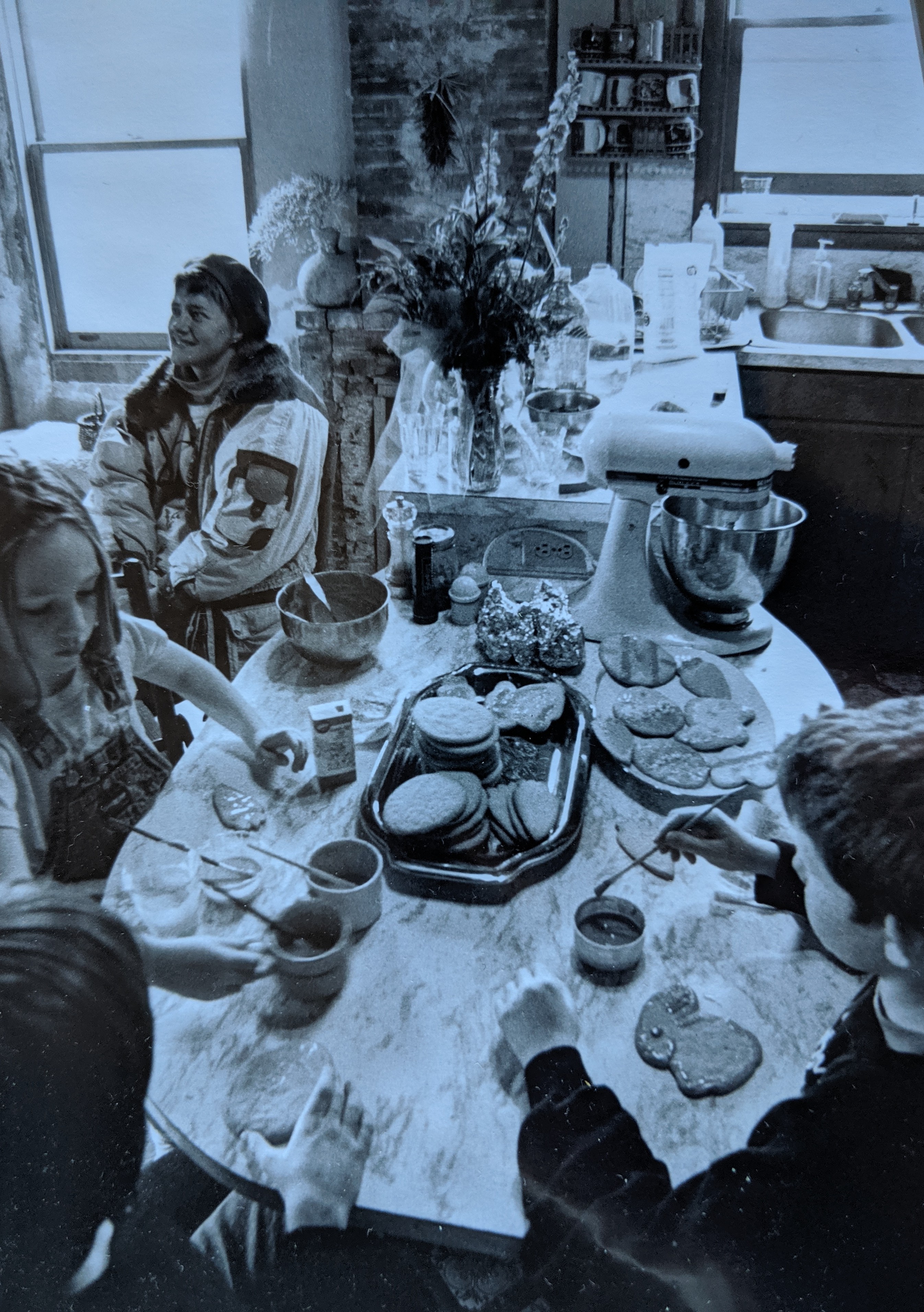
Decorating Easter cookies at the kitchen table. (Also, the last recorded instance of me being able to pull off overalls.)
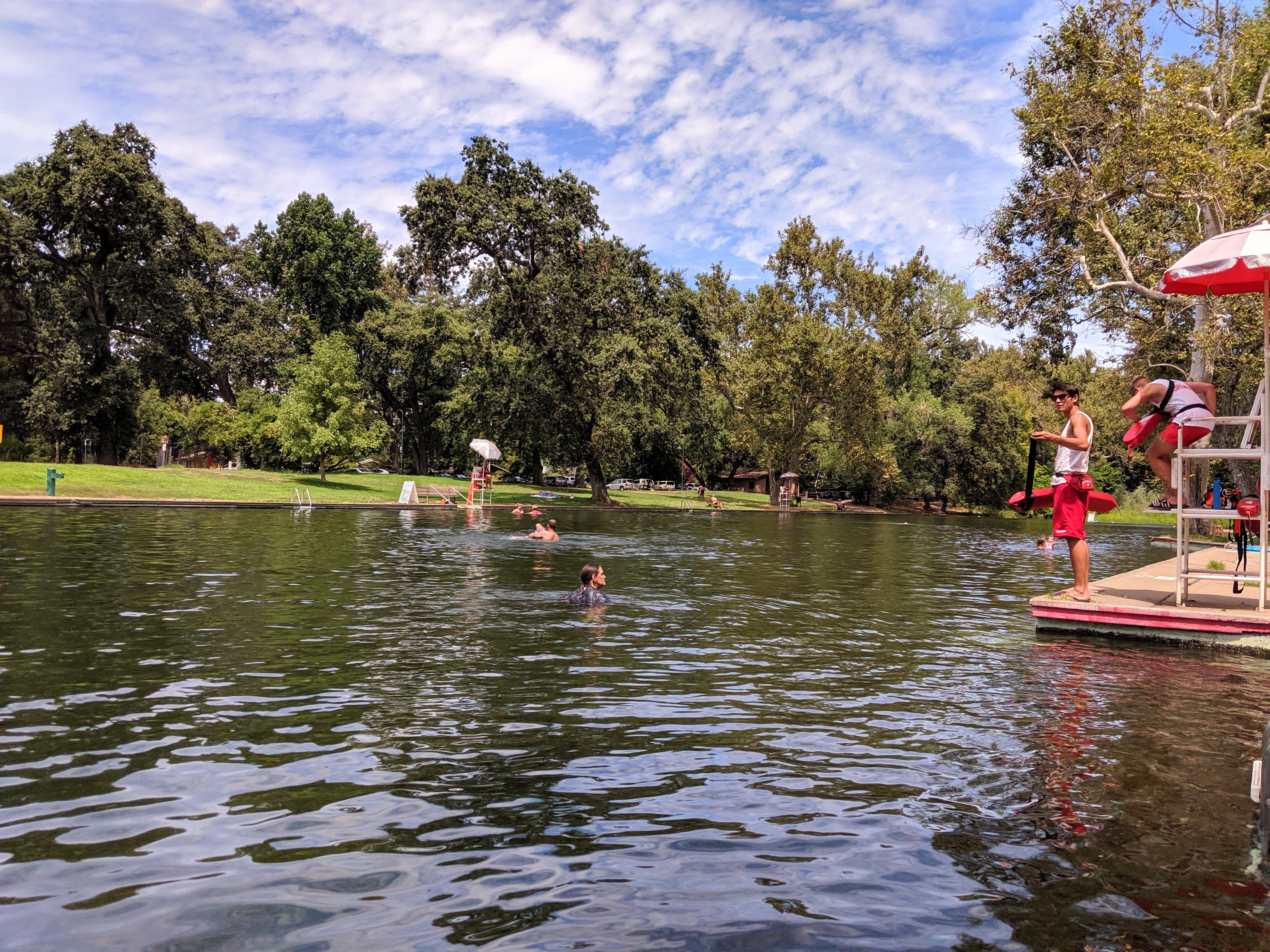
Besides the trip down memory lane, Sean and I had a sweet visit full of good food and great weather. While my uncle and grandma were occupied during the day, we explored downtown Chico and lazed about at the local (literal) watering hole, One Mile.
After Chico, we’ll head up towards the Northern extreme of my familial diaspora — my aunt Holly in Vancouver Island — and hit some fun spots in the Northwest along the way. Stay tuned for Portland, Bend, Olympia, and Seattle!
When I asked Sean how he wanted to celebrate his 32nd birthday, he had only one wish: to eat a salami sandwich in Little Italy.
Fortunately, we were staying with my friend Konner, who proved to be not only a generous host but a fearless leader in our quest to find the perfect sammie. Konner has lived in the city for over ten years, and has the remarkable skill of knowing how to get to multiple neighborhoods and destinations without even looking at her phone. (I, on the other hand, frequently get lost finding our car in the parking lot — and you’ve seen our car.)
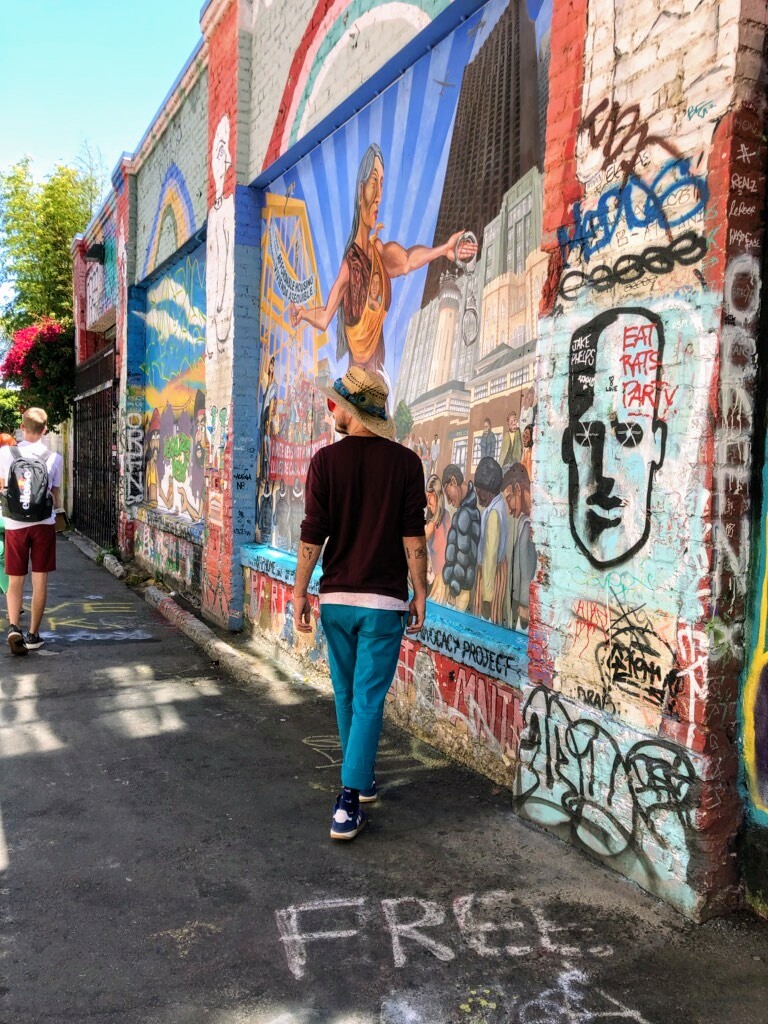
Since we had the whole day to meet our sandwich destiny, we decided to walk to Little Italy from Konner’s house in Bernal Heights. The morning was misty and cool,and the fog — whose name, we learned, is Carl — hung low over the hills as we wandered the many-colored streets.
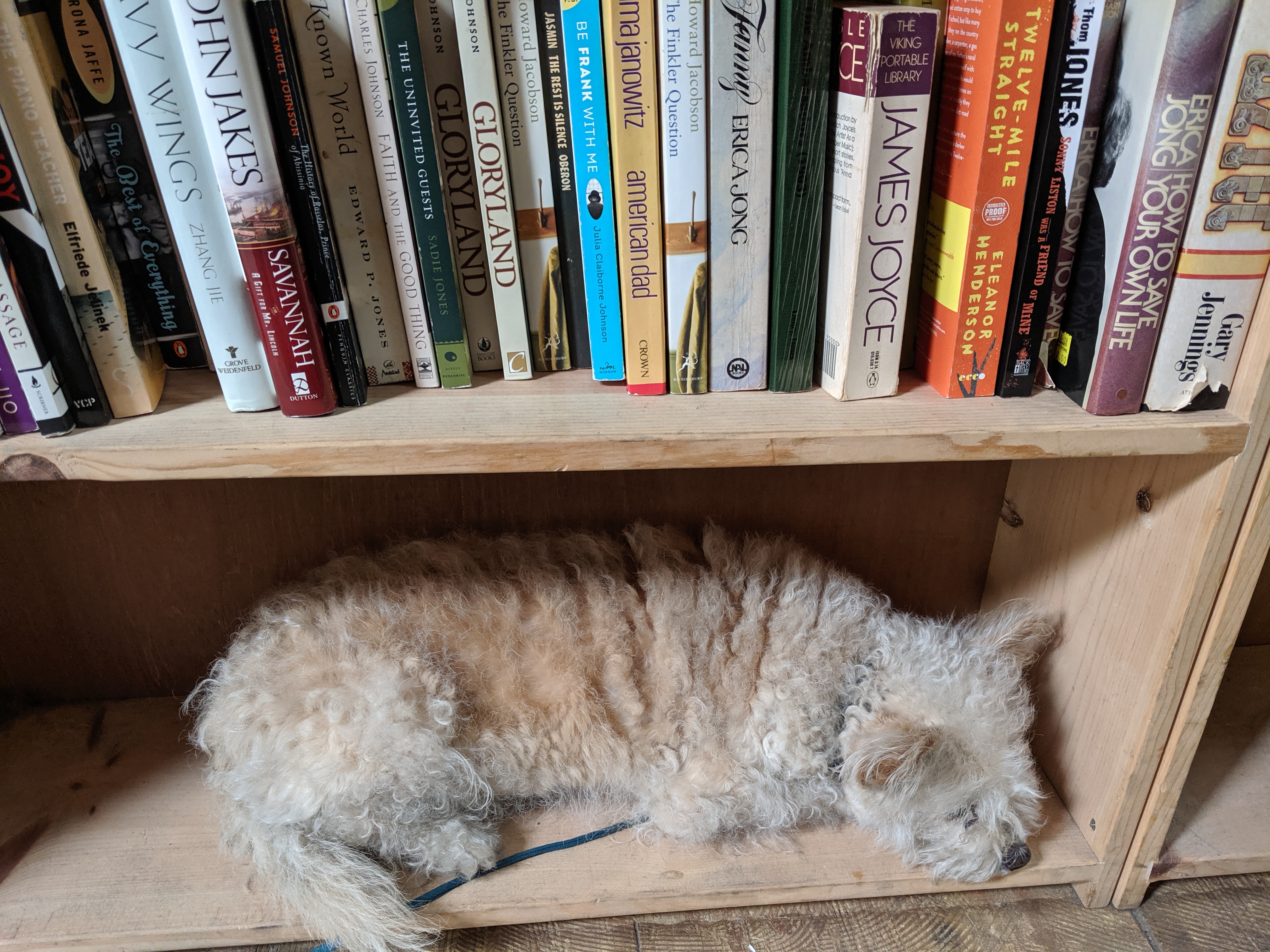
We meandered through the city, stopping occasionally for sustenance in bars and cafes. (These were few and far between, as you can imagine, but we made do.) We wandered in and out of bookstores and thrift shops, making a couple furry friends along the way.
Just kidding, this guy did not want to be our friend. Guarding books is serious business.
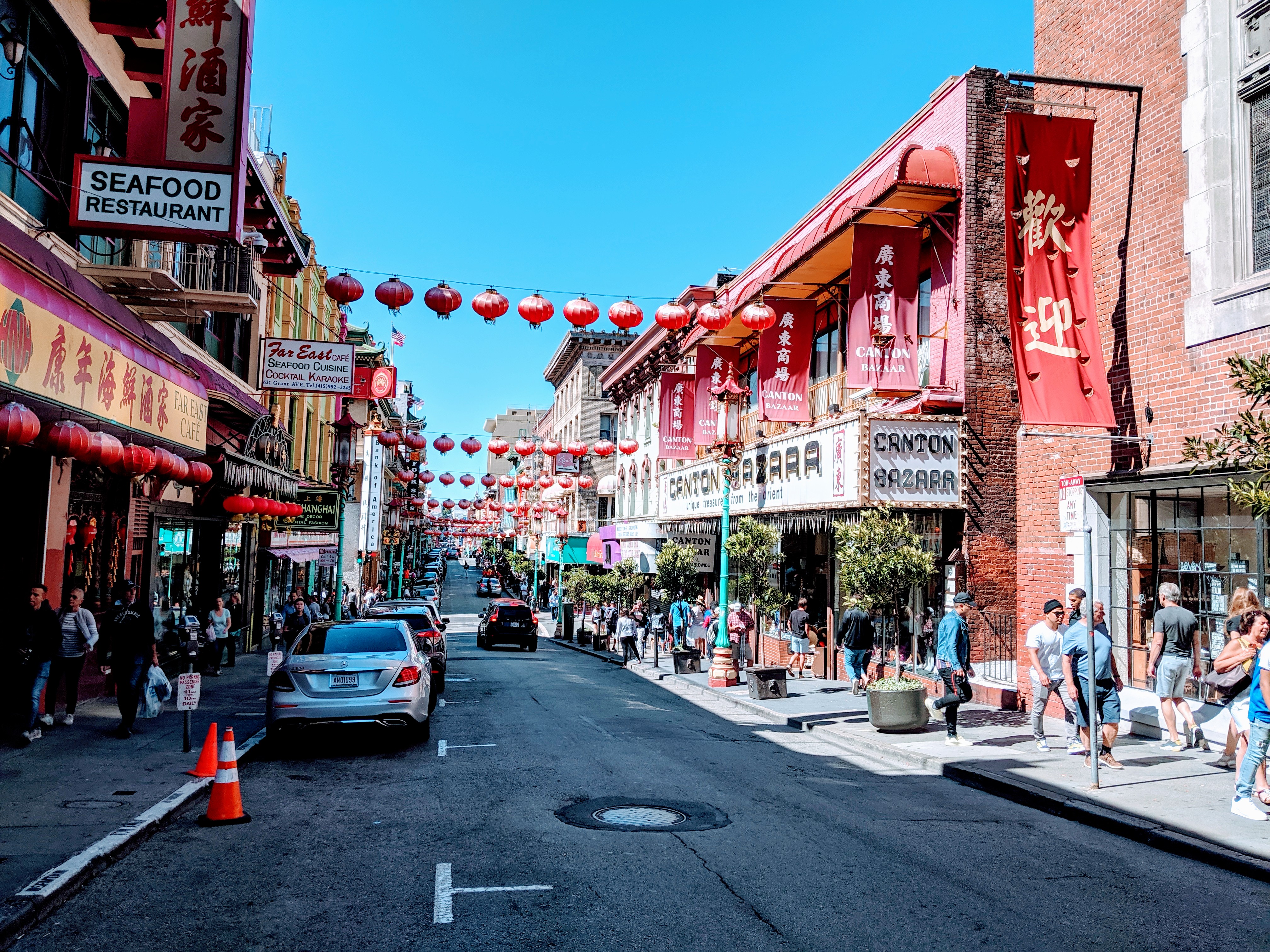
We made it to Chinatown, where we kept passing half-dressed lion dancers who seemed to be late for something. By this time the weather was perfect, Carl having long ago disappeared in his afternoon retreat.
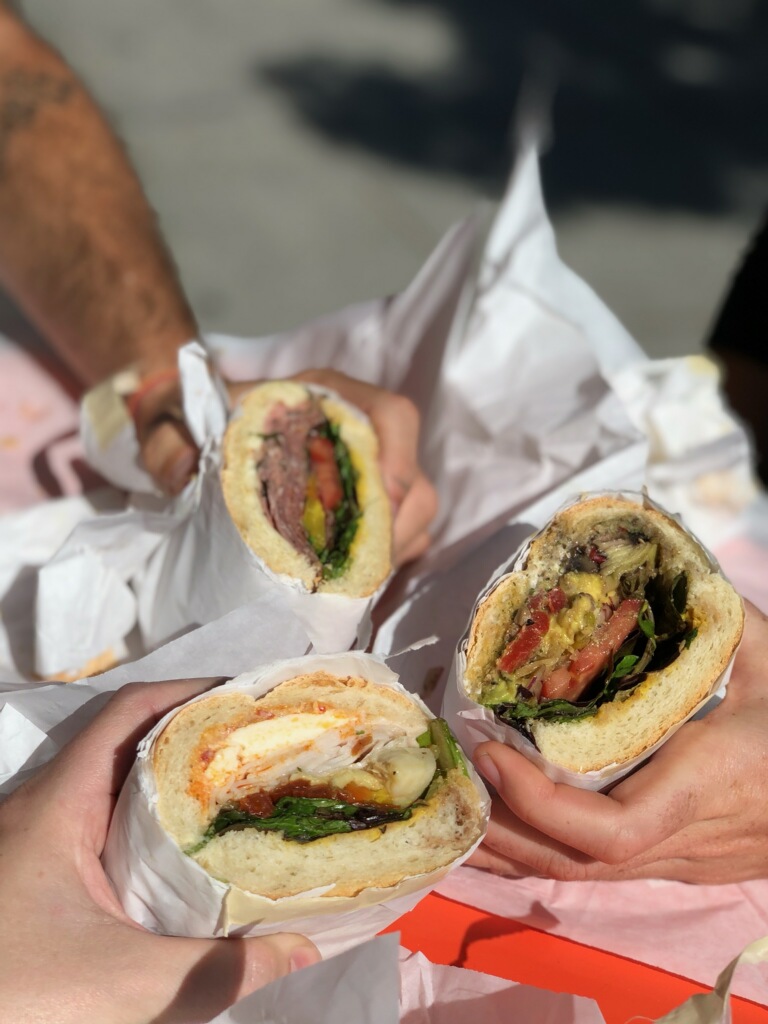
At long last, the moment came: we stepped into Alimento’s Market in Little Italy, stood for several stunned moments gaping at the menu board, then placed our orders. Sean saw his salami dream to fruition; I went for the veggie sandwich, which comes laden with roasted eggplants, artichoke hearts, avocado, and olive tapenade, and could, I am convinced, make the most zealous of carnivores rethink their life choices.
This amazing picture was taken by Konner. My hands were too slippery with drool.
After that (well, that and an affogato — we’re in Little Italy, come on), it was all we could do to stumble into a cab. We all agreed that Sean’s birthday had been a success — so much so that we might just have to make it an annual thing.
I could tell you a lot of things about the central California coast. I could tell you that it’s a desolate and ethereal fairyland, or that the sky peeking through the ubiquitous fog is impossibly blue.
I could tell you that the long, thin pines look like castle spires rising from the hills, or that the waves seem to break slower here, sweeping the shore with a luxurious melancholy. I could tell you that the air seems to ache with a tragic romance.
What I really want to tell you about, though, is elephant seals.
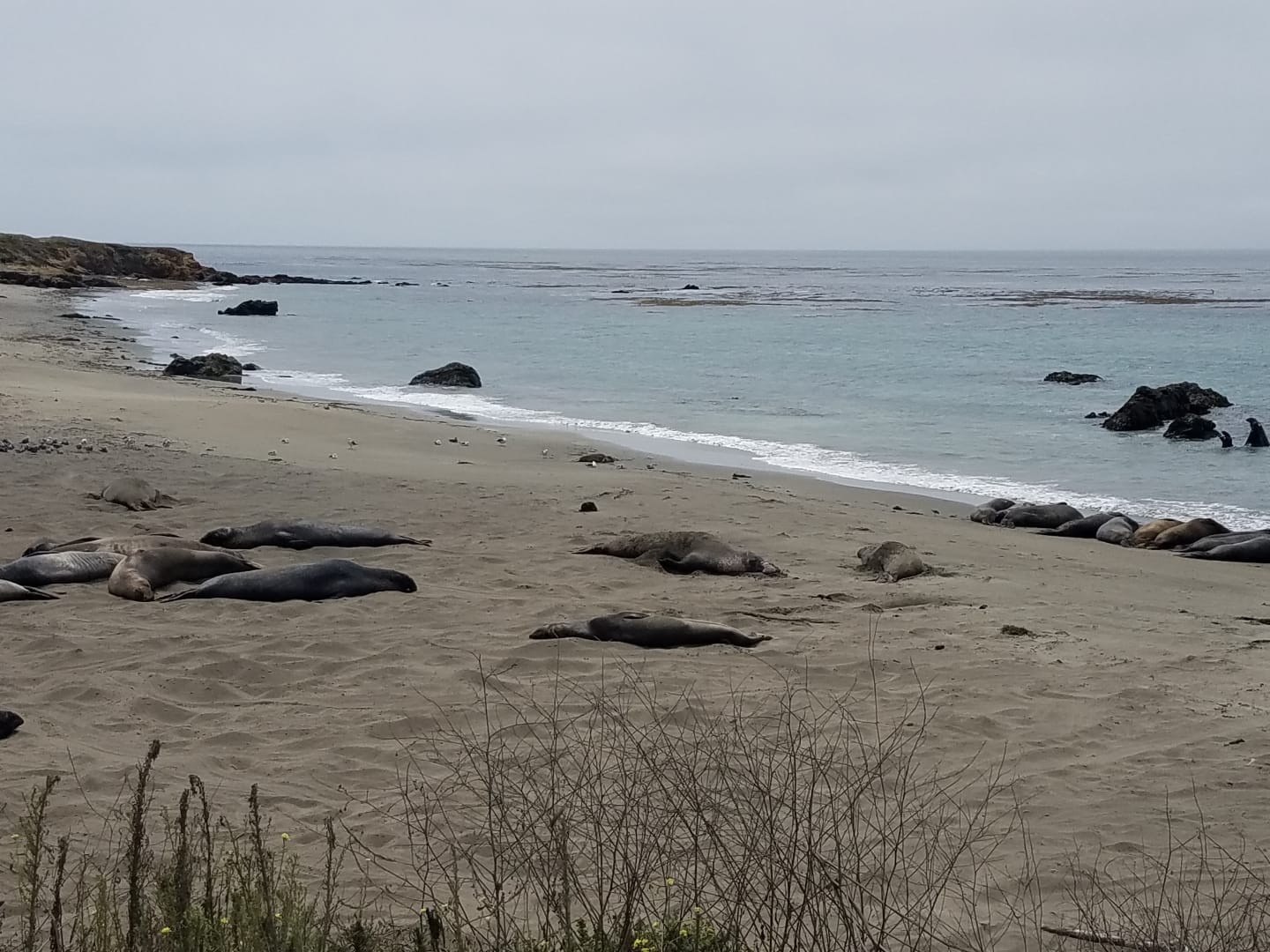
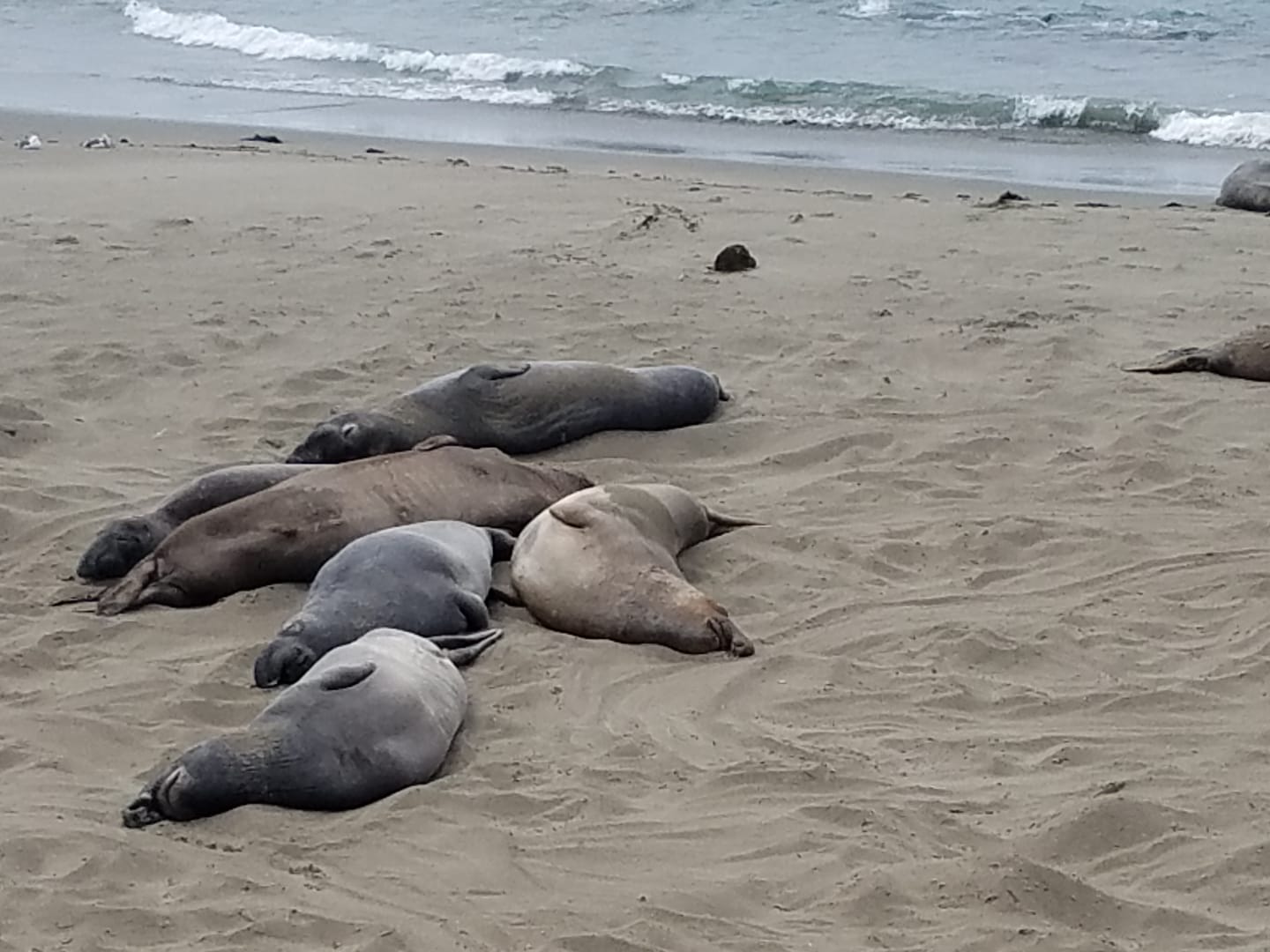
About 5 miles North of San Simeon, there’s a stretch of beach where, at certain times of year, you can witness large numbers of elephant seals doing what they do best: sleeping.
Actually, sleeping really doesn’t begin to cover it. These creatures, which look more or less like giant blubber burritos that started growing limbs and then thought better of it, are capable of a level of passed-outness I have never seen in any other life form. (The only thing I can think of that comes close is maybe a toddler, if someone gave them a Four Loko and set them loose in a bouncy castle for three hours.) Their giant bodies are flopped on the beach in such devout agreement with gravity that you almost don’t register them as living creatures at first.
At first you’re like, “who left like 20 giant sandbags on the beach and then drove over them with a truck?” But then one of them rolls over to scratch its chin with a stubby flipper, or lifts its eponymously oversized snout to emit a sound that’s not unlike someone starting up a weedwhacker.
What little energy they possess during this time seems to be used hauling their 5,000-pound bodies into battle with one another, which mostly entails a lot of aggressive chest-bumping. Occasionally it looks as if they might be trying to bite each other, but haven’t quite figured out how to do so without swallowing their own noses.
In short: my heart
has found a new keeper, and it is the elephant seal. I highly
recommend getting yourself to a place where you can observe them in
the wild — and then taking a long nap afterwards, because believe
me, no one can make sleeping look so good.
After Santa Barbara, we had about a week to make it up to San Francisco, where we’d be celebrating Sean’s birthday. We decided to make our way North via the Sequoia National Forest, since neither of us had ever been. On our first night, we landed in a little campground called Sandy Flats.
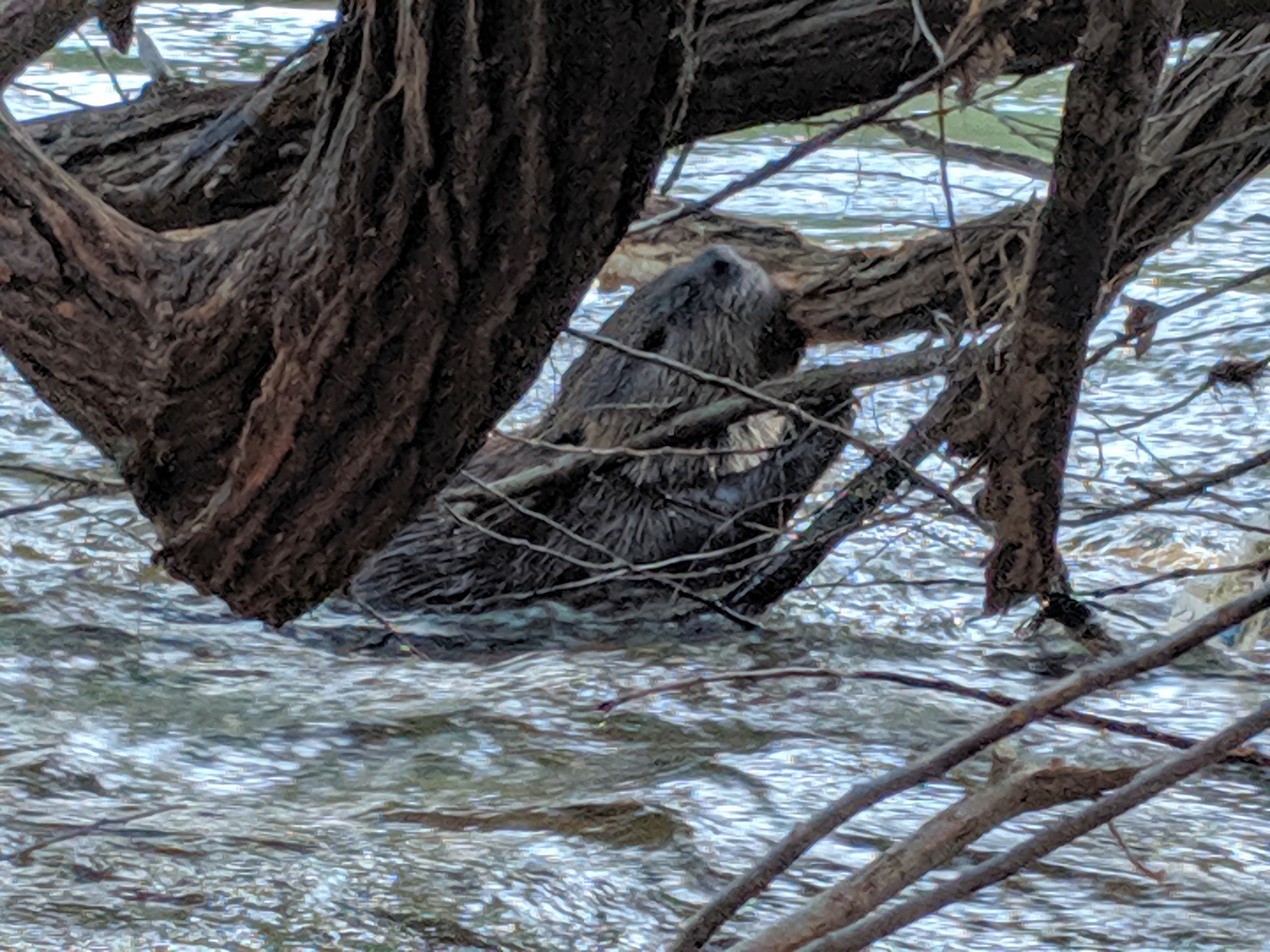
This campground was perched right on the Kern River, and while it was blissfully free of chipmunks, we did discover one rodent friend:
This was very exciting, but not as exciting as when I thought I saw an otter swimming next to the beaver. (Turns out it was just a second, smaller beaver. My zoology game is not what it could be.)
The next day we woke up early to hike to Miracle Hot Springs, a lovely little collection of stone pools fed by a natural spring that sits right by the river. We couldn’t find the proper route on the way in, but we managed to reach it through a combination of intuition and willingness to pretty much just slide down a hill on our butts. Fortunately, the long soak must have cleared our heads a little, because we found an established path on our way out with no trouble.
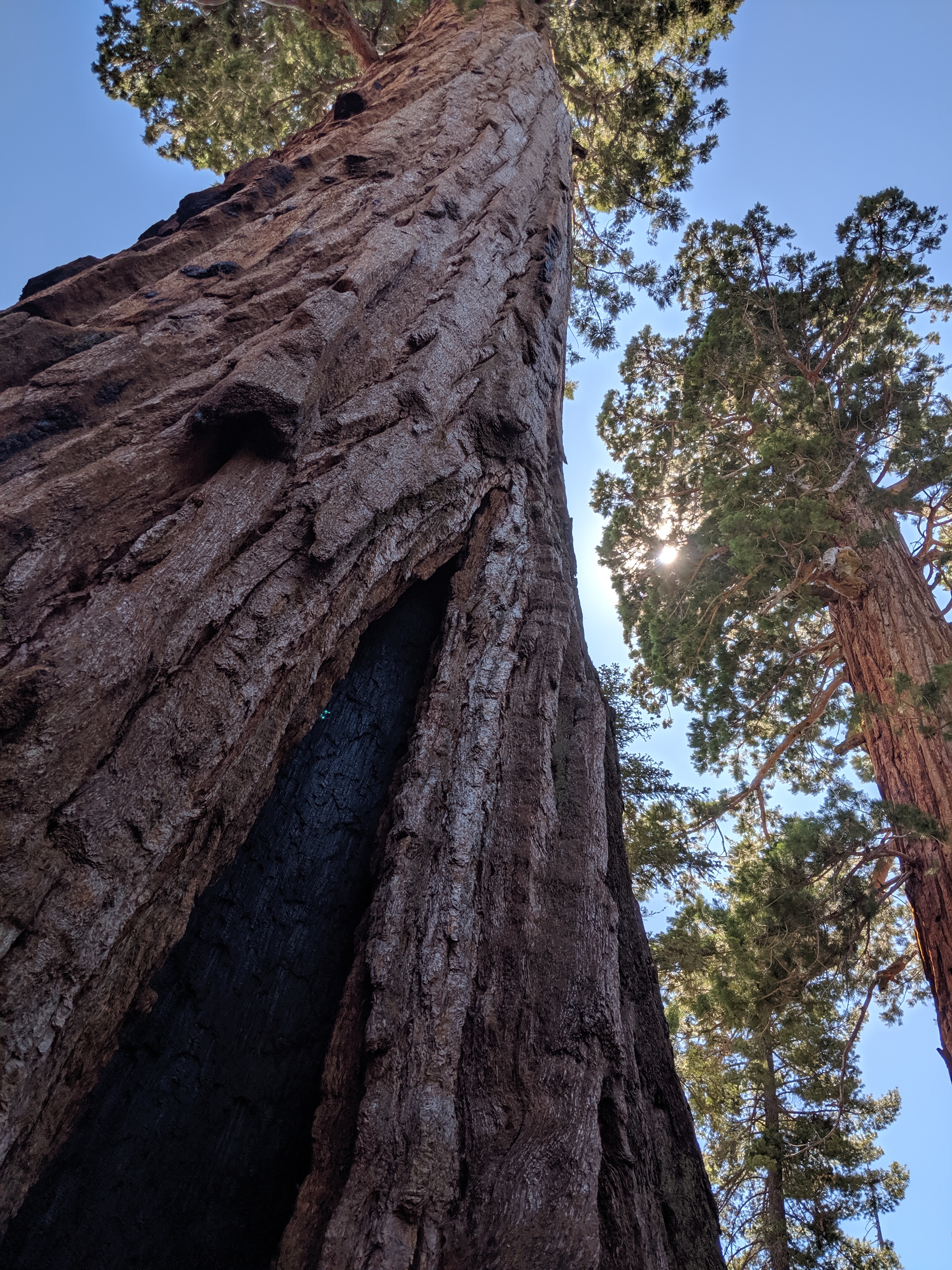
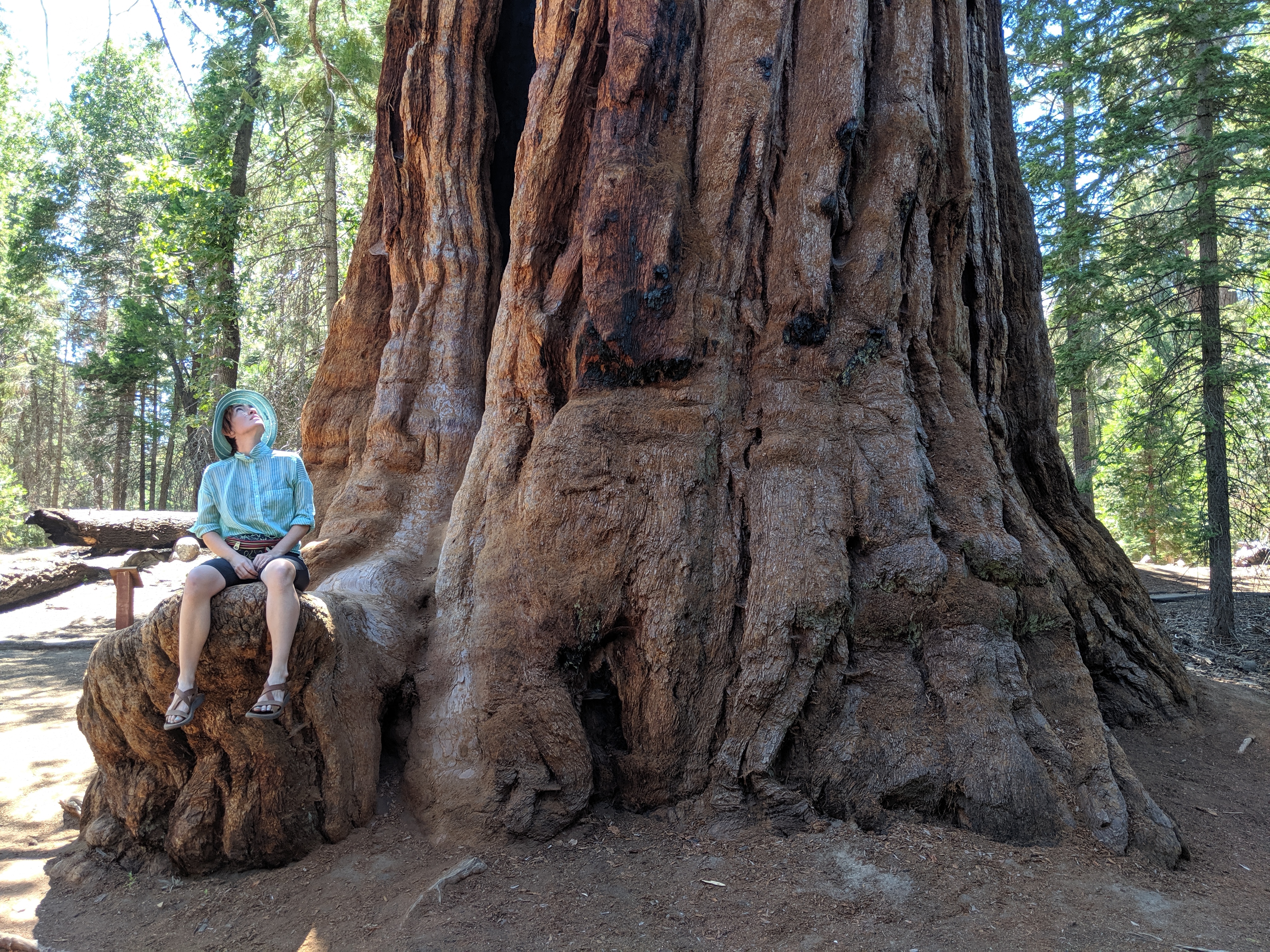
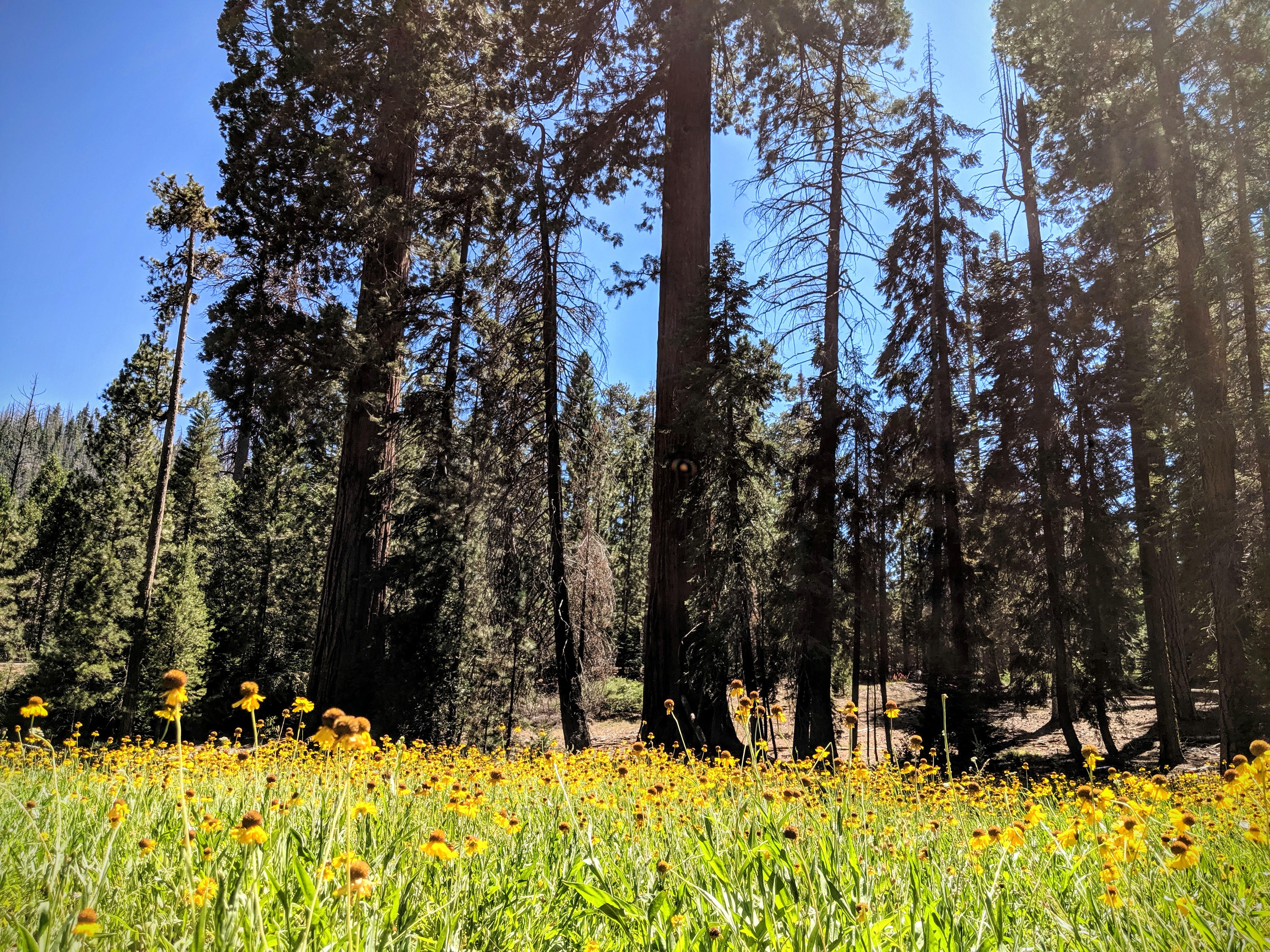
After the springs, we drove to a sequoia grove called Trail of 100 Giants. The grove itself isn’t very large, but what it lacks in area it makes up for in height.
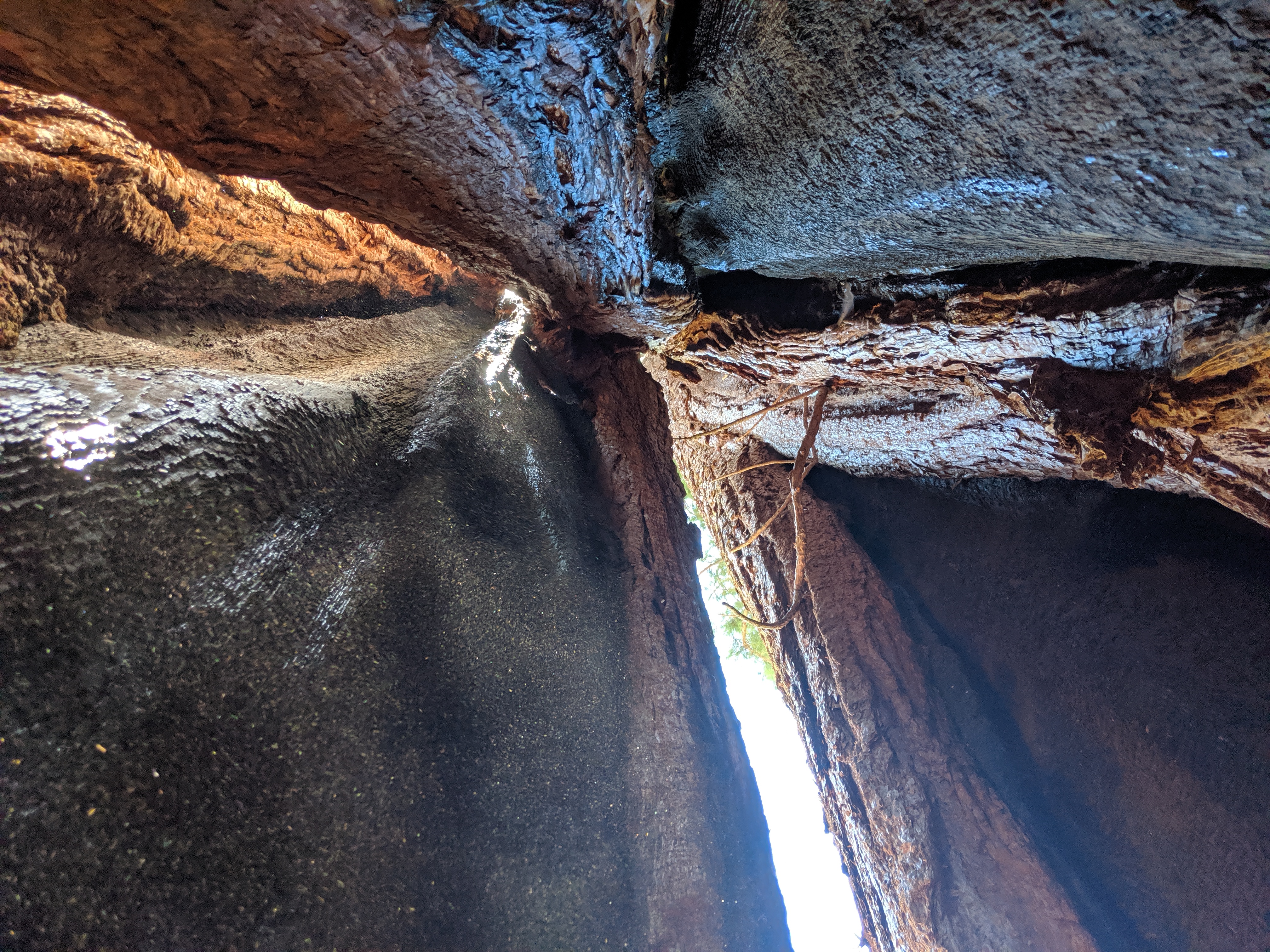
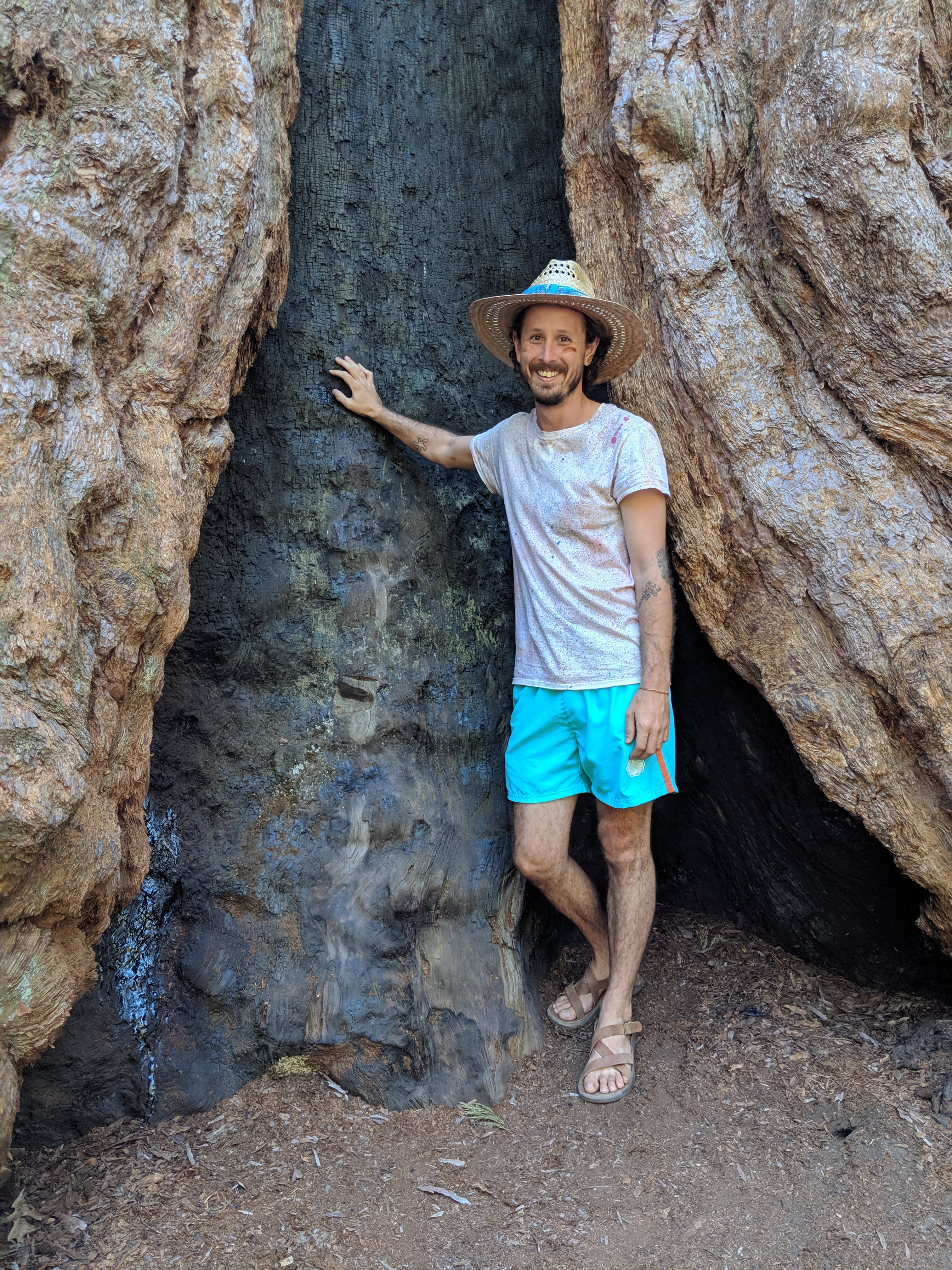
Almost all of the mature trees had long, black gashes in the center, scars from forest fires that must have happened before the younger trees sprouted. Some of them you could even climb into; I circled one of the larger sequoias at least three times looking for Sean before I finally heard his voice coming from inside.
How DOES one get hired as a Keebler elf?
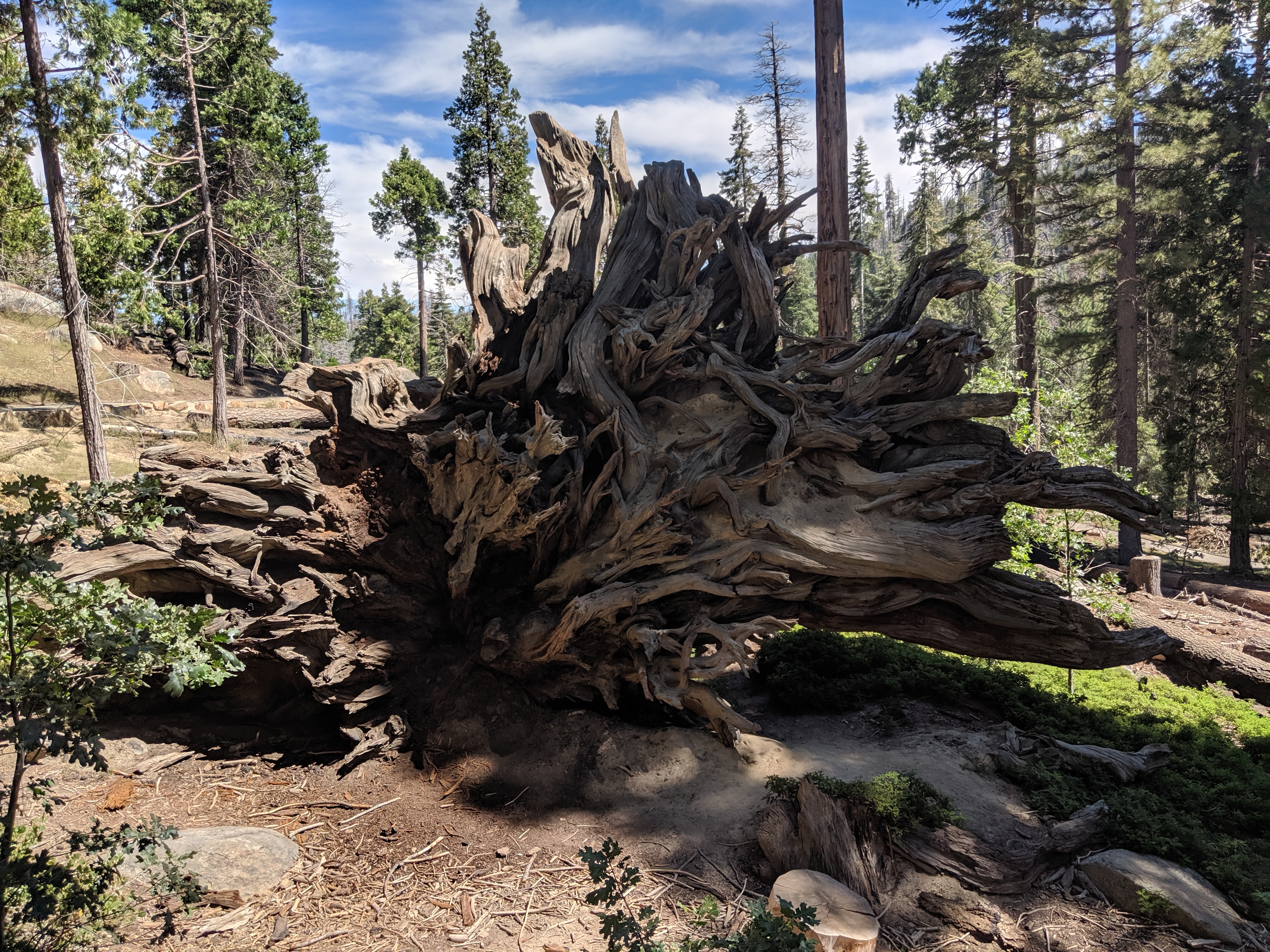
At first glance, the trees seemed to be all more or less the same; the more you explored, however, the more their differences became apparent. Some trees were conjoined with their neighbors, trunks fused together in their soft youth. One had a great knobby plateau growing out of its base to make a perfect natural bench. Here and there you could see a fallen tree, its root system exposed, a gaping crater left where it used to grow.
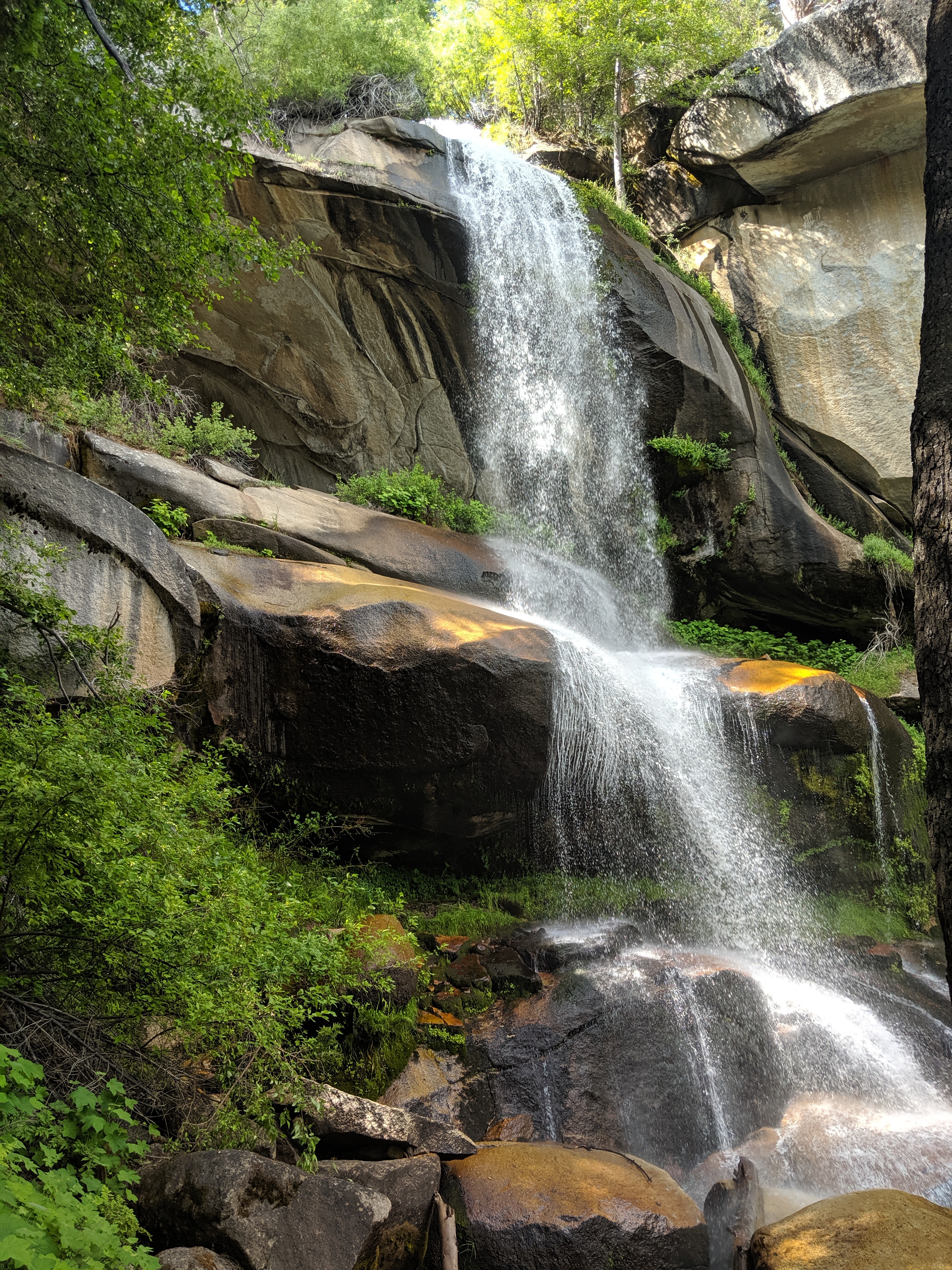
Once we’d filled our eyes and exhausted our necks, we popped into the gift store, where we asked the clerk for her favorite local spots. She recommended a nearby trail that led to a waterfall, “just past the three boulders and the pile of sawdust.” Her directions proved to be accurate.
We’d now experienced both a natural bath and a natural shower — neither of which made us anything close to clean, but we’re learning that sometimes adventurers just don’t get to smell good. (You should still let us visit you and sleep on your couch, though.)
Camping life has also meant sporadic Internet access, but we’re back in wifi-land now, and will be catching up with ourselves before long. Stay tuned, good people!
After the natural beauty and punishing temperatures of Joshua Tree, we moseyed towards the coast to stay with some family friends who’ve known me since I was in cloth diapers. About twenty years ago, Lisa and David left the small town I grew up in and moved to Santa Barbara, California.
Why they chose this place over rural Iowa is anyone’s guess.
Since then, a string
of relatives and family friends have moved to the West coast: my aunt
helps run a permaculture school in Cuyama Valley, my uncle and
grandma now live up in Chico, my brother went to UCSB — I even lived
in Santa Barbara for a couple short stints, working for some local
beekeepers and struggling to acclimate to the perfect weather. (In
the Midwest, one becomes accustomed to spending half the year in a
pre-emptive cower.)
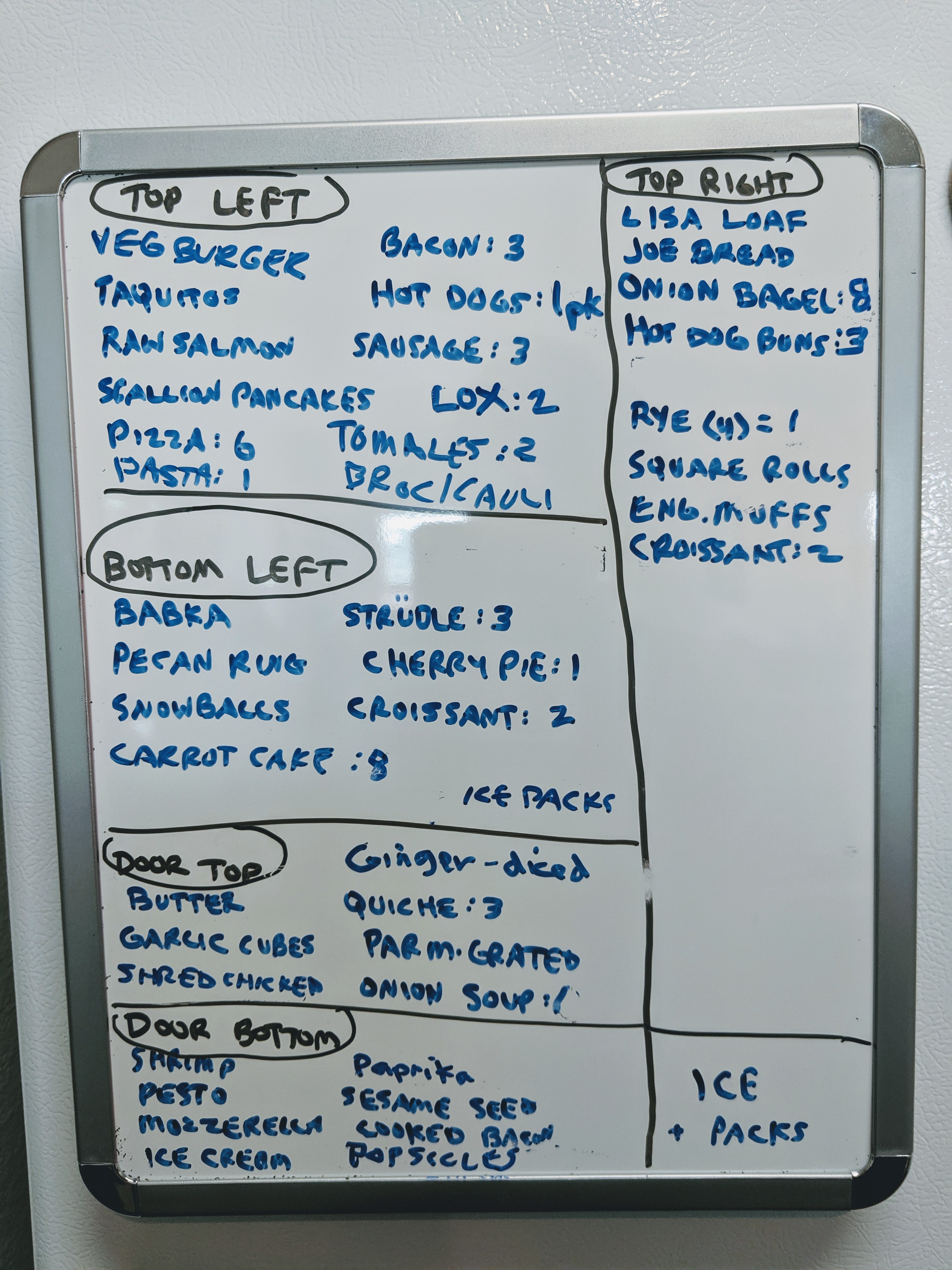
After almost two months of camping, couch-surfing, and venturing through strange territory, Lisa and David’s place was like an oasis of familiarity. I mean, look at this fridge map and tell me you don’t feel comforted:
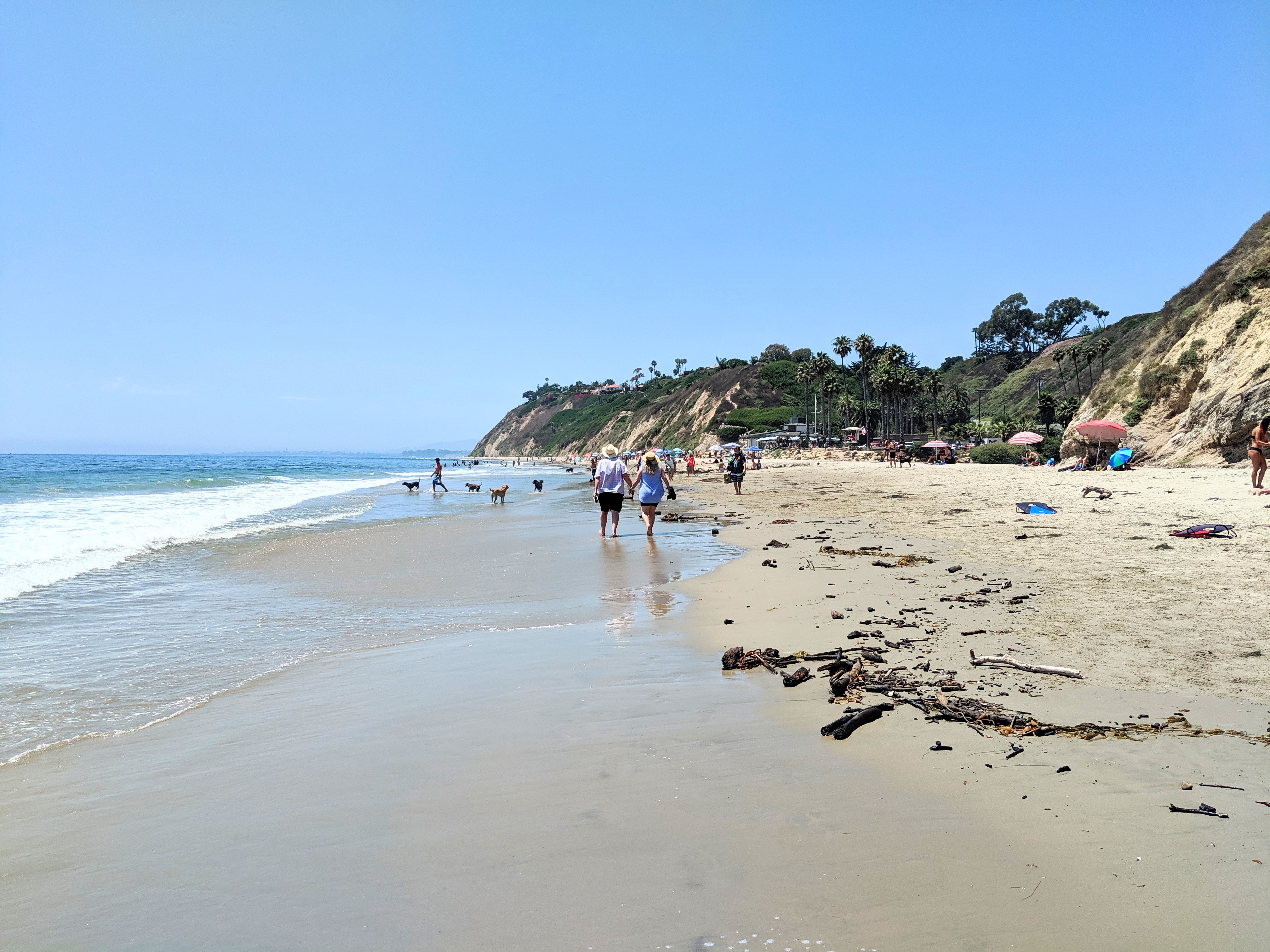
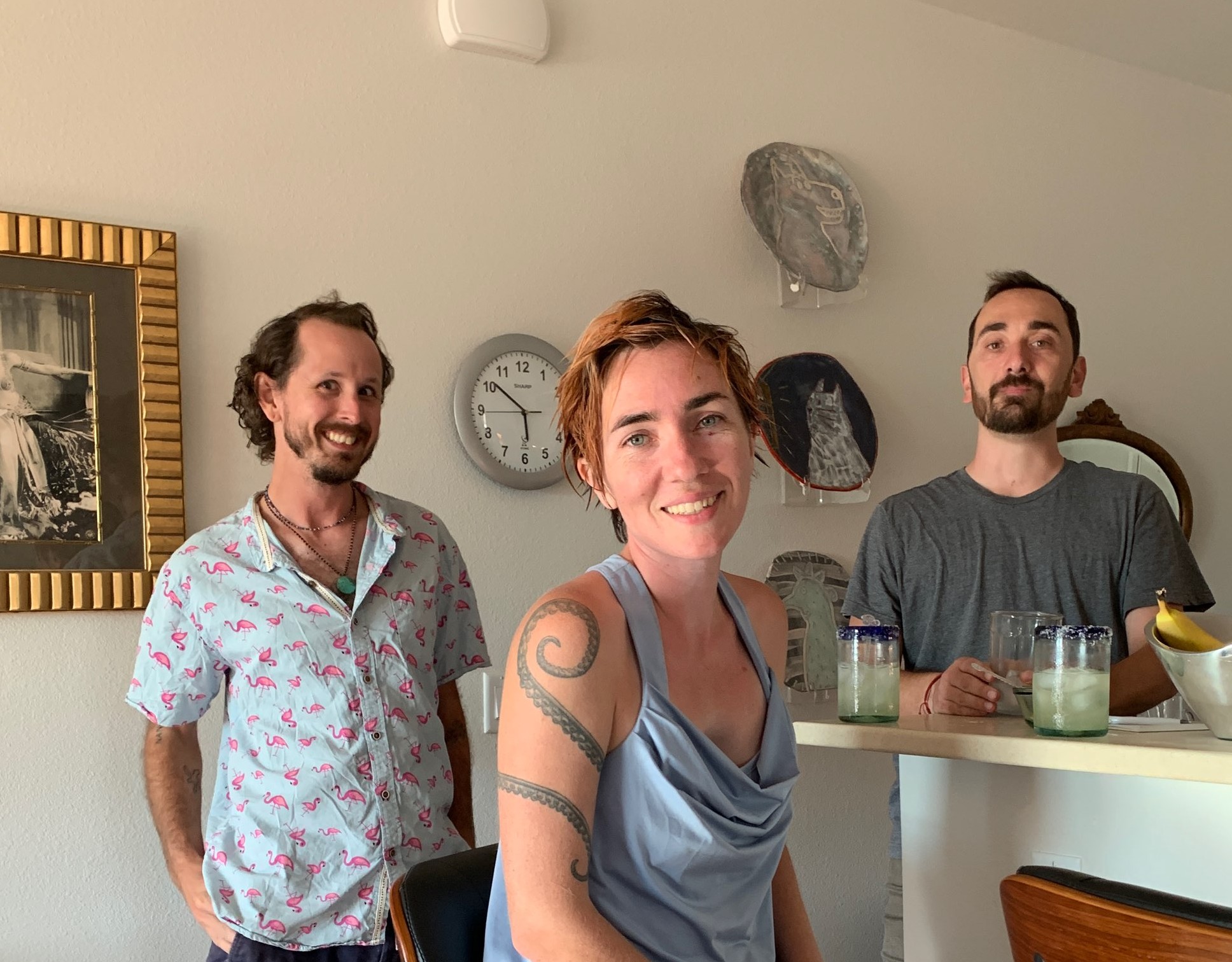
We spent our days in Santa Barbara roaming the city, wandering State Street and playing with strangers’ dogs at the beach. In the evenings we hung out with Lisa and David and my brother, Van, who had recently made the wise decision to move back to Santa Barbara from Colorado Springs.
In retrospect, Sean was definitely plotting something in this picture.
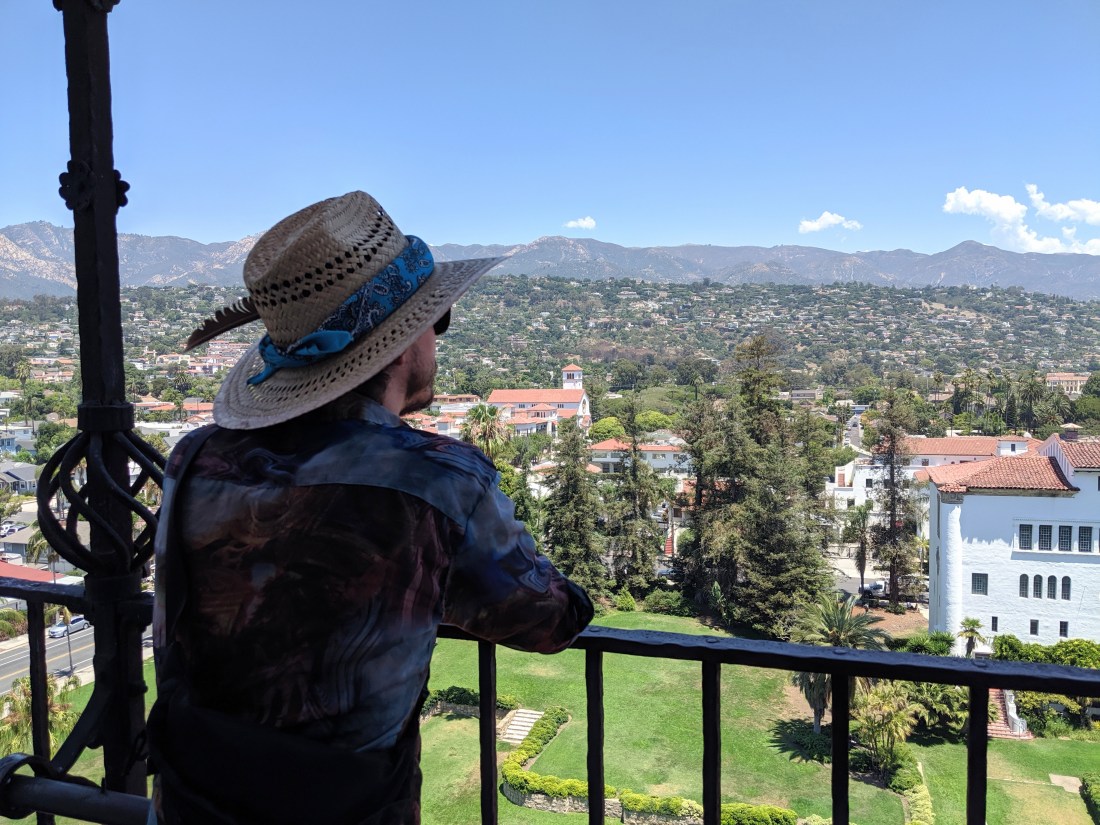
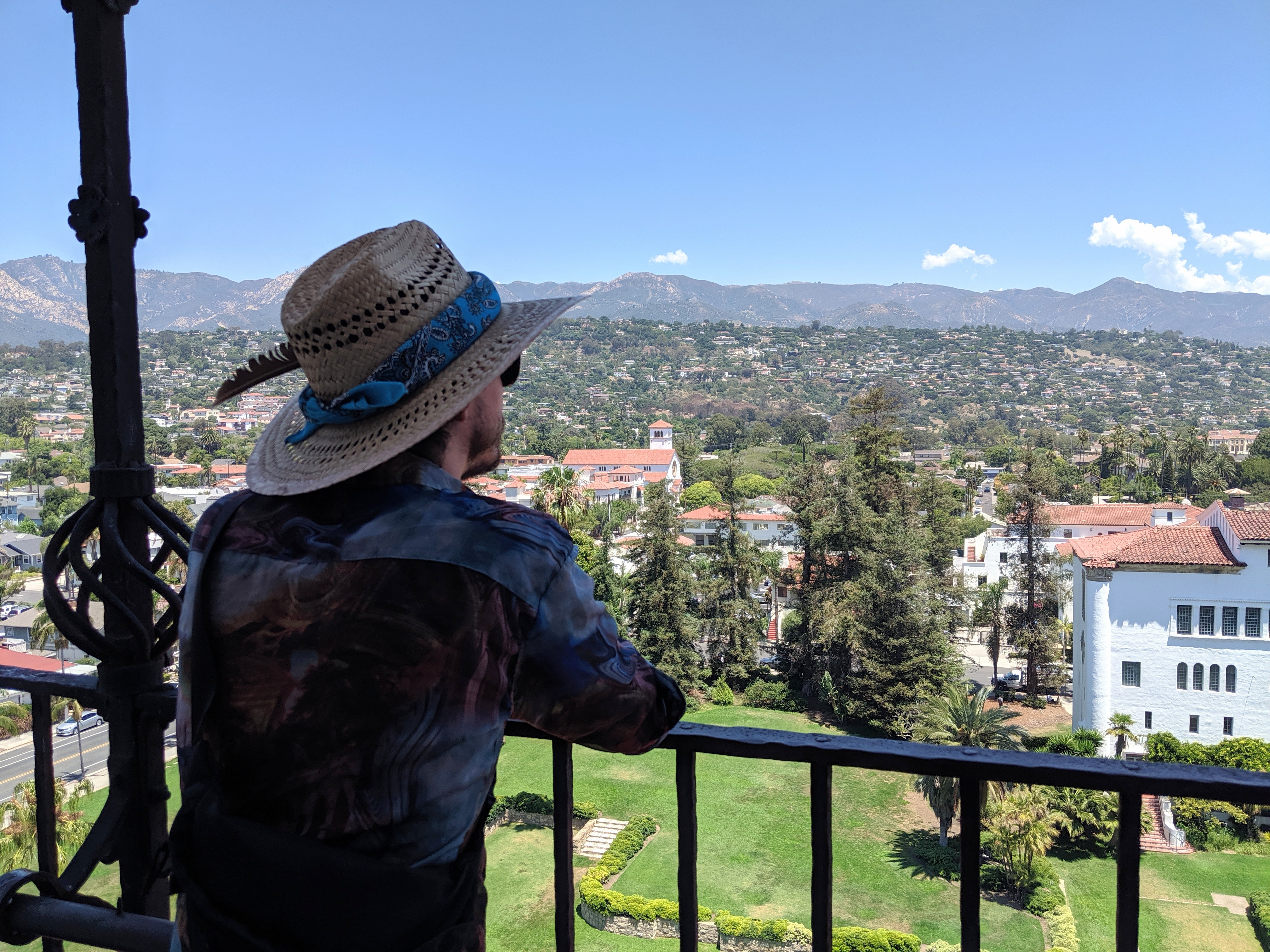
Santa Barbara is nestled between the mountains and the Pacific, with red tile roofs and palm trees as far as the eye can see. It’s where famous people go when they’re old and just want to chill in their mansions and use the word “terroir” a lot, but it’s also much more than that.
But I mean really, does it NEED to be more than that? Look at that view.
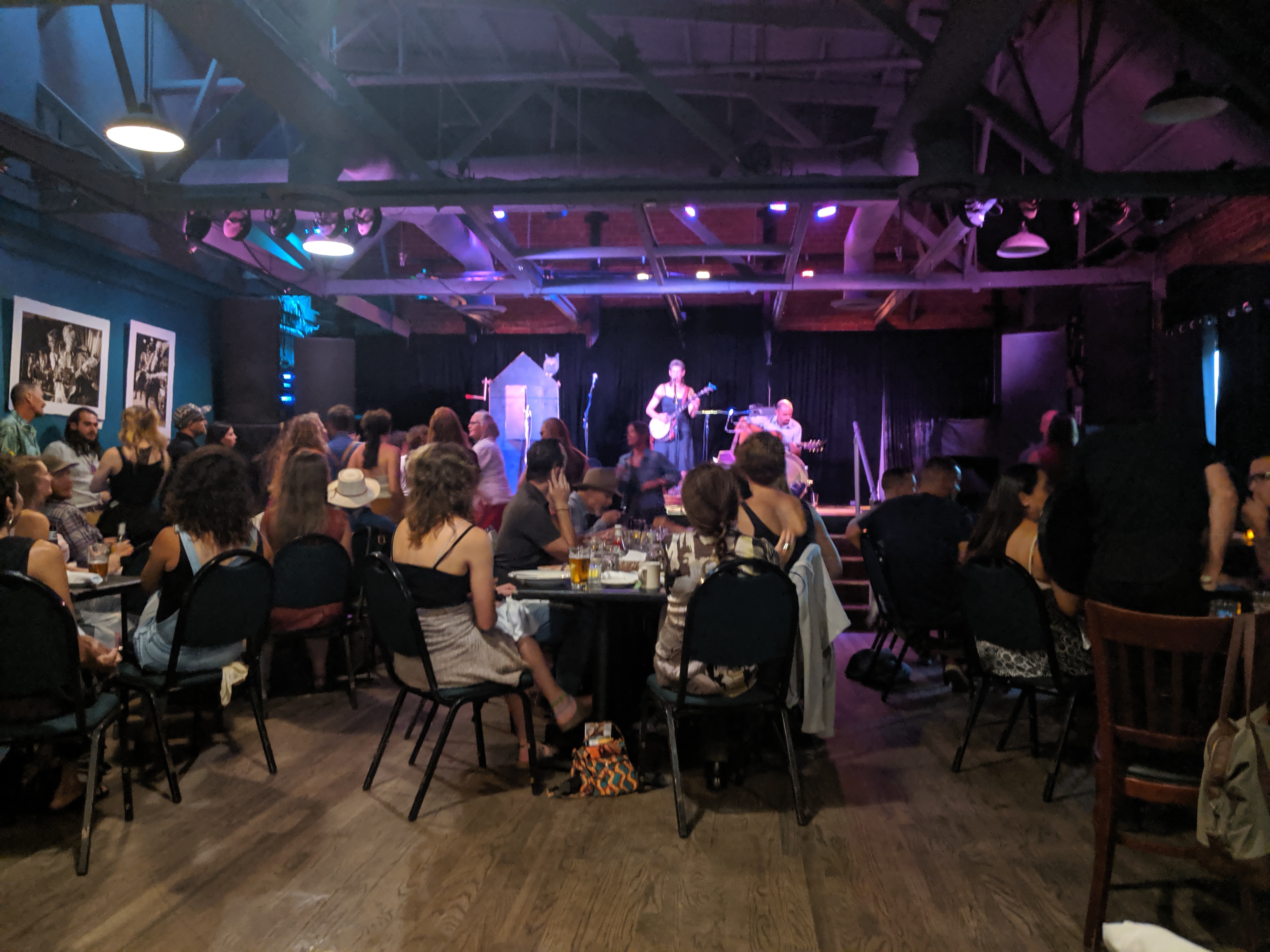
We were also lucky enough to catch a show at Soho featuring Jan Smith, a phenomenal local musician who also happens to be my aunt.
A few days later we
went to visit Jan at the eco-village where she lives, out in the
desert a couple hours from Santa Barbara. Usually teeming with
visiting groups and students, the property was quiet in the summer
heat. We stayed in a sweet little cob house that was constructed by a
teenage girl during one of the eco-village’s natural building
courses. (In my teenage years, I could barely construct a clean
outfit — but hey, we all walk our own paths, okay?)
Being back in Santa
Barbara reminds me of coming here as a beach-dazzled teenager, back
when anywhere outside of Iowa seemed boundless and exotic. I feel
fortunate to have had a rural childhood that was quiet but immensely
full, and also to have had the opportunity to roam and explore so
much as an adult. From here we’ll be venturing into more of the
unknown, but I’m happy to know our way will be blessed with plenty of
familiar faces.
We were sad to say goodbye to La Paz last week, but the homeland was calling, and we knew if we stayed much longer Sean would descend even further into his Mexican Coca-Cola addiction. We said our farewells and hit the road, heading back the way we came.
Adios, Baja!
Well, more or less the same way — I confess there was one instance where I neglected my navigational duties and took us down a country road that soon turned to gravel. By the time we realized my mistake, we’d gone too far to backtrack, and before long the gravel turned to large rocks — some of them menacing enough that I had to jump out of the car and hurl them out of the way to ensure that Watermelon’s dainty underbelly could proceed unscathed. It wasn’t that close to sunset and we weren’t that low on gas, and we did end up making it to our hotel with plenty of time to spare, but let’s just say we both spent a lot of time thinking about how we’d survive in the desert if it came down to it.
If only we could eat breathtaking vistas.
Other than that, the drive up was fairly uneventful, although we did discover that military checkpoints are considerably less nonchalant when you’re driving towards the States. It was a true test of our Spanish skills trying to explain to Mexican officials what all the weird crap in our car was. (Things like antihistamines and tarot cards and odor-eating charcoal bags just don’t come up very often in Duolingo lessons.)
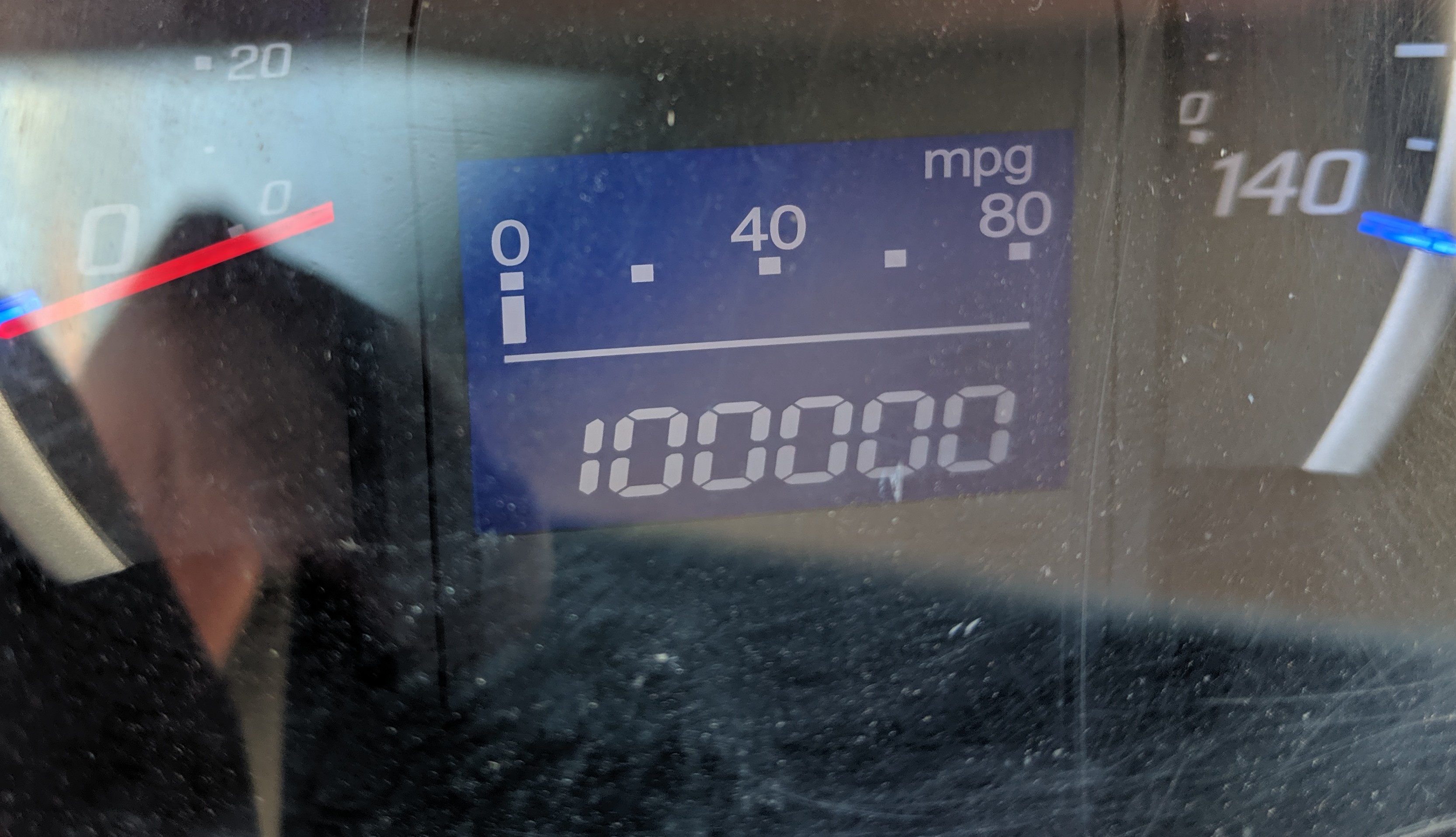
Just shy of Tijuana, we hit an exciting milestone:
That’s right, Watermelon is now a ripe 100,000 miles old. Gifts aren’t necessary, but she’d love to get a card. Ziggy is always nice. A check would be fine too.
After spending the night in Tijuana, we made our slow way back across the border and drove to our next stop: Joshua Tree.
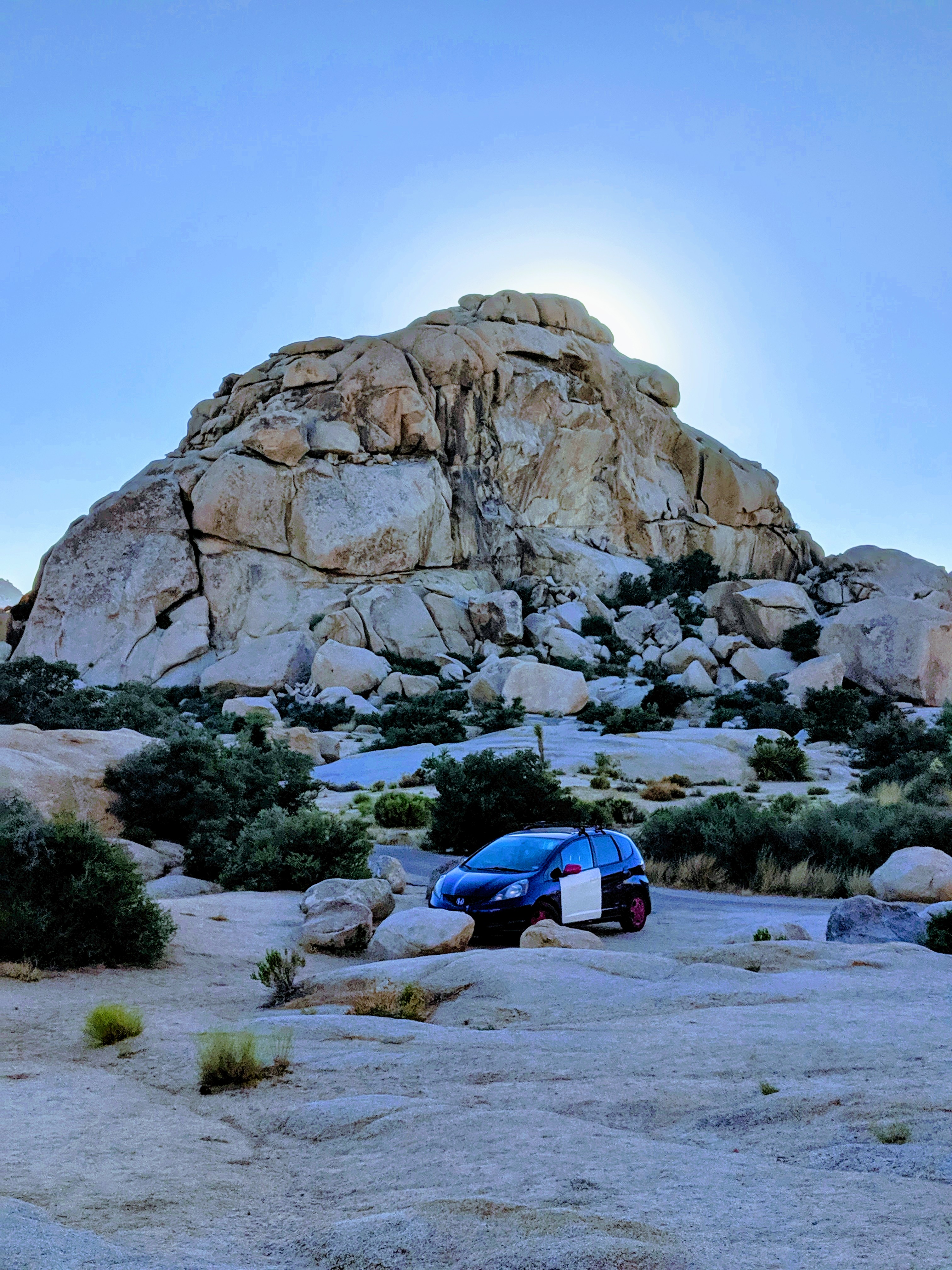
Even in the dead of summer, Joshua Tree was by far the most crowded park we’ve been to, but somehow it felt more remote and pristine than anywhere we’d camped so far. Maybe it was the quiet: whereas the other campgrounds were filled with bird chatter or insect songs, in Joshua Tree we barely heard a wing flutter.
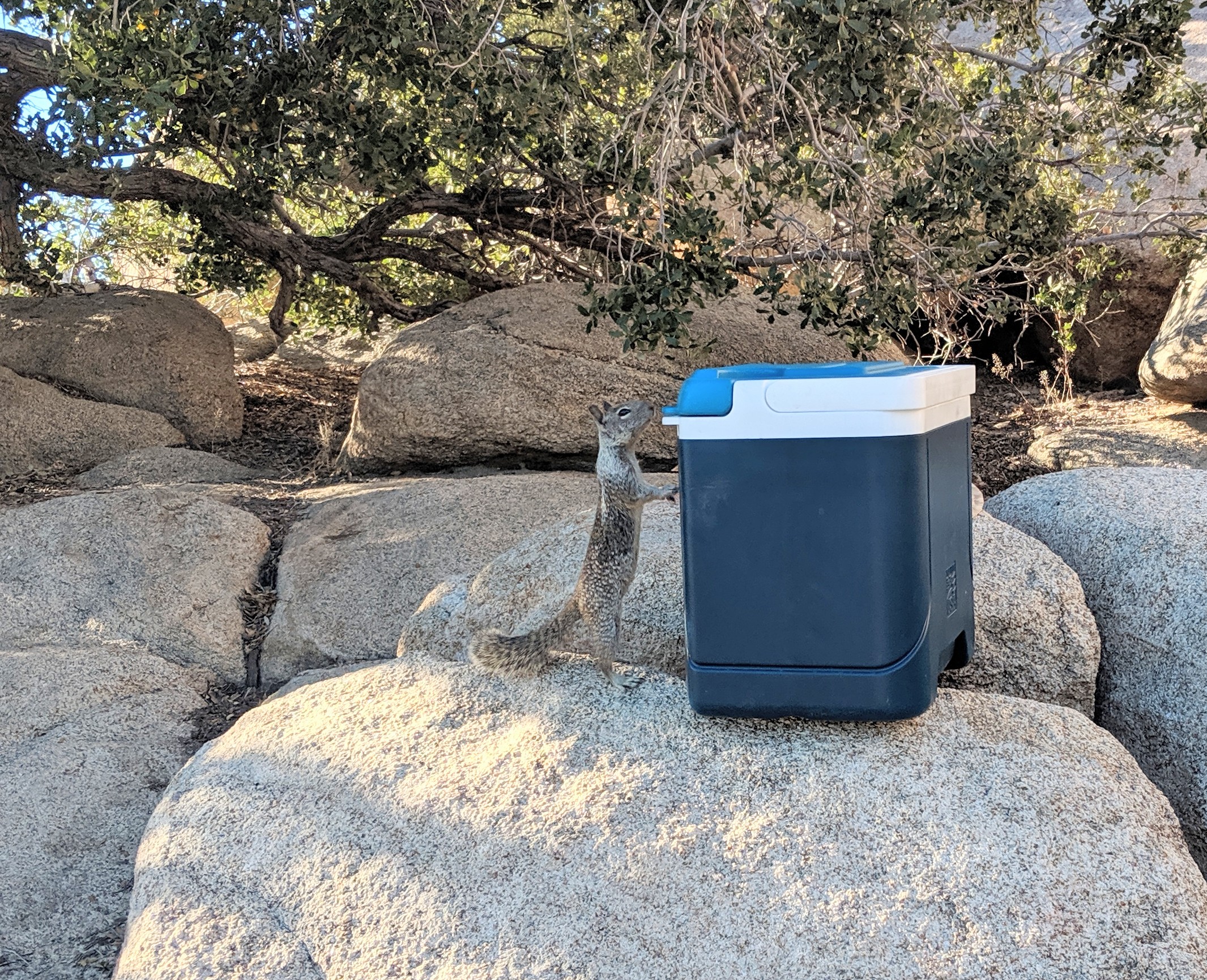
We did, however, have some uninvited guests.
In fact, much of our time at Joshua Tree was spent waging a rodent war of Caddyshack proportions. Every time we turned around, these disturbingly brazen creatures were infiltrating our food, water, beer and coffee supplies. They managed to devour an entire bag of guacamole chips, which I was hoping would at least cause them some mild intestinal discomfort, but it seemed only to cement their conviction that we wanted desperately to feed them and needed only to be shown how.
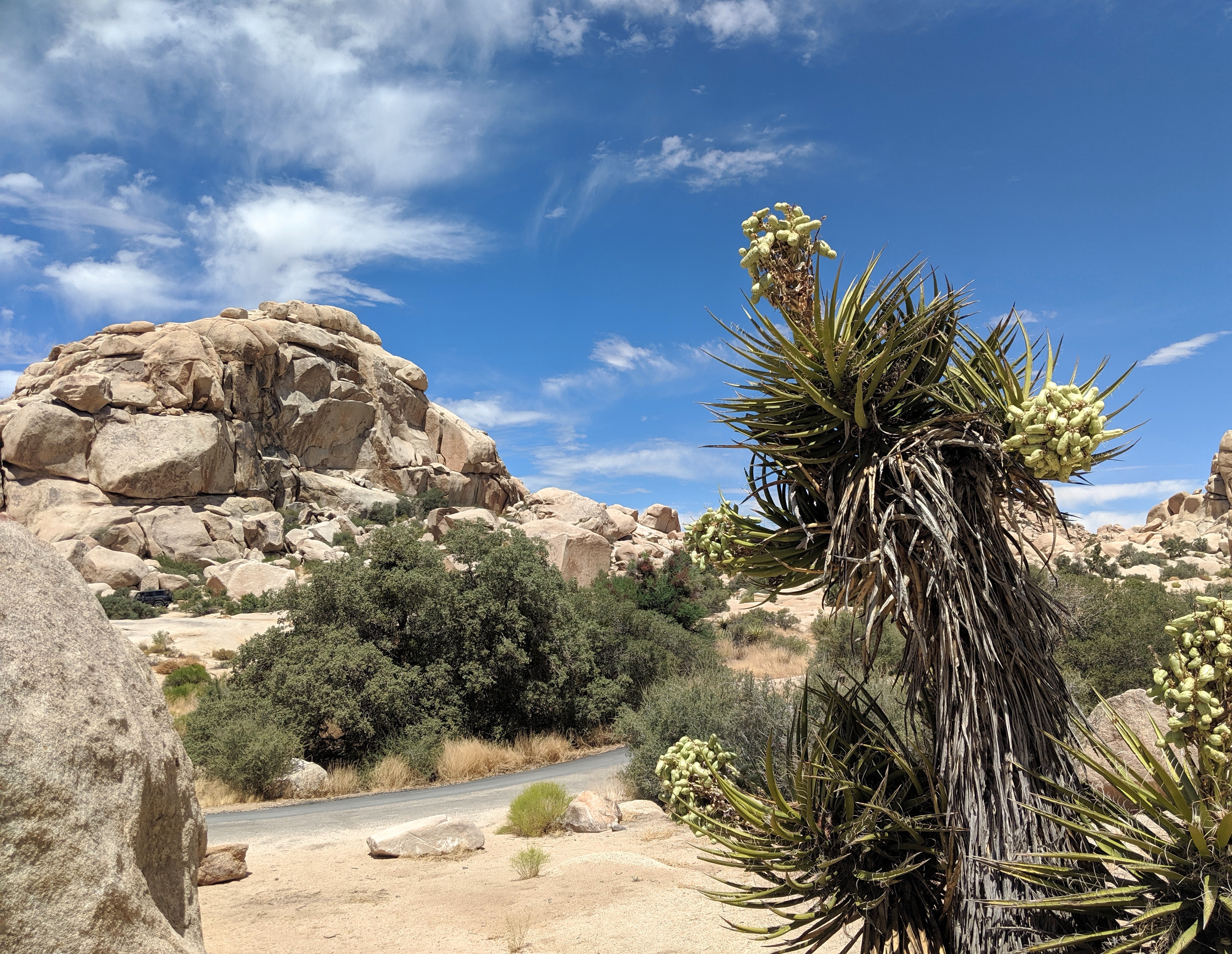
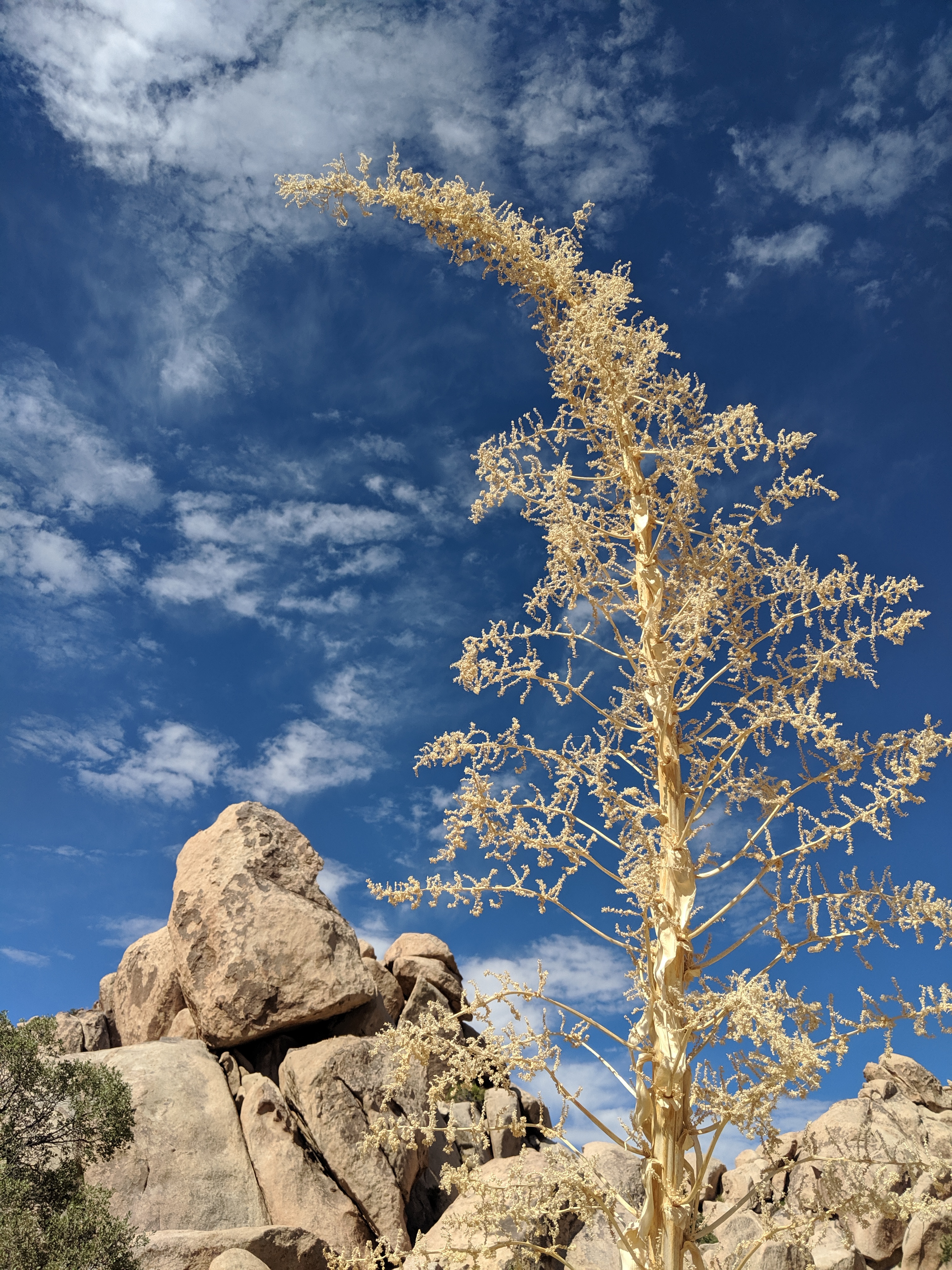
Nevertheless, after securing our comestibles, we managed to get in some very scenic hikes. I don’t know anything about rocks, but the ones in Joshua Tree look like giant pebbles stacked by a daydreaming child, piled in such improbable configurations that you can’t help but see whimsical shapes in them. It’s not unlike staring at a bunch of clouds.
When you’re just trying to get a cool rock picture and a tree totally photo-bombs.
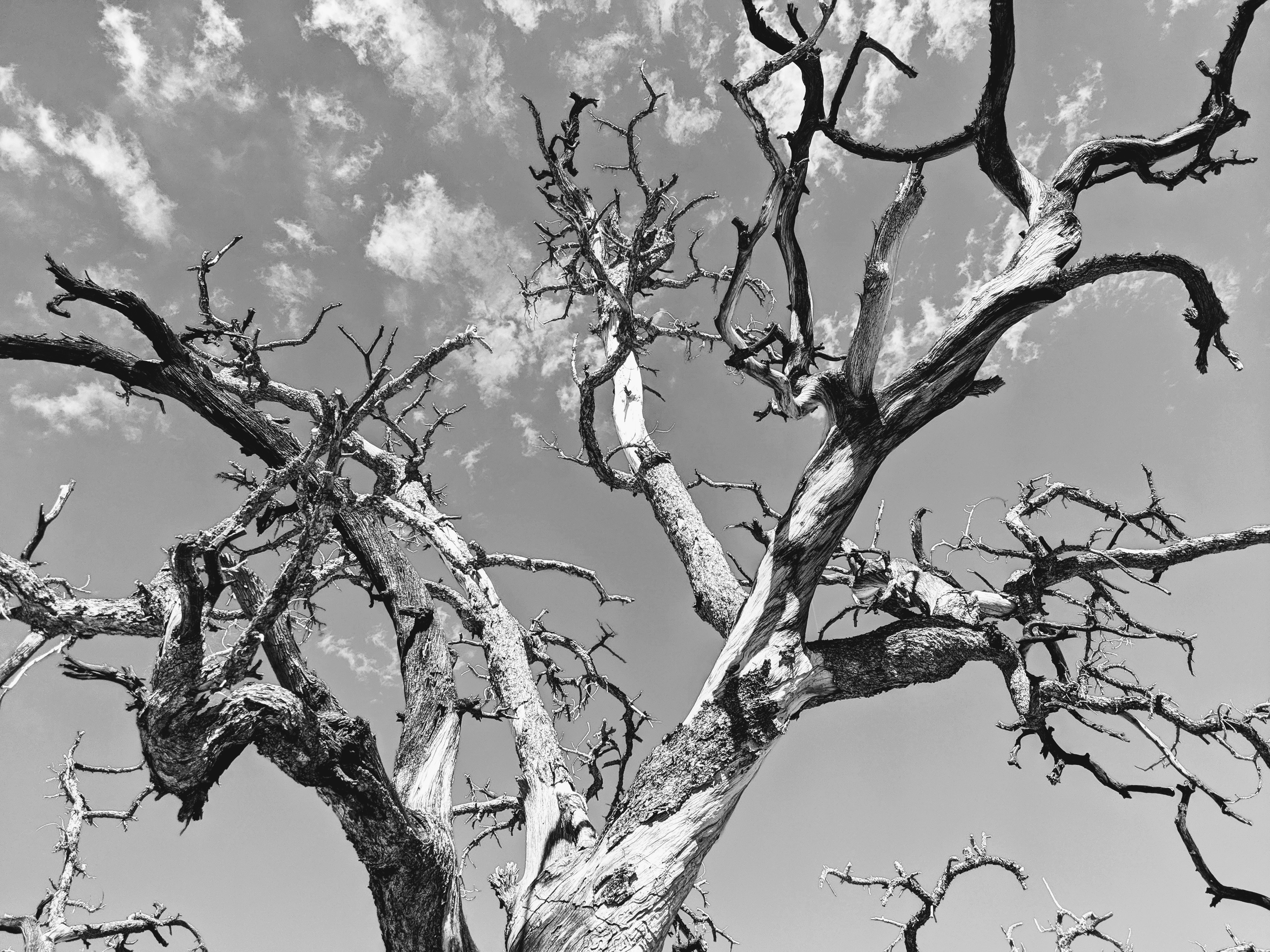
The trees themselves are equally tempting to the imagination — they seem to be frozen midway through some frantic gesture, like hands grasping at the sky. They also have surprisingly shallow roots, so you frequently see them listing at precarious angles or collapsed entirely in the sand, like a desert traveler crawling towards water.
We kept these hikes short, however, because as soon as the shadows receded under the scorching mid-day sun, we were like ants under a magnifying glass. On our first day I made the mistake of trying to prepare lunch at noon and nearly burned myself on the silverware I’d set on the picnic table just seconds before.
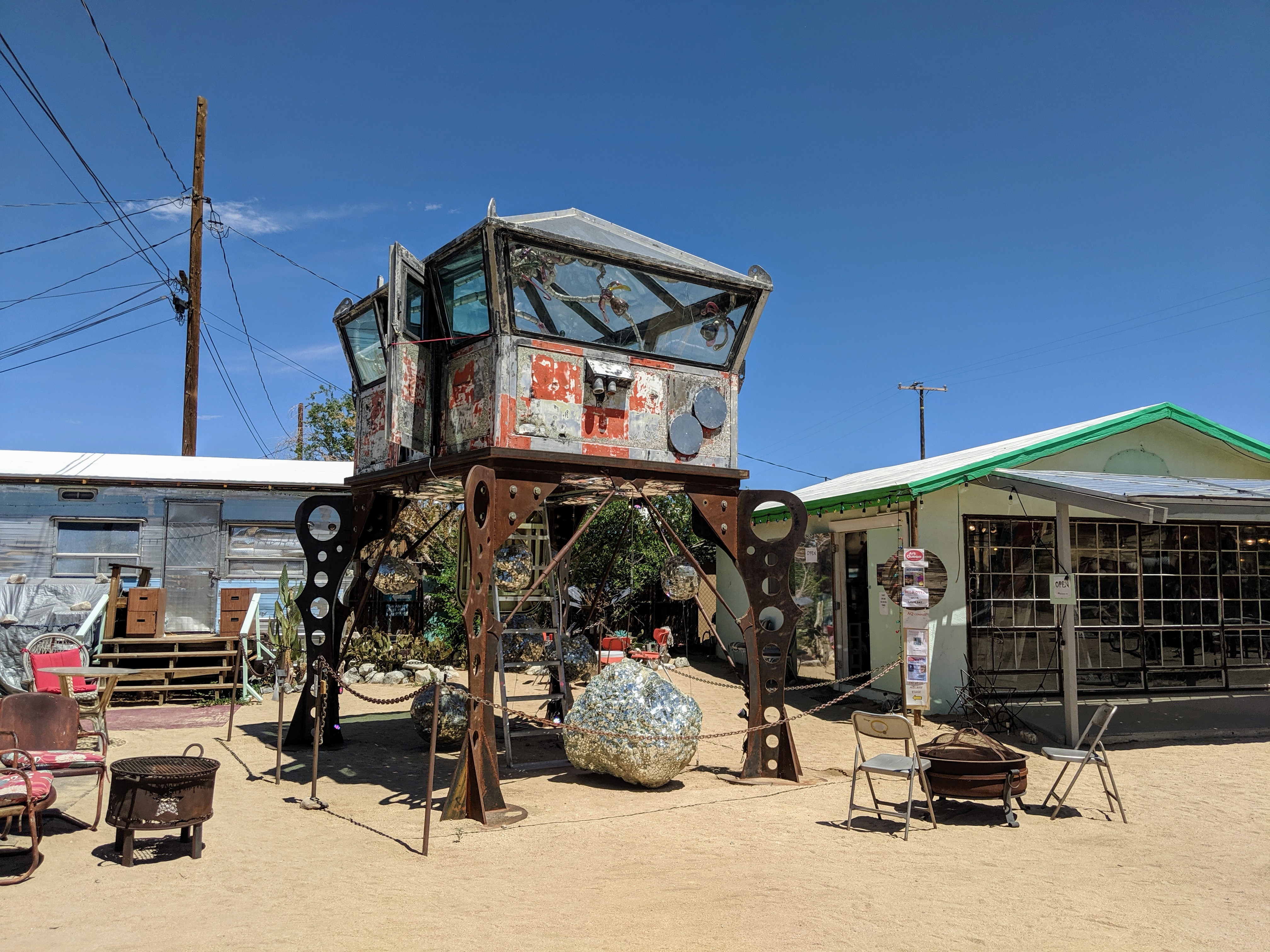
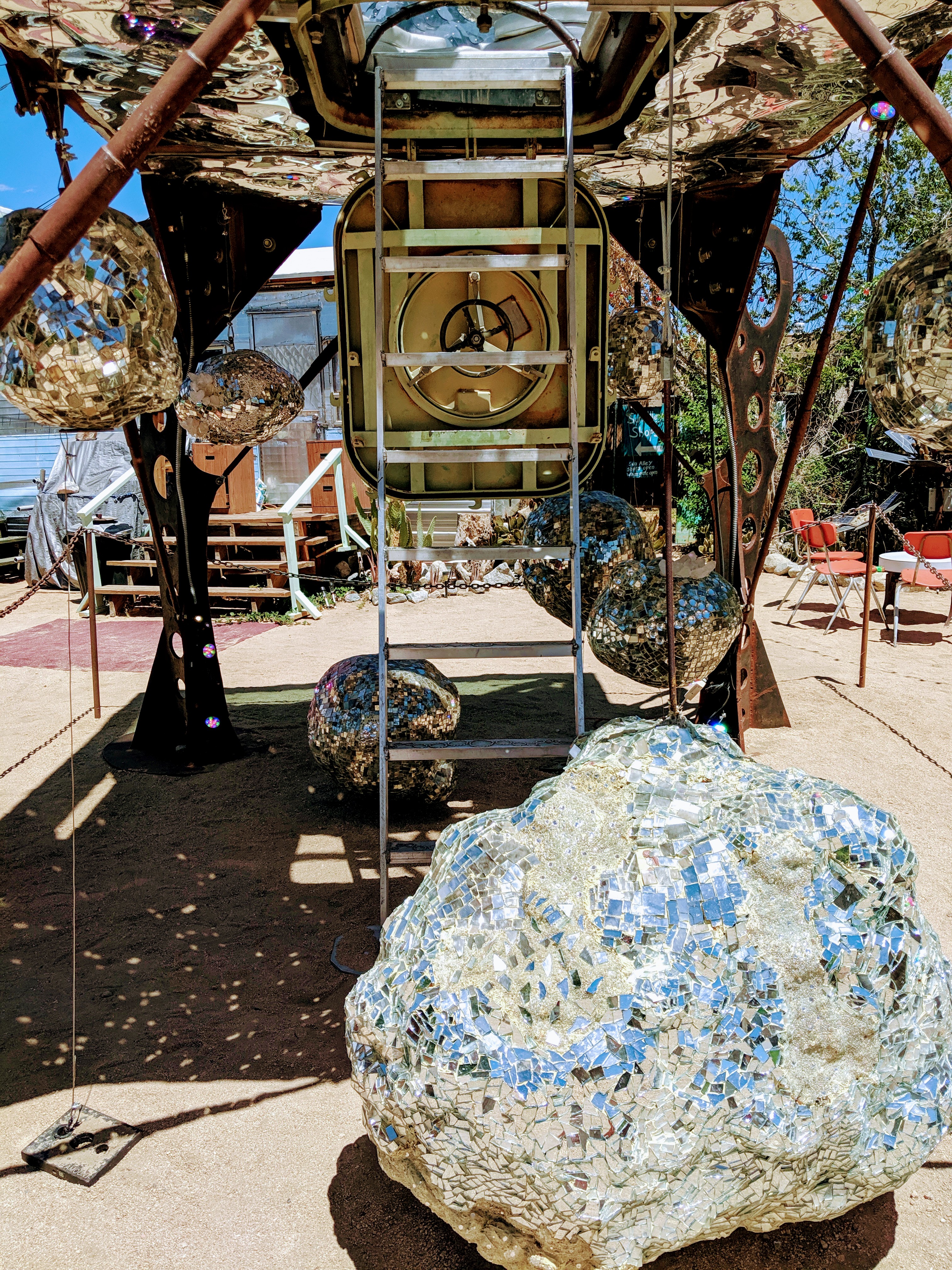
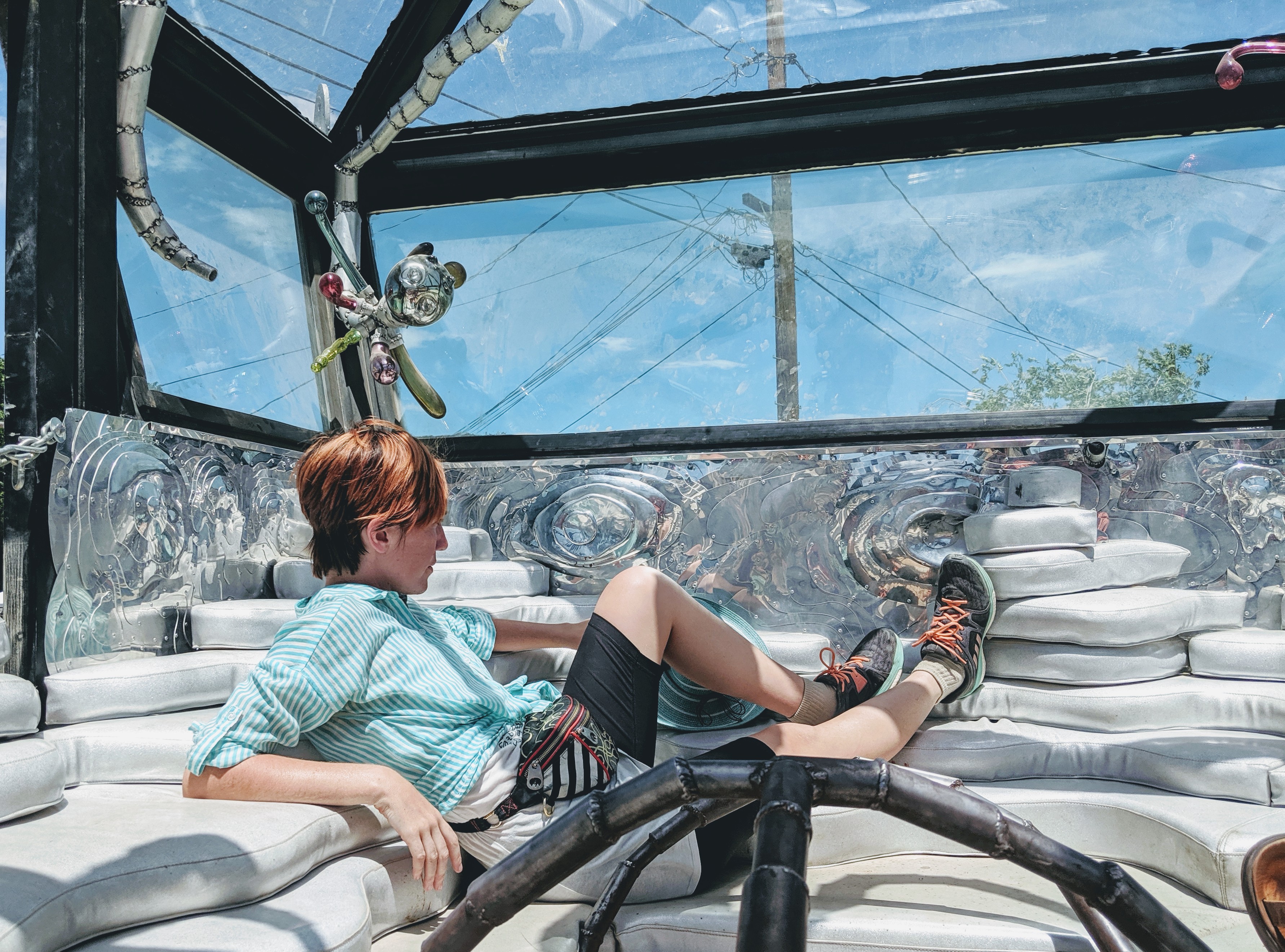
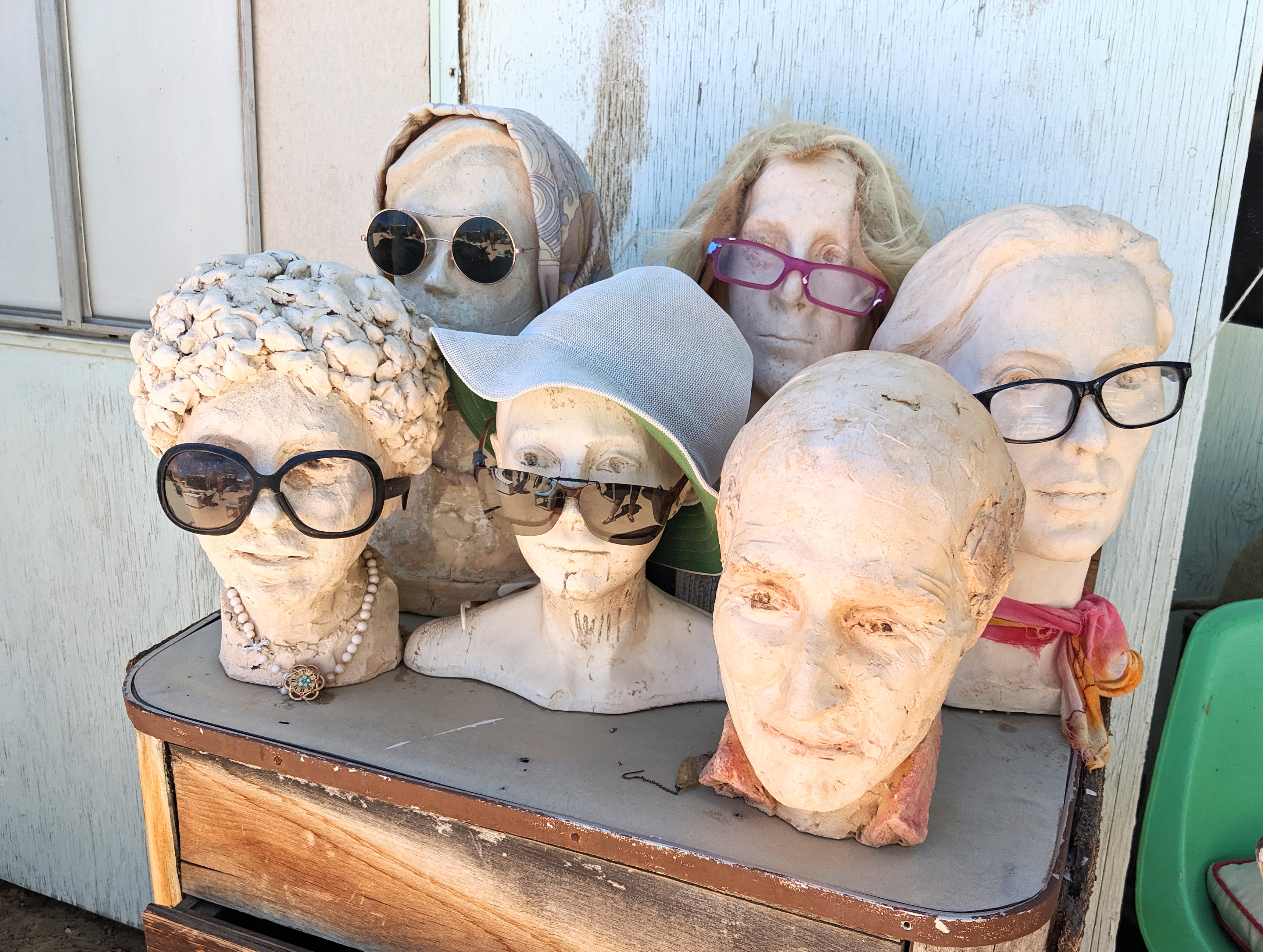
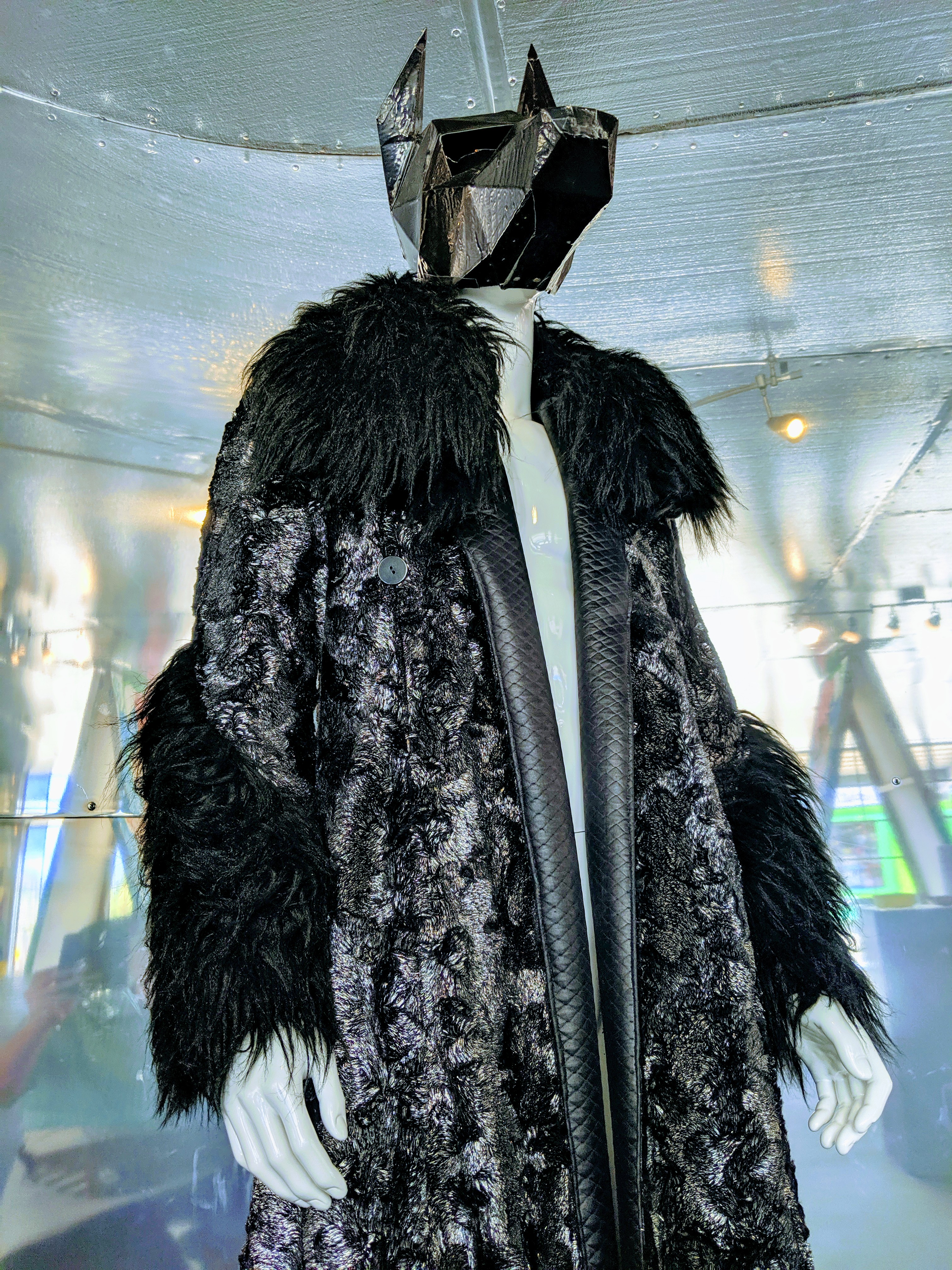
For those particularly punishing hours, Sean and I ventured into town to explore. On the main drag we found a little gathering of weird galleries and shops, and we happened across a loosely defined outdoor art space that featured a spaceship-like construction with revolving disco boulders.
All the people we talked to (except the mannequins) was friendly and helpful, giving us suggestions for coffee-shops, bars, galleries, and tourist attractions. Following one tip, we drove out to a little Old West village called Pioneertown, which has served as a film set for famous westerns over the years such as, I kid you not, “The Gay Amigo.” The town is also home to a famous bar called Pappy and Harriet’s, which, in spite of its remote location, boasts such big names as Paul McCartney and Lorde in its roster. (We didn’t see any superstars, but their nachos were divine.)
After Joshua Tree, our trajectory will take us steadily Northward, which will bring a welcome change in climate. I love the desert, but we only have so many layers of skin left between the two of us.
Next we’ll be heading to Santa Barbara for a little dose of perfect weather (and to see some dear friends and family). Will we stop in L.A. and get famous real quick along the way? Probably. Stay tuned.
First and foremost, we have an introduction to make:
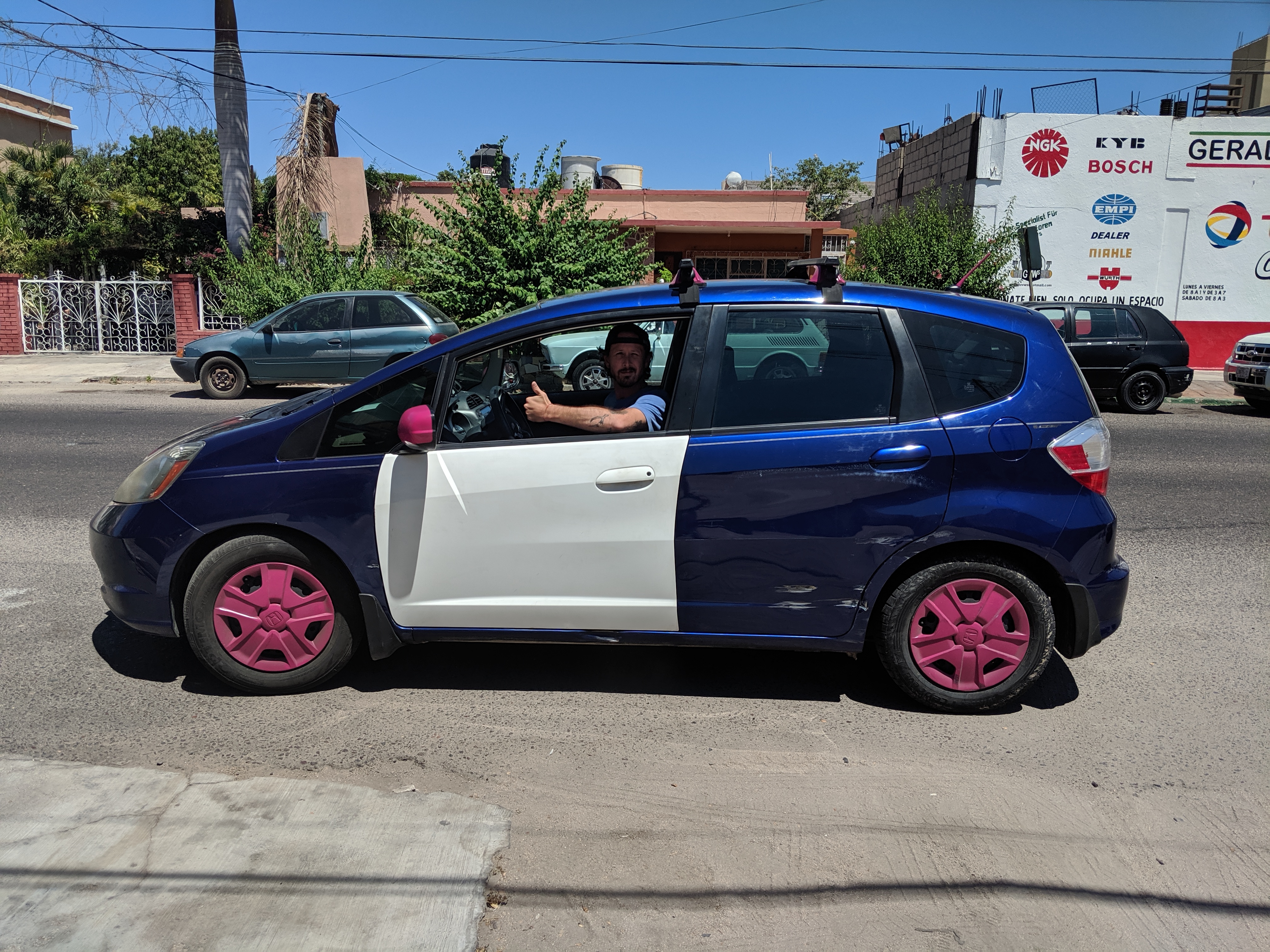
Yes, our dear Watermelon is now Watermelon 2.0. (Or Frankenmelon, if you prefer). With any luck, this will be her last non-elective surgery on this trip. Sean has made up a song that goes “el carro es azuuuul, but la puerta es blaaaanca…”
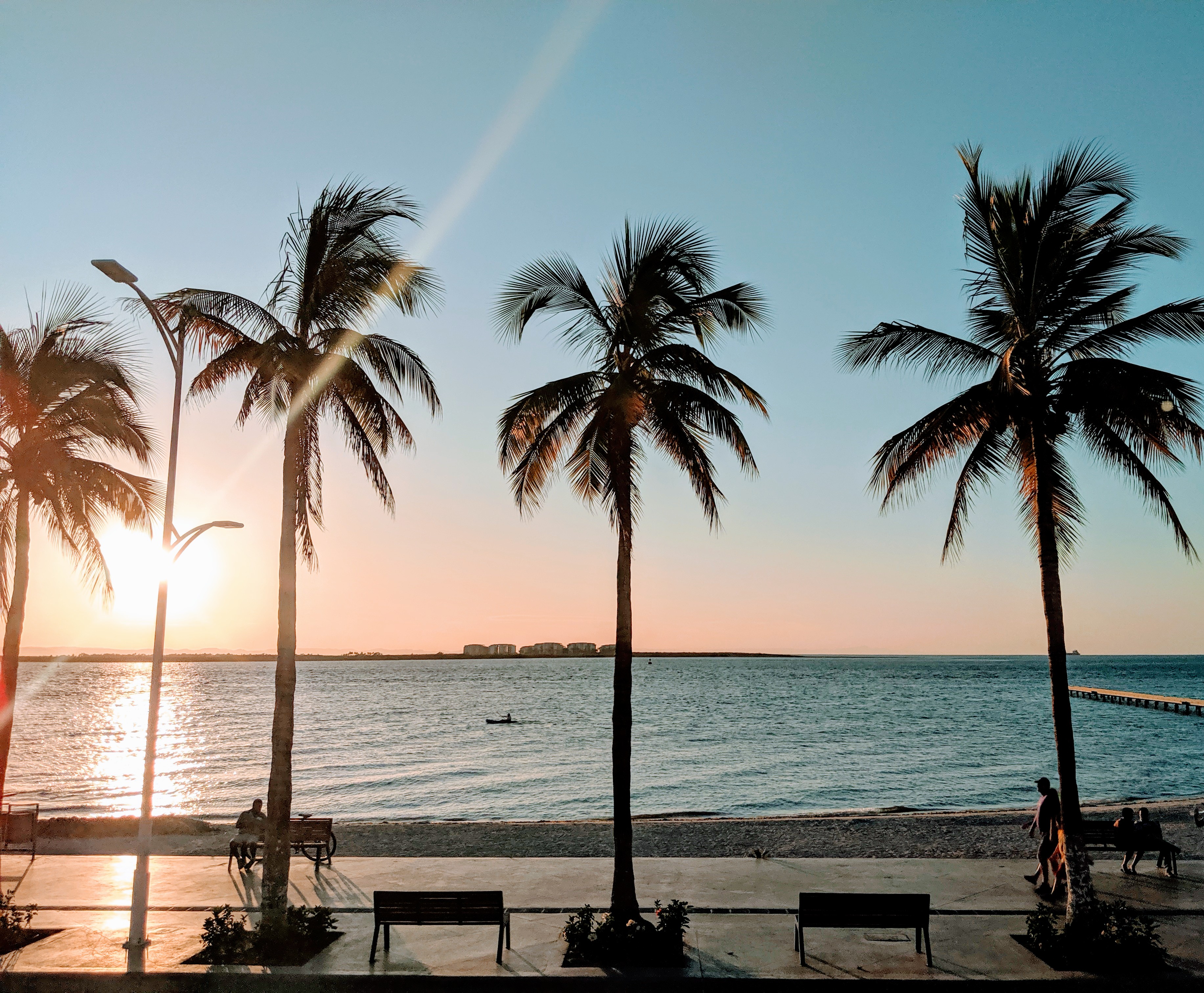
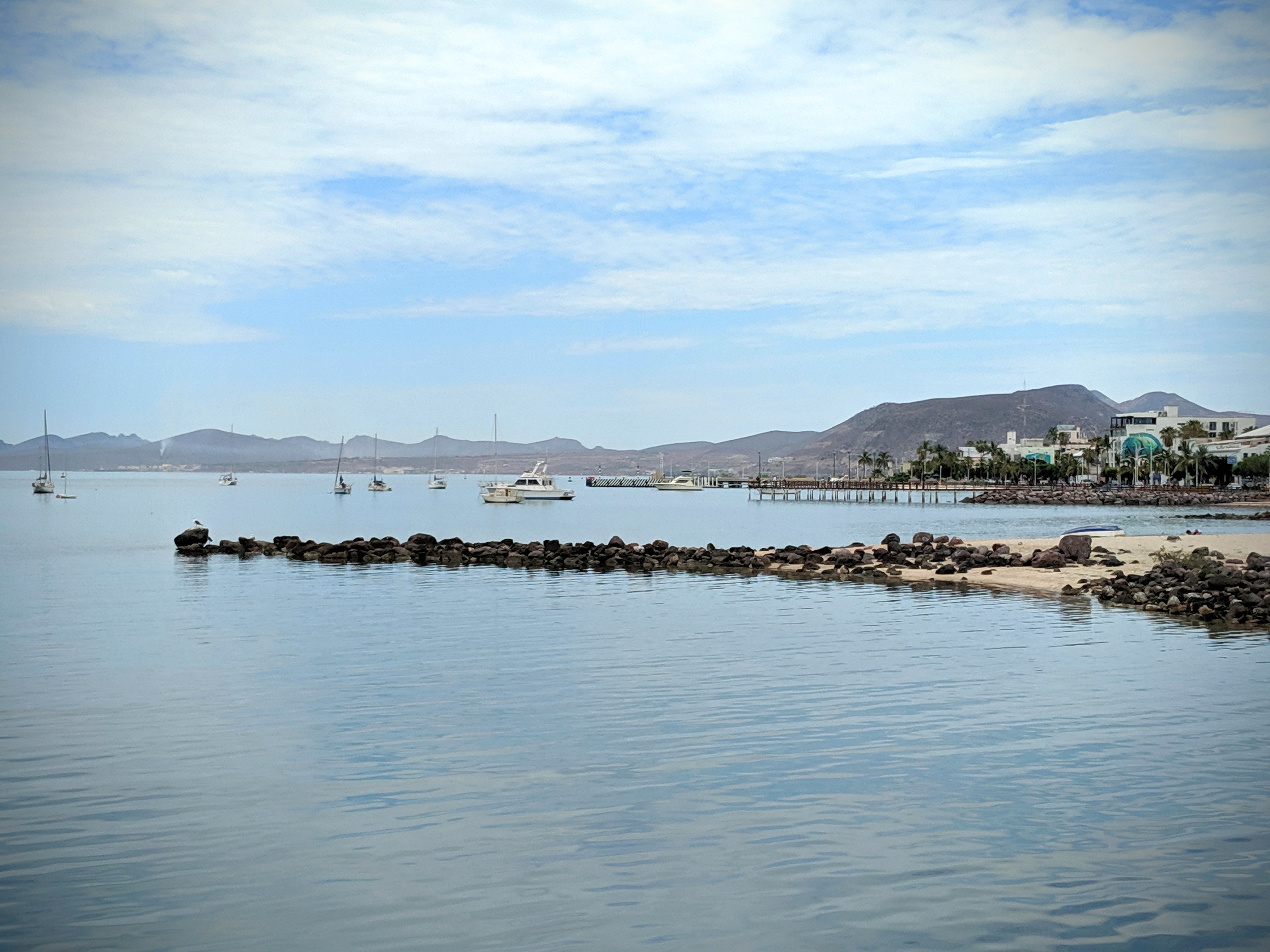
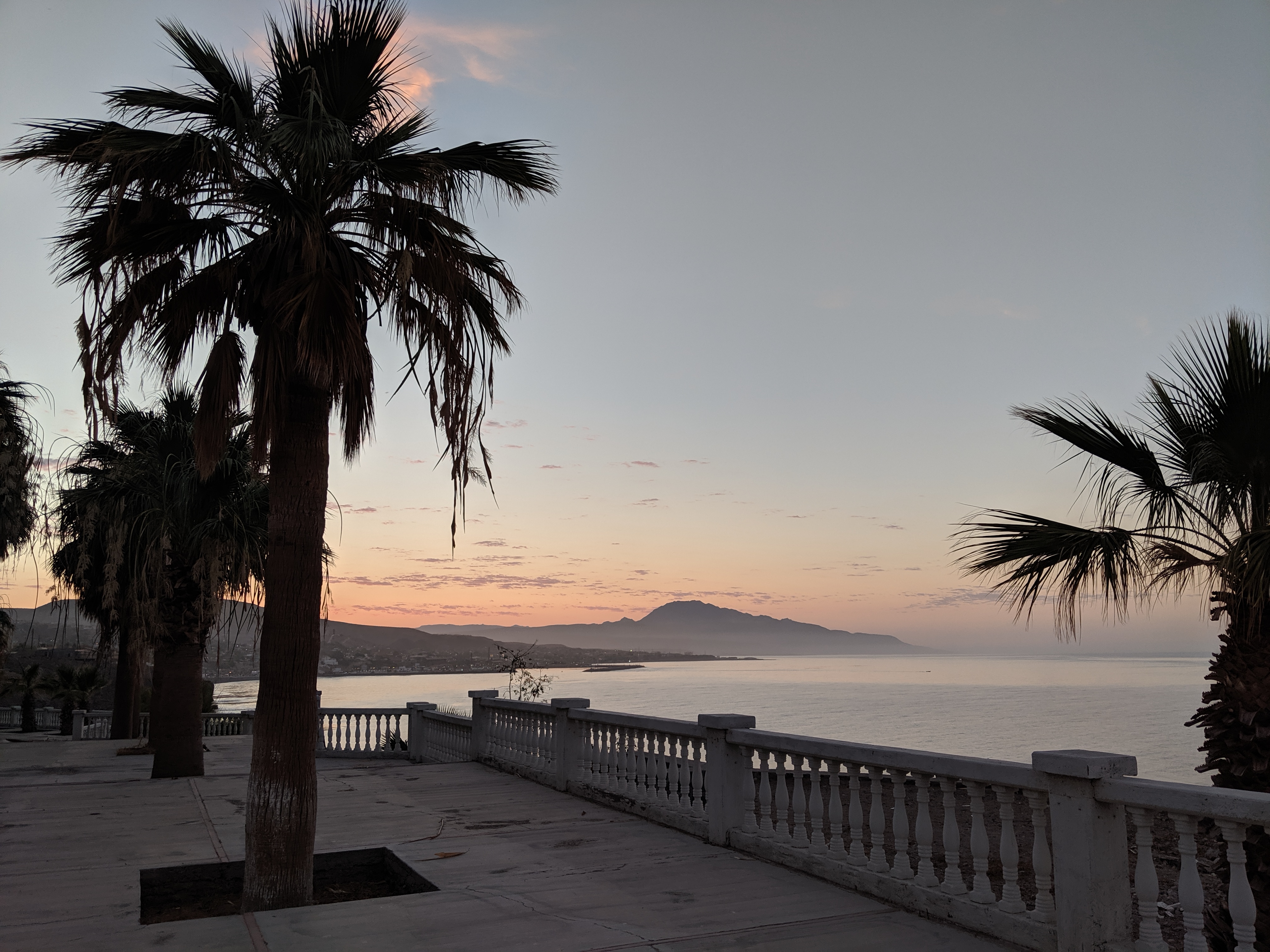
Fortunately, La Paz is a very walkable city, so there was plenty to do while we waited for the new door to arrive. Actually, do might be an overstatement — to be honest, my favorite activity in La Paz is just roaming up and down the malecon with a belly full of burritos, watching the sun go down.
I’ve been coming to La Paz for about 3 years now, ever since my dad moved down here to fix up a sailboat in 2016. While it’s a far cry from the party havens of Cabos or Cancun, La Paz sees its fair share of foreign visitors — mostly tourists seeking glimpses of local wildlife, or a respite from that bane of all earnest travelers: other tourists.
Even in the high season, however, La Paz always feels amicable and relaxed, free of that peculiar tension that often arises — at least in the U.S. — between locals and visitors.
In the dead of summer, the streets are sparse in the daytime, everyone hurrying towards the promise of air conditioning on their midday errands. As the sun goes down, however, thebeachside paths are teeming with bodies in motion: families out for a stroll, resolute joggers in Spandex and hip weights, young couples sharing ice cream, children zooming through a sea of legs on their toy cars and tricycles. Someone is always camped out under a thatch umbrella with a pair of speakers piping Mexico’s Top 40 into the night air. Someone is always watching their children splash into the water one last time before the sun goes down.
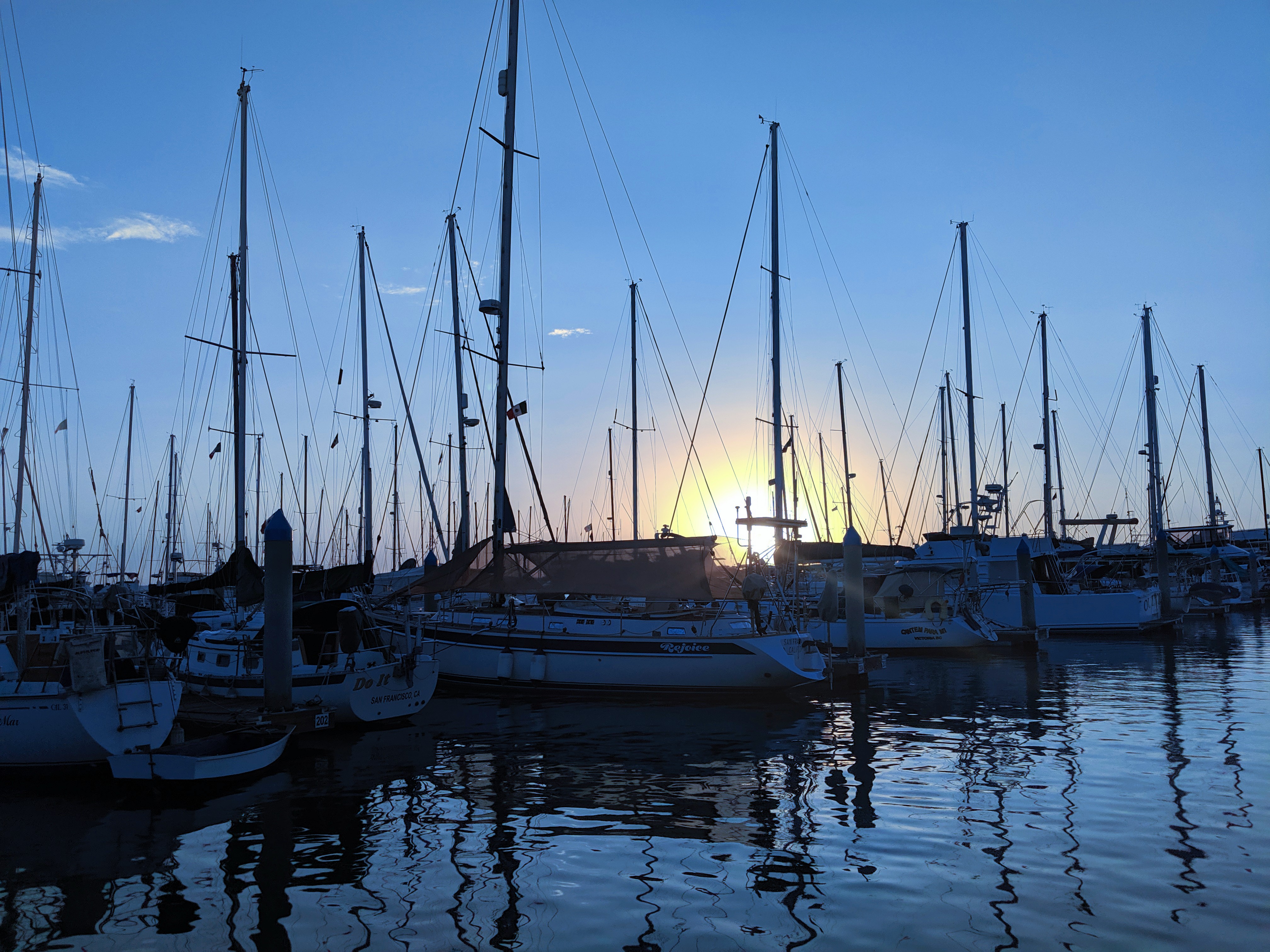
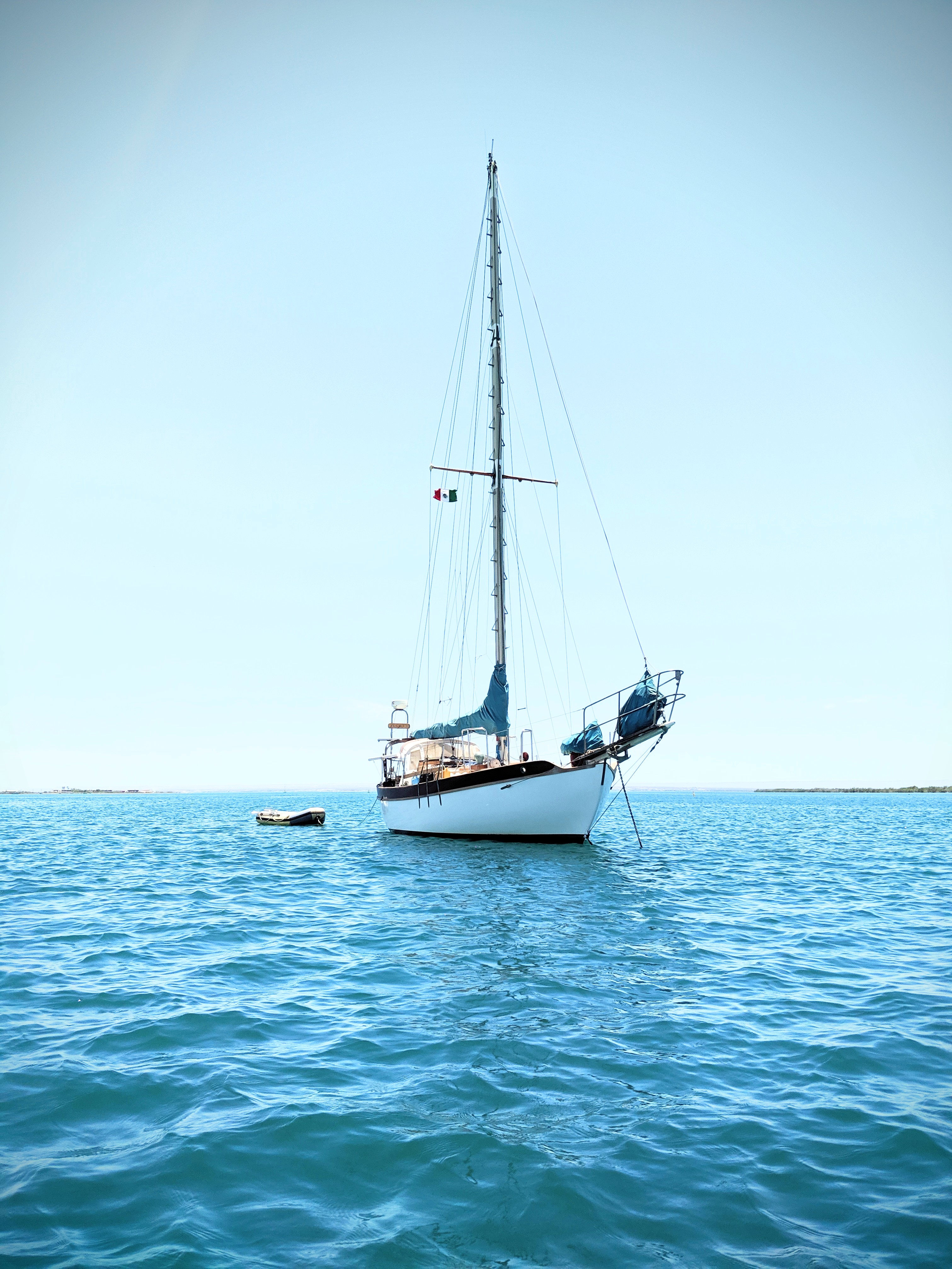
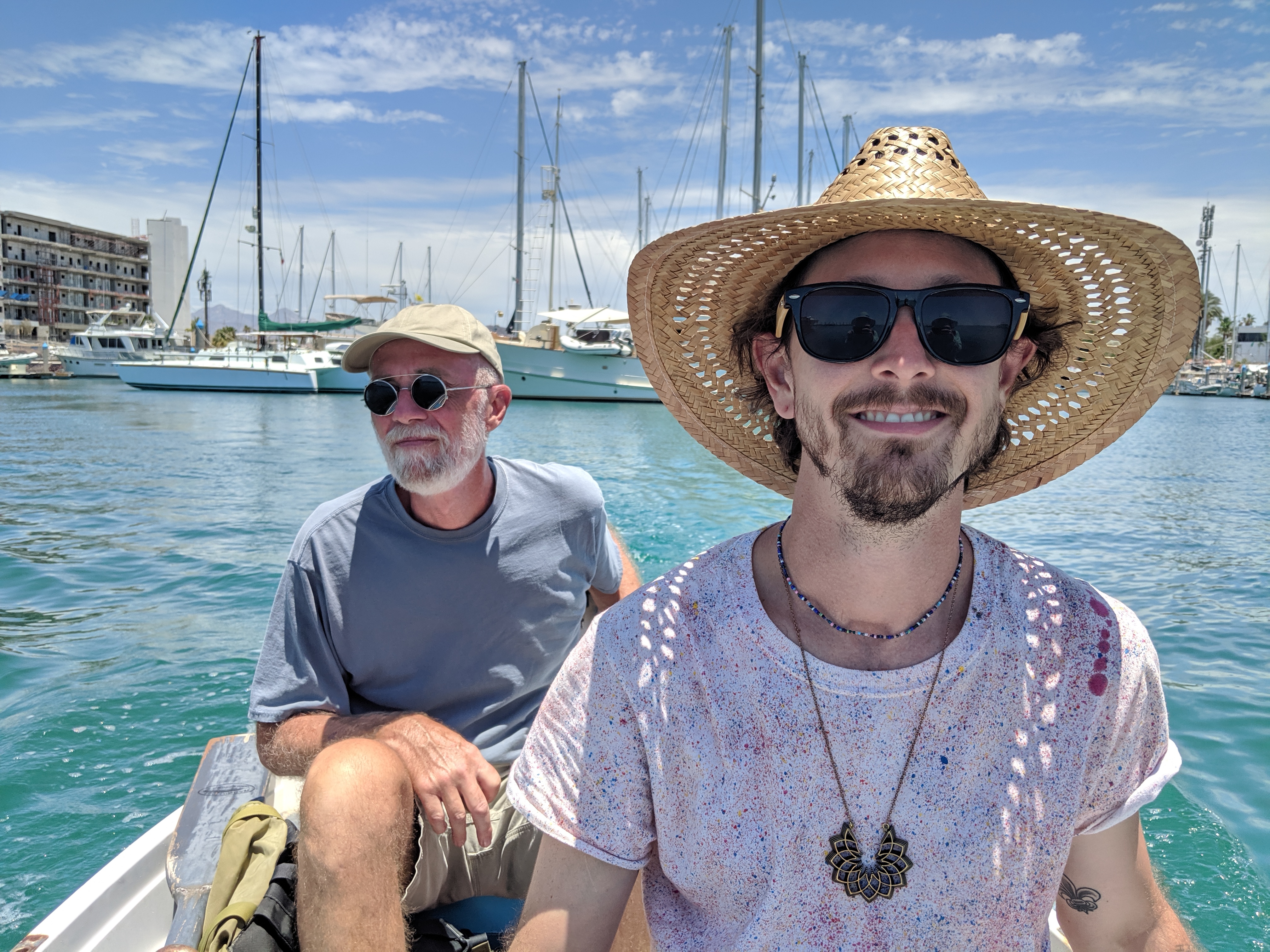
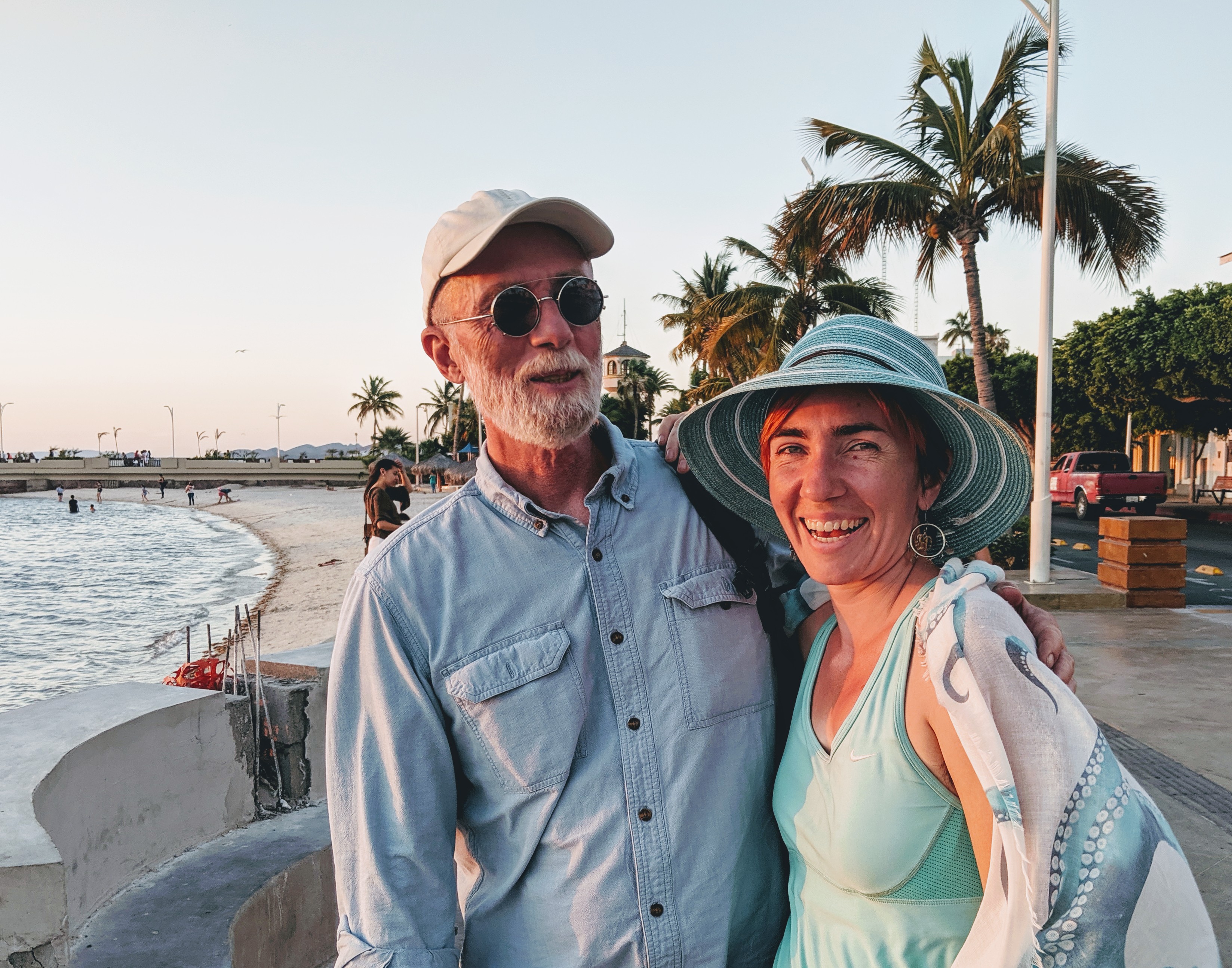
When I tell people my dad lives on a boat in Mexico, they often assume that he’s some sort of retired investment banker living on a yacht in Cancun. The reality is much less extravagant, but significantly more charming: the good ship Thinkabout is a 30-foot Westsail that “drinks six, eats four, and sleeps two.”
Once we’d gotten our bearings on land, Dad dinghied us out to the boat and gave Sean the grand tour. We went for a dip when the current died down, and within minutes a small band of dolphins passed by, just meters away. (Sean, who’d just been asking some friendly but urgent questions about the prevalence of sharks, did not react with immediate delight.) Dad told us there’d been a pod hanging around his boat for the past few weeks, some of them babies.
After three days of tense mountain driving (and the whole, uh, stop sign situation), Sean and I are more than ready to let the city of peace work its magic on us.
The journey from San Diego to La Paz, BCS took about three days of driving. (We could have done it in less, but the narrow mountain roads inspired a cautious pace.) We got off to a rough start, mainly because I misread my dad’s very specific instructions and drove past the office where we were supposed to buy our tourist visas. Once we realized this, we attempted to backtrack, but inevitably found ourselves funneled into the huge, crawling line to get back into the U.S.
It took about an hour for us to reach the border, inching forward while a wide variety of industrious street vendors offered us everything from tacos to crucifixes to Frida Kahlo aprons. When asked why we were entering the U.S., we explained that we were just trying to get to Mexico.
At long last, we managed to get back across the border, obtain the proper documents, and start making our way South. Most of our drive would take place on Highway 1, which meanders down the length of the peninsula and offers stunning views of both the Pacific Ocean and the dreamy blue-green Sea of Cortez.
The view from Hotel El Morro in Santa Rosalia.
Aside from El Rosario and Santa Rosalia, where we spent our first and second nights, towns were few and far between. A couple times we saw signs for gas up ahead, only to realize that this referred to a truck parked by the side of the road with a few gas cans in the back.
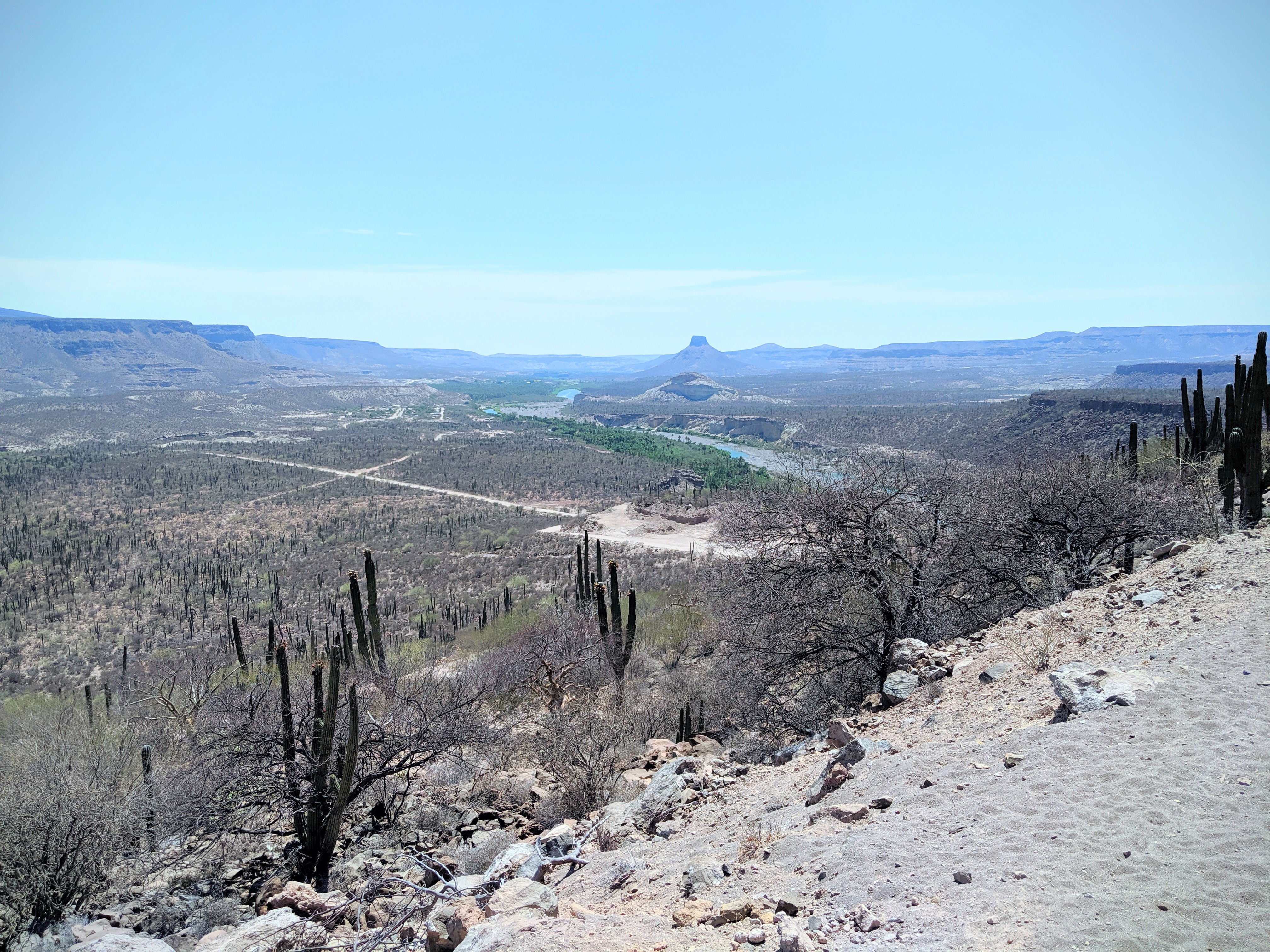
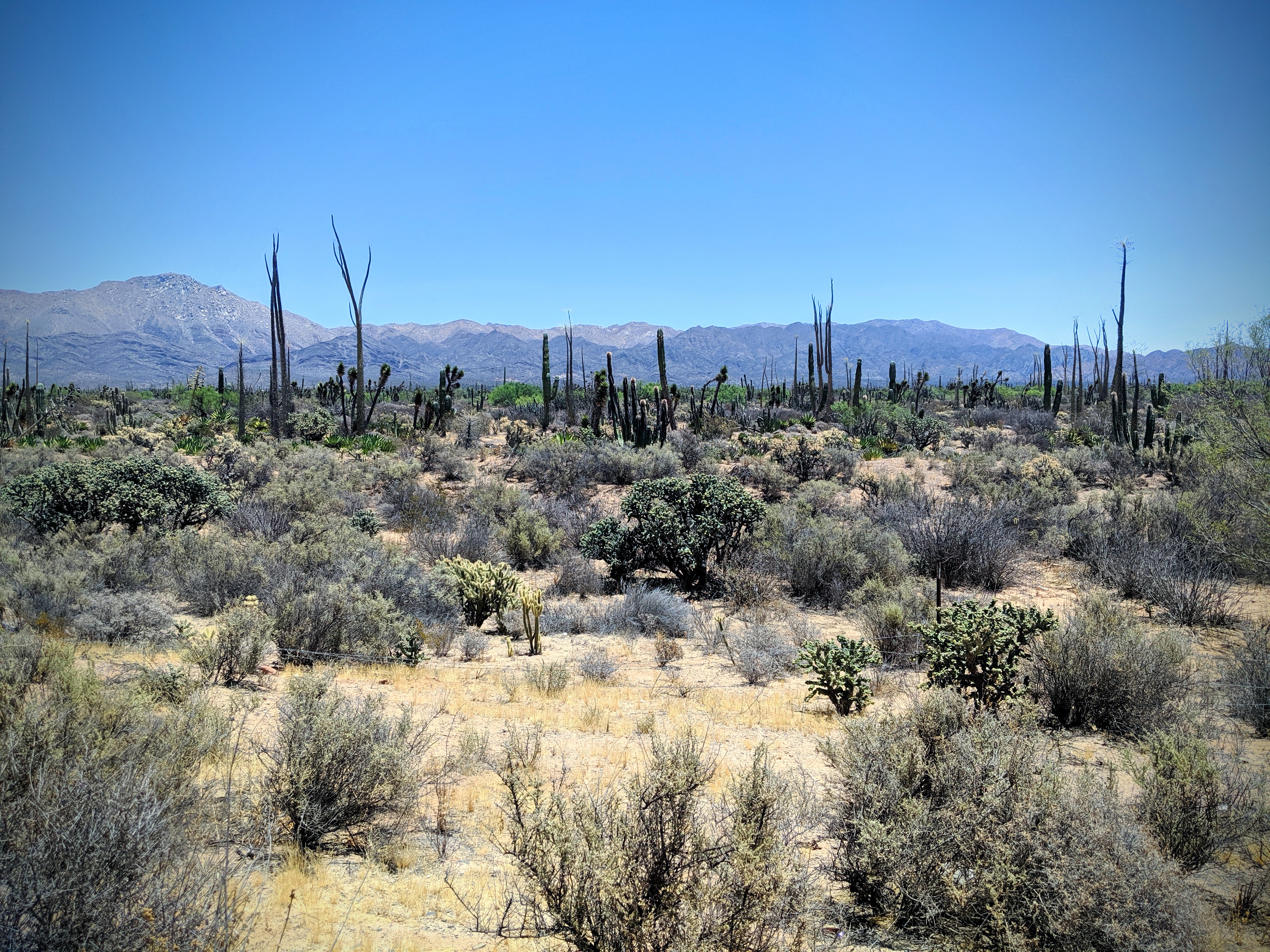
We drove through hundreds of miles of parched desert, surrounded by blue-grey mountains and towering saguaros, the occasional burst of forsythia. Further South, we encountered a new kind of tree, tall and skinny with stubby little branches and a single tuft of greenery on top — sort of like if trees went through an awkward teenage phase. I was delighted to learn that this tree is called a boojum, a reference to Lewis Carroll’s “The Hunting of the Snark.”
The roads down to La
Paz were, to say the least, nail-biting. Each time a car flew past us
in the opposing lane, I felt a flash of terror and saw us tumbling
into the valley below. As a passenger, the best tactic seemed to be
to keep one’s eyes closed and trust the driver and God, but our
looping trajectory made me nauseous every time I took my eyes off the
road. Instead, we both spent most of the three-day drive braced for
impact.
It seemed especially
ironic, then, when we got into a car accident two blocks from our
hotel in La Paz.
As with any city, the traffic in La Paz has its own particular rhythm that doesn’t always reflect the exact letter of the law. People tend to roll through stop signs as long as the intersection is clear, and, perhaps because of their apparent insignificance, these stop signs are often tucked into the far corner of the street and obscured by trees or vehicles. Unfortunately, I missed one such stop just as another car was running their stop. The other driver slammed into our side, tearing a wide gash in the door and spraying safety glass across our laps.
After the initial shock, it was clear that no one was hurt, and the damage to poor Watermelon was mainly cosmetic. Dad was only a few blocks away, and before long someone stopped and offered to help us translate to the cops. The man who’d been driving behind me generously waited around in the hot sun to testify that he’d seen the other driver run the stop sign too.
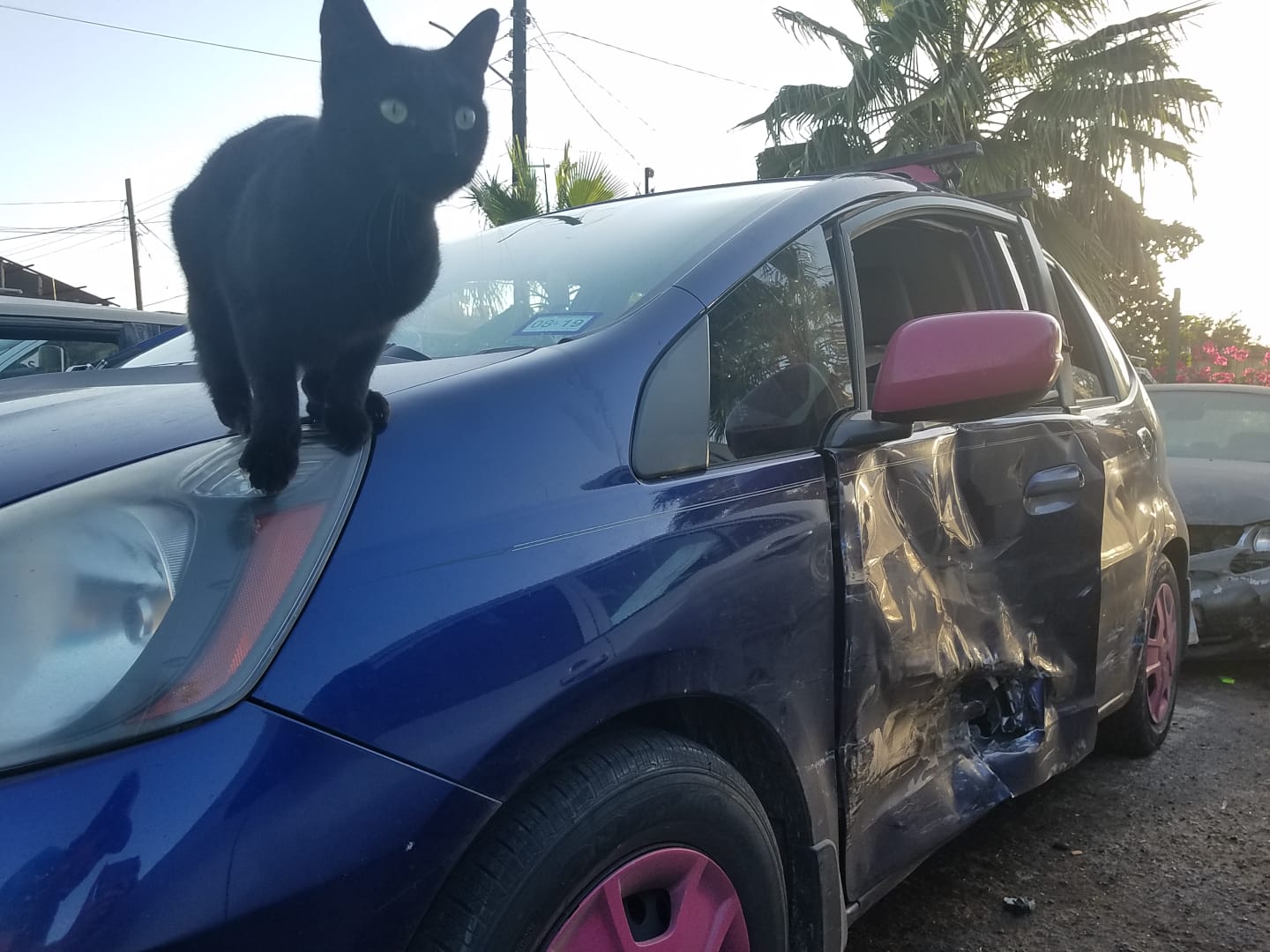
In the end, the cops determined that we’d both been at fault and would both pay for our own damages, which was probably the best case scenario considering all we needed was a new door. After a long, tense hour in the La Paz police station, waiting for the reports to be finalized, I happened to look out into the parking lot and saw what I thought was a piece of black plastic flapping on top of our car. Upon closer inspection, I realized it was a small black cat happily bathing herself on our roof.
Some might consider this a bad omen, but this little gato was a dead ringer for our own black cat, Phoebe, which we chose to take as a good sign. After all, if a choque was in our destiny, it happened in pretty fortunate circumstances. Replacing the door will be considerably cheaper here than in the U.S., and, as Sean pointed out, there’s always the chance that we’ll get a really cool mismatched door and Watermelon will look even more fly.
In the meantime, at least we’re in a beautiful place with one of my favorite people. Maybe destiny’s in our favor after all.
Driving out of Santa Fe, we’d expected to hit a gas station, but instead found ourselves on another endless stretch of desert with the needle nosing towards empty. Neither of our phones had a signal, so we wound up stopping in a small town called Madrid to ask where the nearest station was.
At this point, several nights of incomplete sleep cycles had left me decidedly short of cheerful, but my crankiness waned as we walked through Madrid. This was exactly the sort of place that inspired me to take roadtrips in the first place: although we soon learned that Madrid was home to only about 300 people, the main street was stuffed with colorful galleries, restaurants, and jewelry shops. We talked to one gallery owner who said she’d stopped in Madrid (firmly pronounced MAD-rid by the locals) in the 80’s and bought property there within the week. The jewelry salesman showed us his collection of cerrillos turquoise, a soft, aqua-tinted variety that had a smoky quality when unfinished. Everyone told us we had to go to Harvey the chocolate maker, whose generous samples and Wonka-esque wackiness lived up to their reputation. When we stopped in the bar to ask about a gas station, two day-drinking locals kindly offered to proffer gas cans from their own homes.
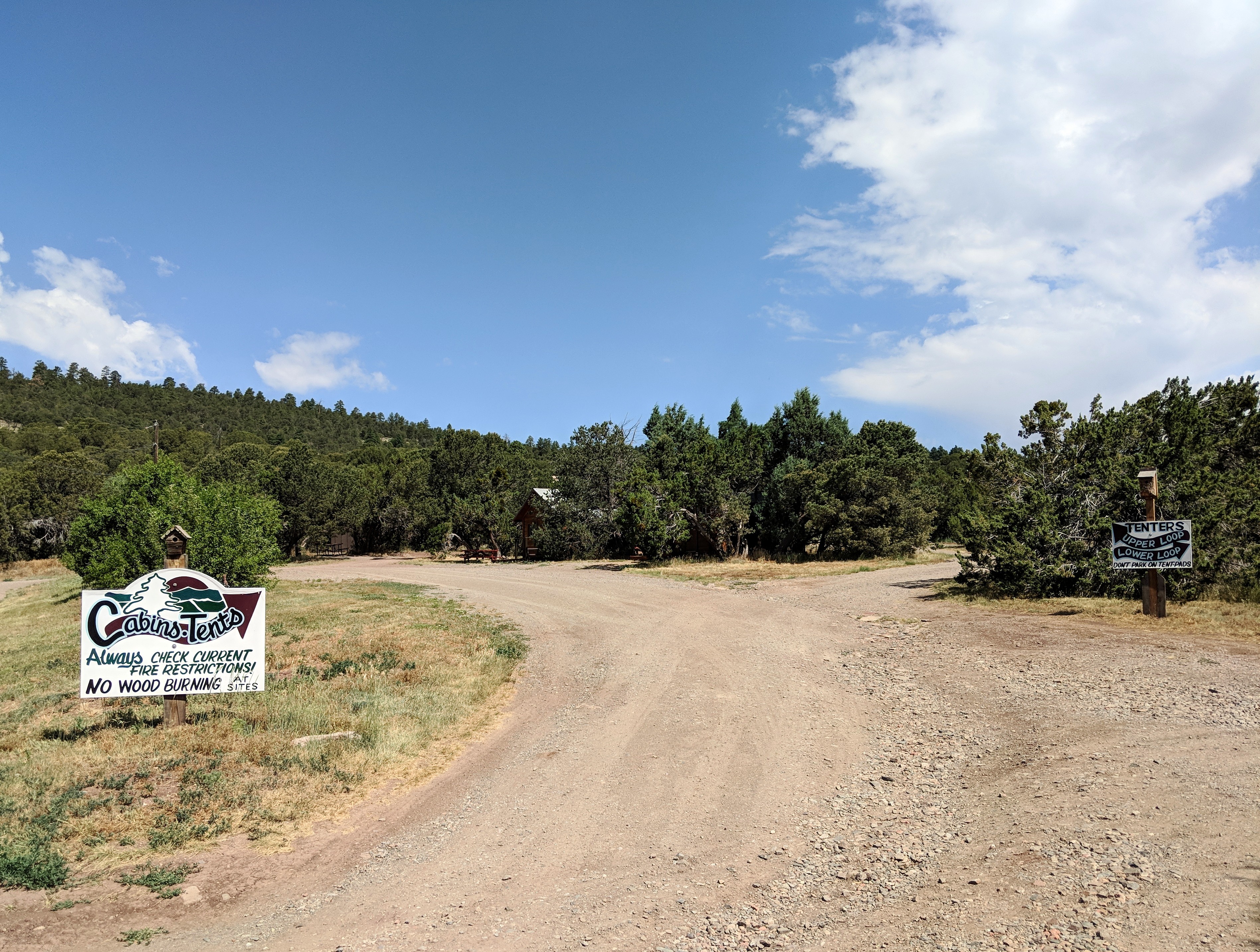
Instead, we managed to make it to the nearest station, which wasn’t far from our campground in Turquoise Trails. We settled in for a peaceful evening, pitching our tent under some low juniper trees that emitted a soft crackling sound through the night.
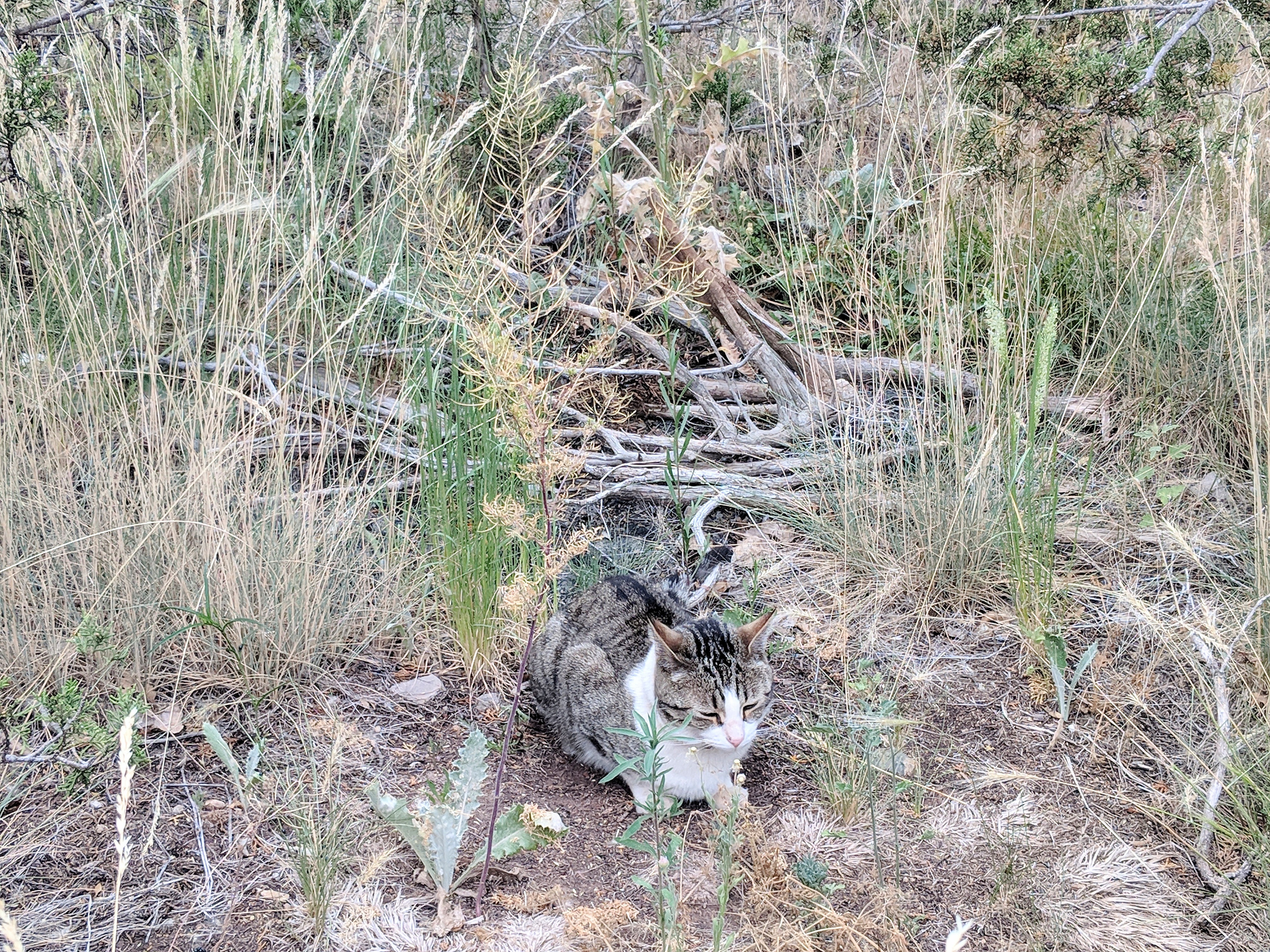
We also befriended the campground cat, whose loyalty was cemented when I helped him fish a dead bird out of our grill.
Om nom nom. Just kidding, I played it with it for three seconds and then forgot about it because I’m a cat.
Unfortunately, he also took it personally when we retired inside our tent, and decided to get our attention by jumping on top of it. I couldn’t stop laughing, but Sean was less than amused by the twenty claws coming through our recently repaired rain fly. (By the end of this trip, I suspect the whole thing will be made of weatherproofing tape.)
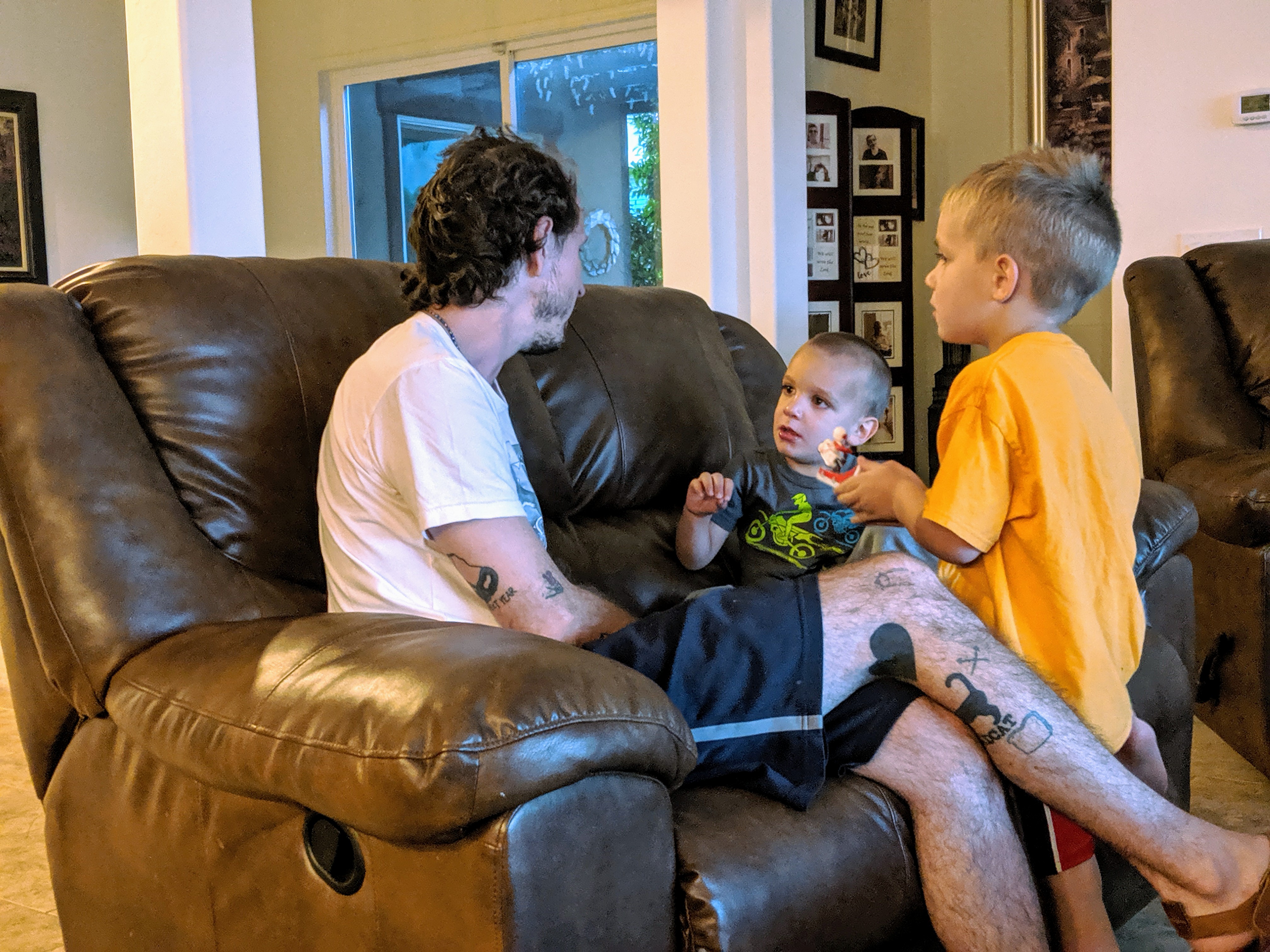
When we finally made it to Phoenix, our first stop was Sean’s aunt and uncle’s house, where we also found his cousin and her three kids. The five of us adults chatted over some much-needed ice water while we watched the big-screen TV that was the window onto the backyard pool, where the kids were by turns splashing manically through the water and jumping up on land to wave shyly at us.
Shyness didn’t last long. Who could resist Funcle Sean?
Once the sun went down and it went from being brutally hot to just horrendously hot, we all took a walk around the neighborhood while the kids rode their bikes. Sean opted for a more rigorous exercise routine, which mostly involved giving endless piggybacks to everyone under 10.
We also met up with Sean’s cousin from the other side of the family, who’d moved to Phoenix from Connecticut about a year ago. We were going to check out her friend’s concert at some cool dive bar downtown, but at the last minute we remembered that we’re old and broke, so instead we caught up over salads and craft beers in her kitchen the next day.
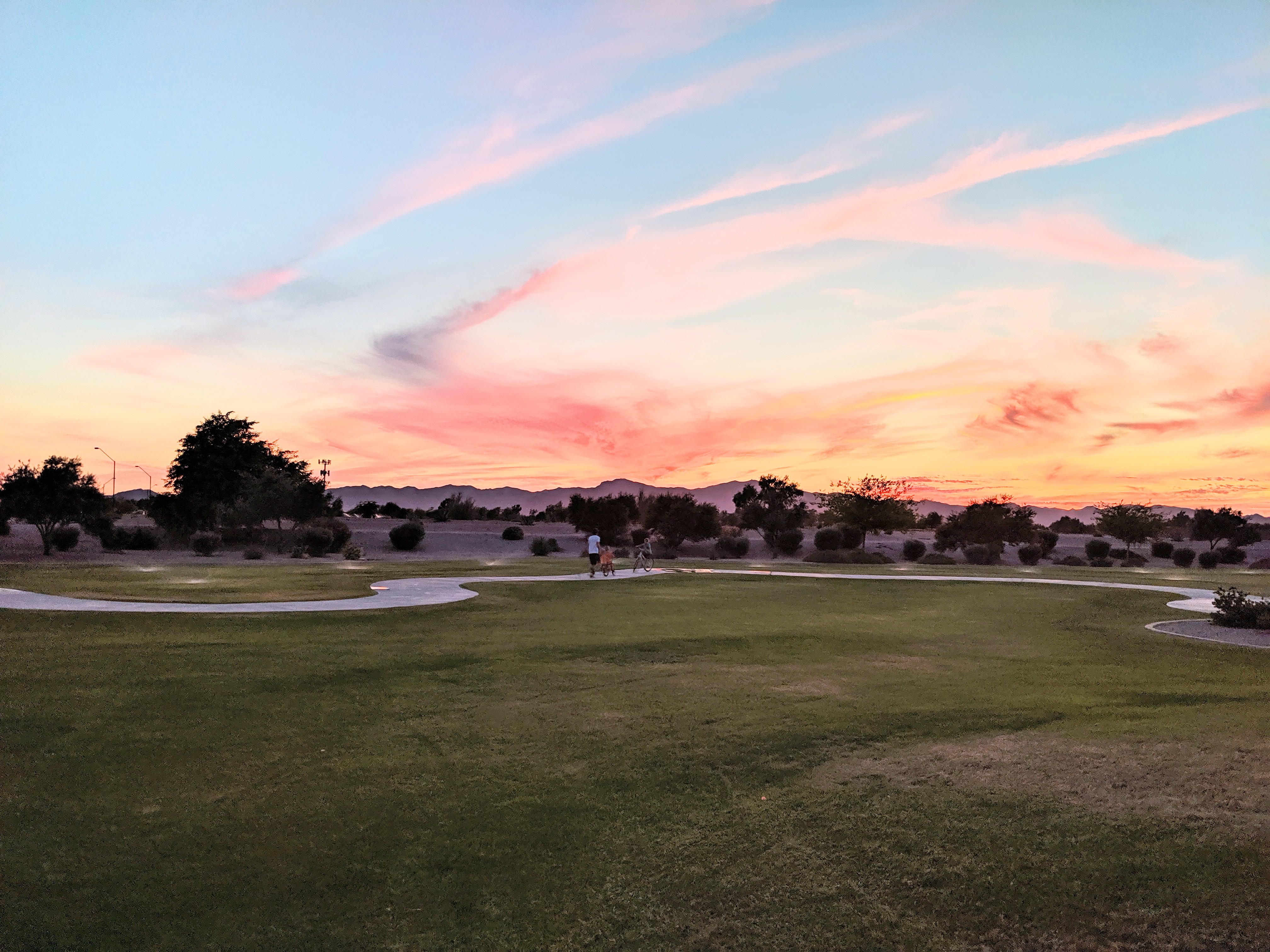
These family visits pretty much concluded our adventures in Phoenix, since it was too hot to explore anything that required leaving air conditioning. (I don’t know what the logistics are of connecting the entire city by underground tunnels, but it’s something Phoenix should maybe look into.) We set off for San Diego, our jumping-off point for the Mexican leg of our trip.
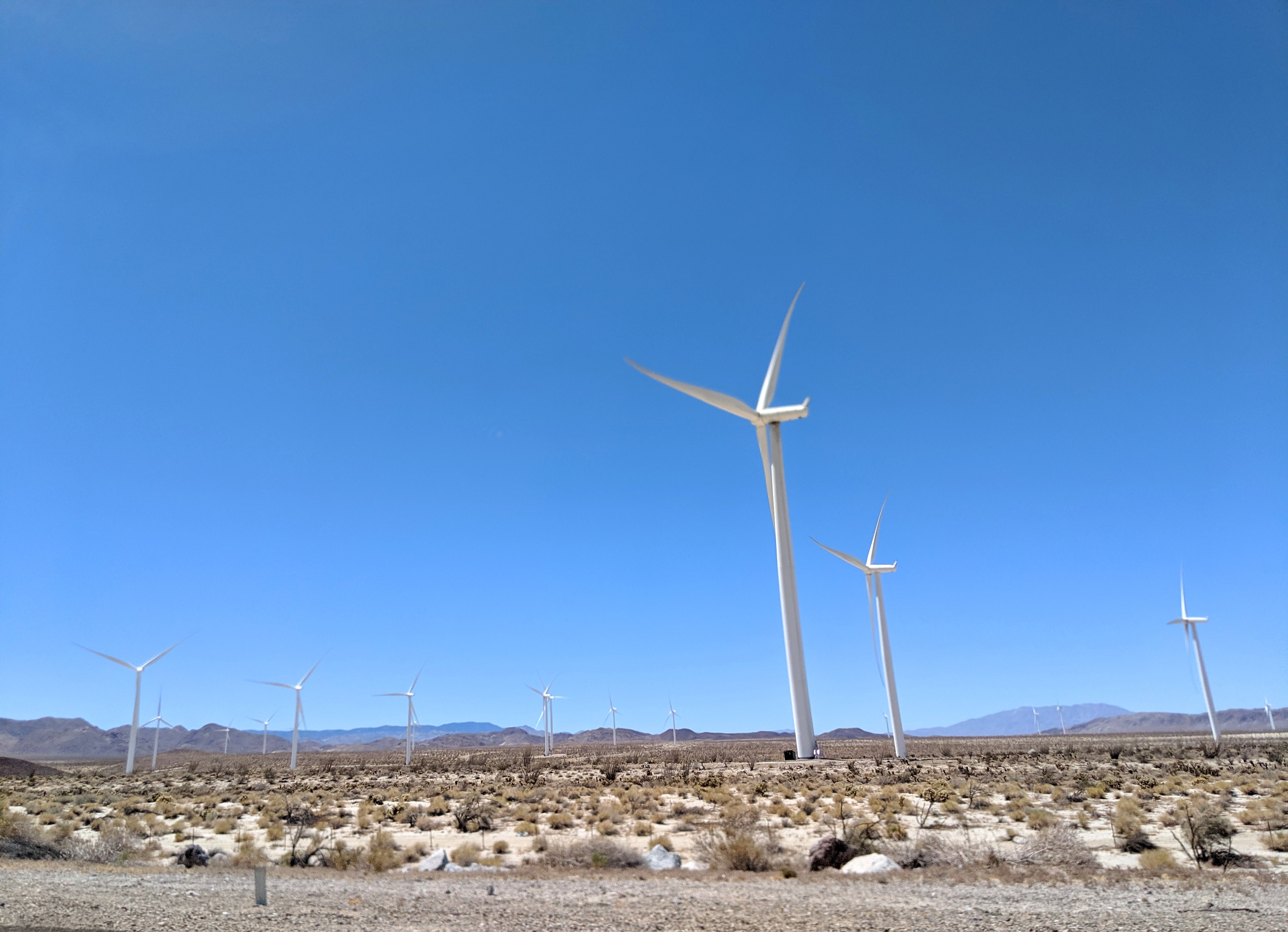
Fortunately, this drive offered a little more variety in scenery than the last few days. Rolling hills gave way to sandy desert, which morphed back into towering clay-red mesas. Once or twice we even drove through wind farms, which felt like being an ant in some Seussian garden, the long white blades swinging with the mesmerizing grace of something very large moving very swiftly.
After a night in San Diego, we’ll start heading down the Baja Peninsula to where my dad lives on a 30-foot Westsail in La Paz. Hasta luego, Estados!
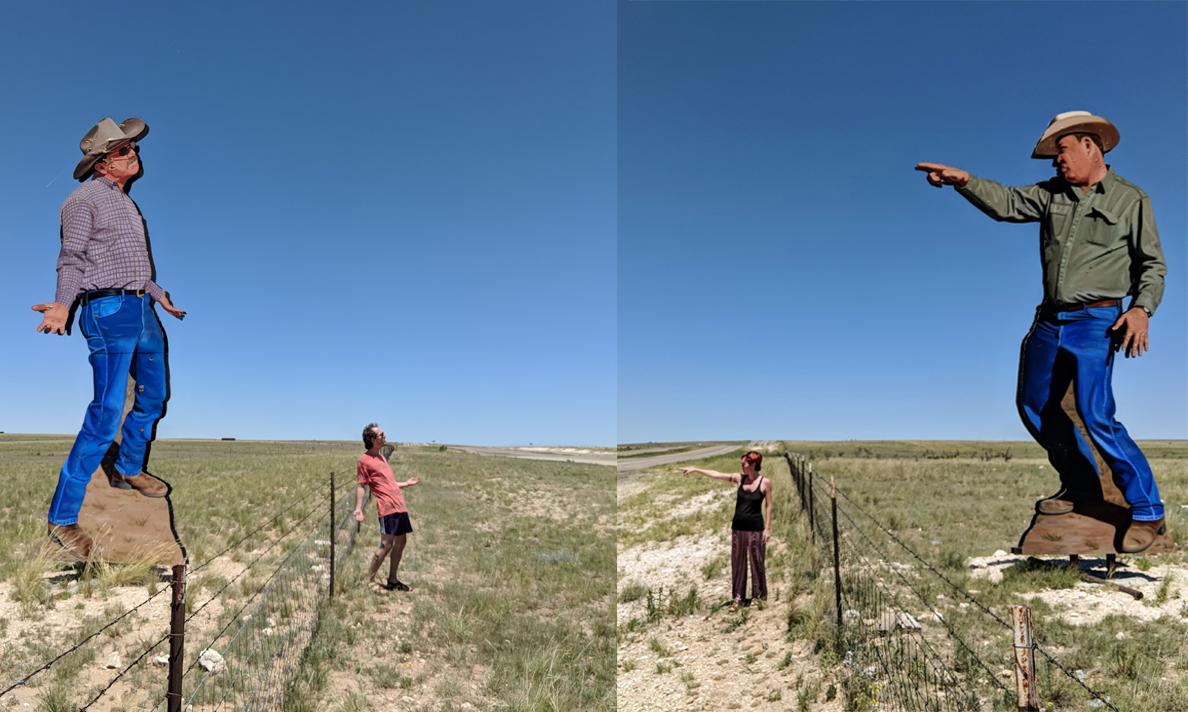
The stretch of road between Roswell and Santa Fe was perilously empty, in the way that makes you glance nervously at your gas gauge every few minutes even if you just fueled up. It seemed we were the only people on the road.
Well… almost the only people. (art by John Cerney)
When we finally spotted a glinting chrome diner just off the highway — the first functioning business we’d seen in hours — we all but screeched the car to a cartoon stop.
Penny’s Diner was one of the few fixtures of a small town called Vaughn, New Mexico. It provided exactly the classic diner experience its retro image promised: generous but poker-faced waitresses in heavy eyeshadow, a white-haired man in suspenders cleaning egg out of his moustache, a misspelled specials board, rewardingly bland sandwiches.
After devouring said sandwiches, we soldiered on through the emptiness towards Santa Fe National Forest, where we set up for the night at Black Canyon Campground.
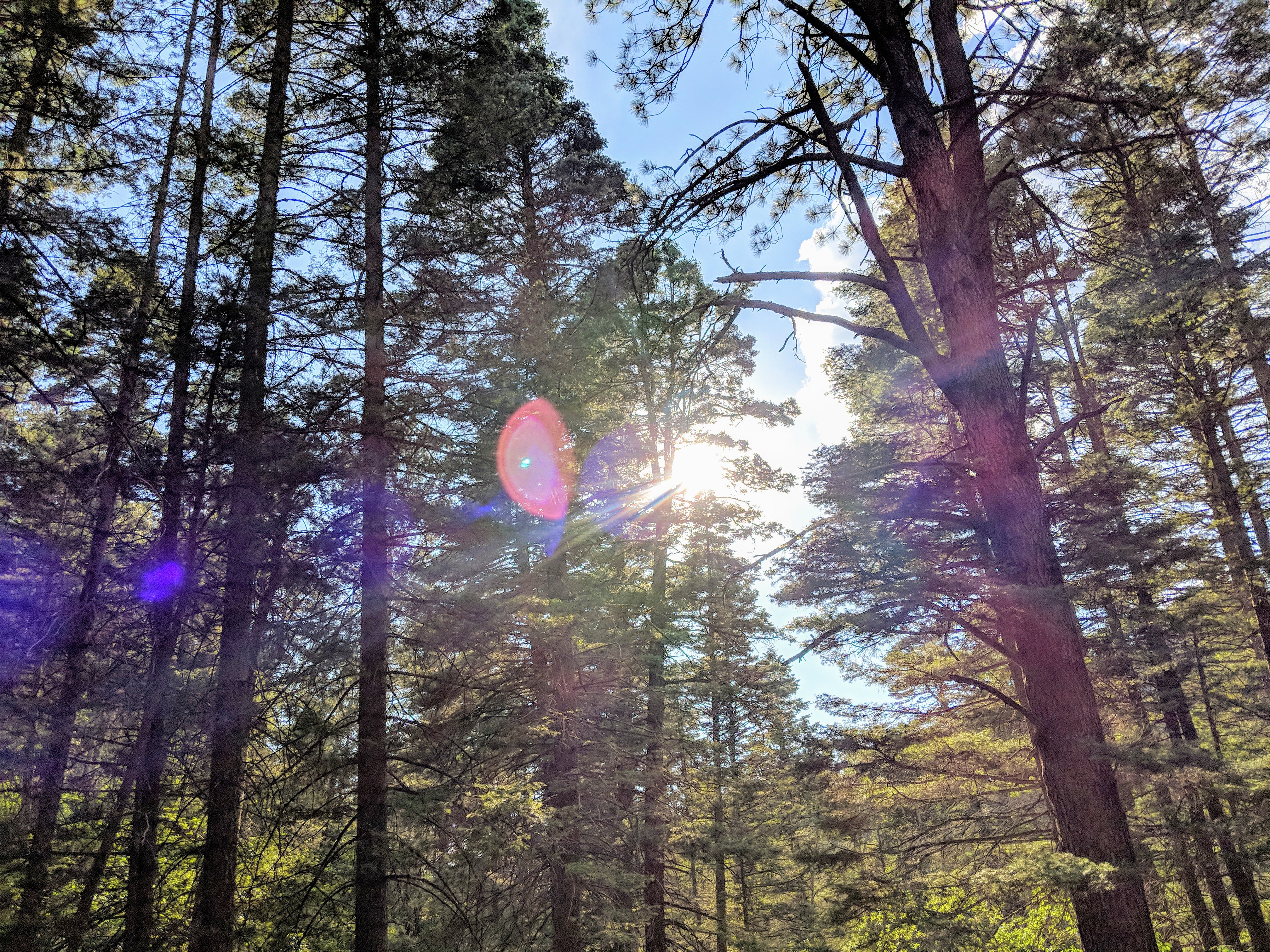
After the wide-open landscapes of western Texas, the tall pines had a sort of magical hush that felt like true wilderness. The quiet was punctuated with wingbeats up above, crows and robin trading places in the branches, the occasional whirr of a hummingbird.
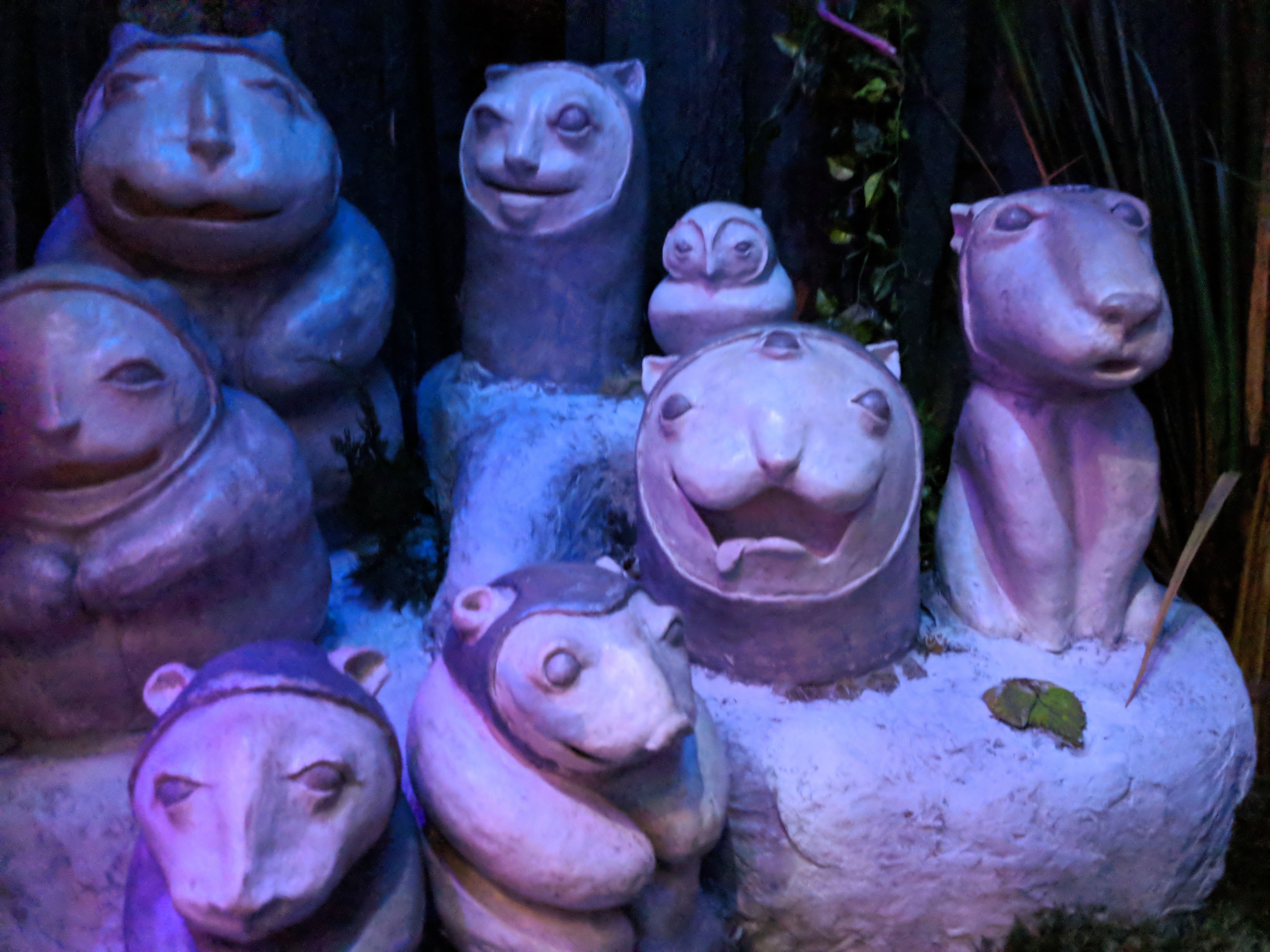
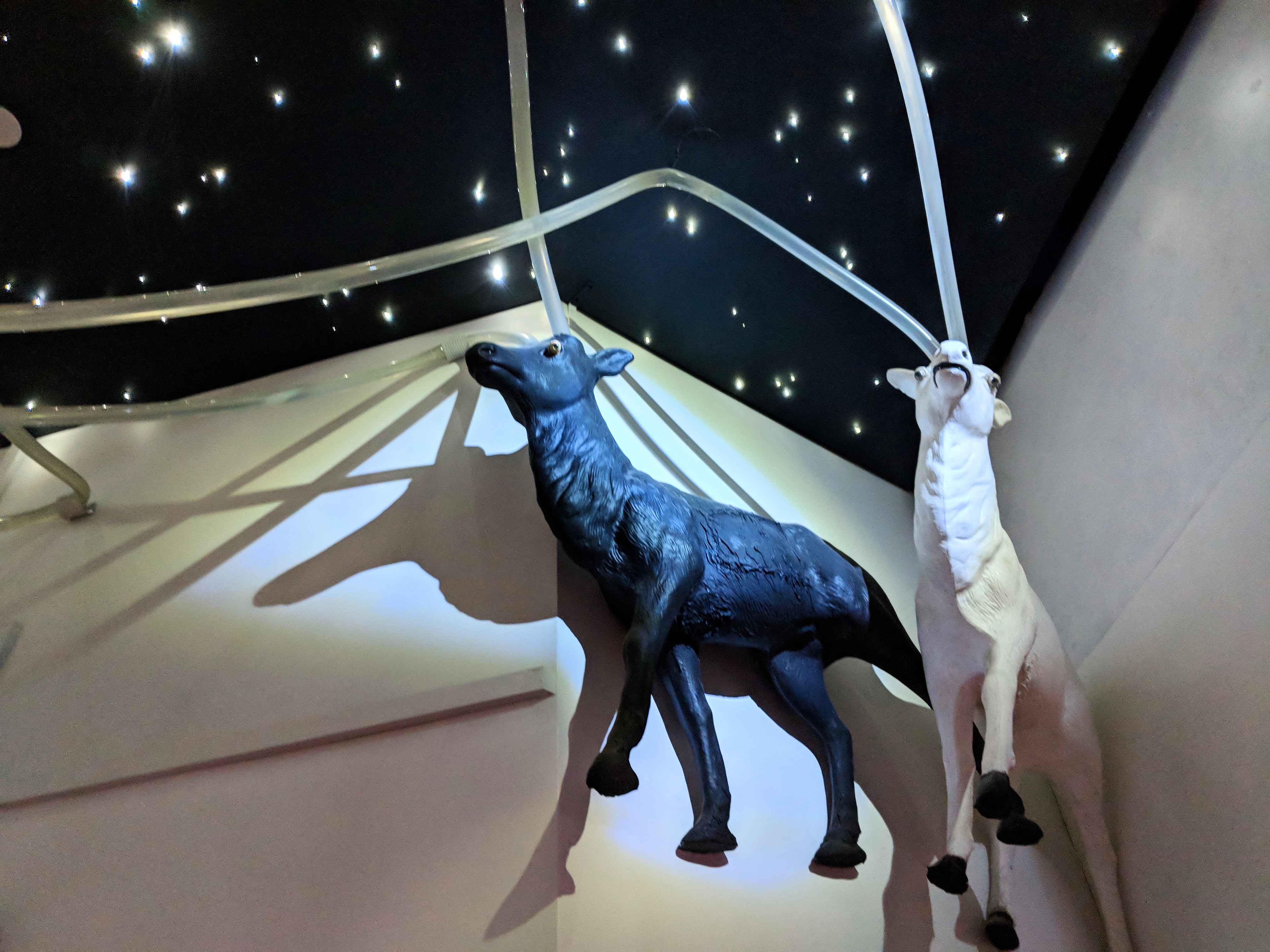
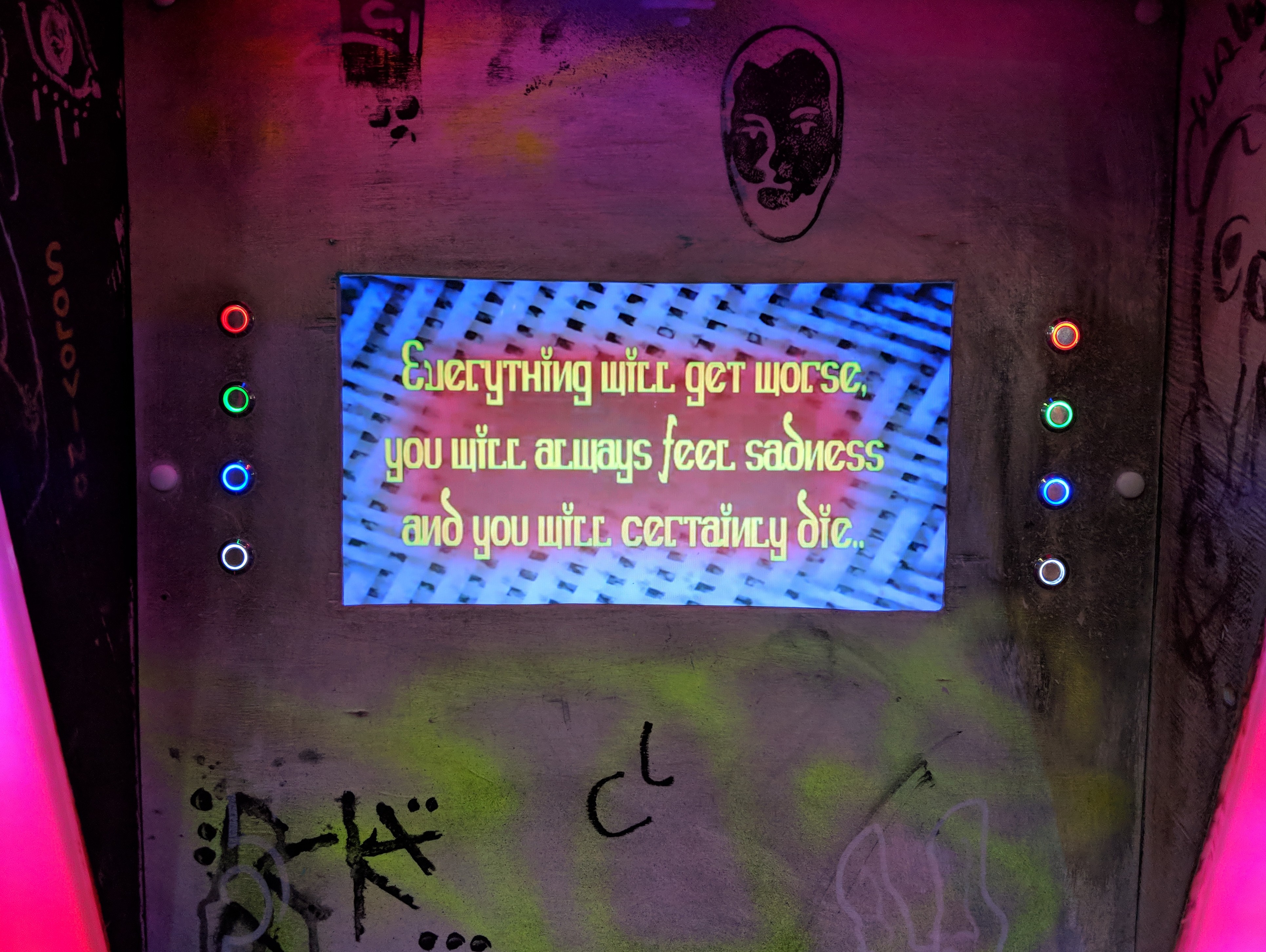
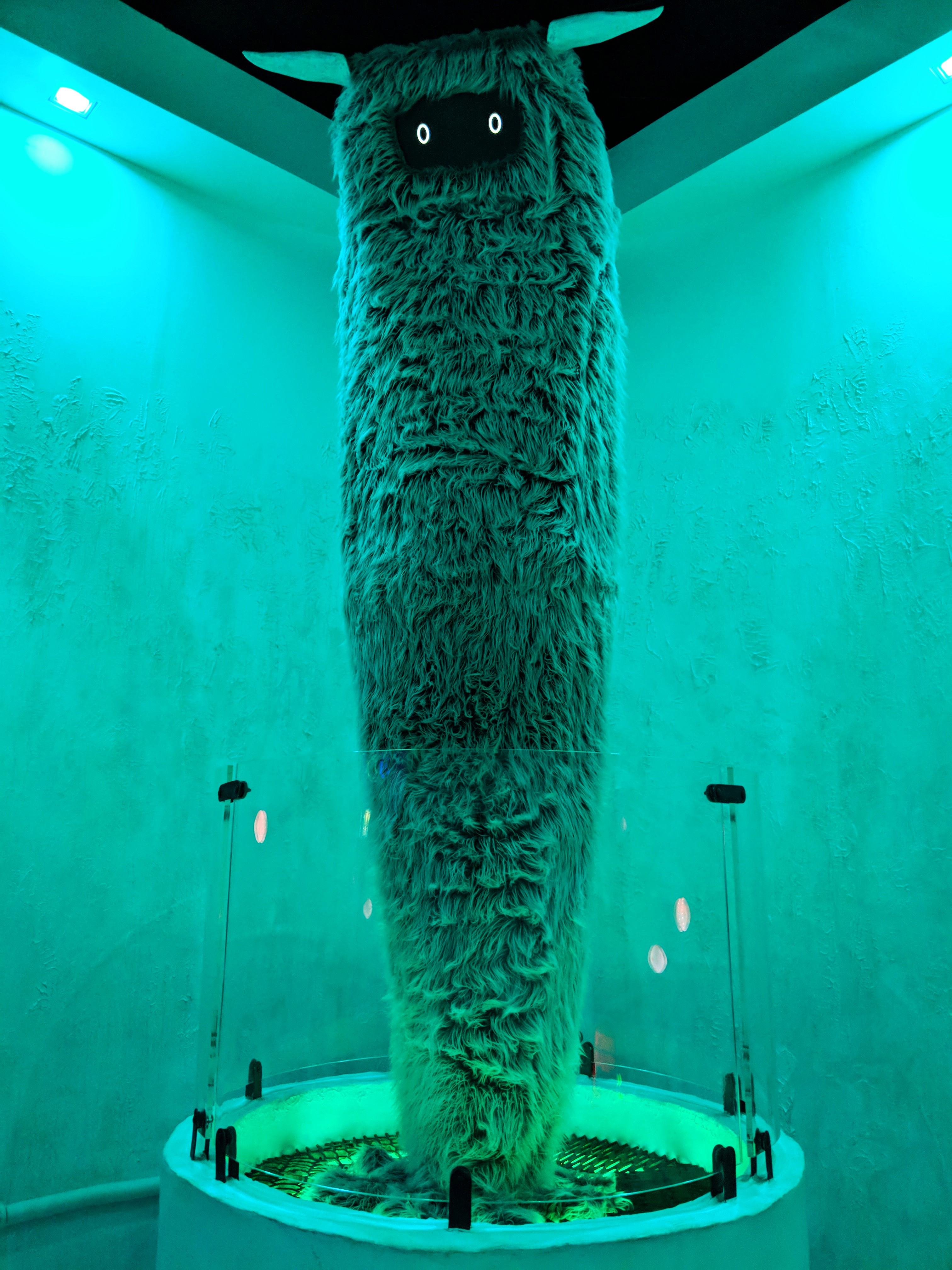
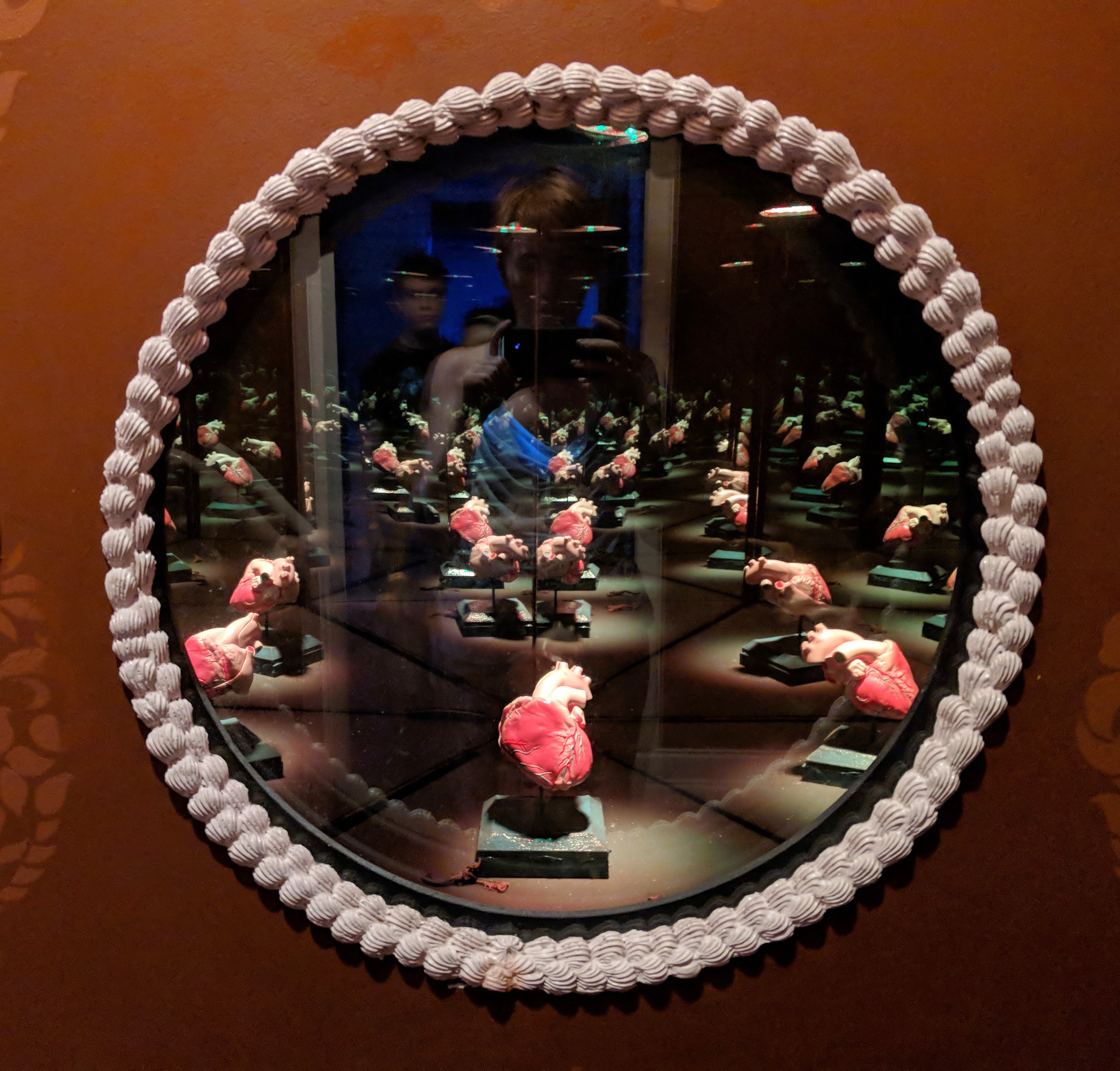
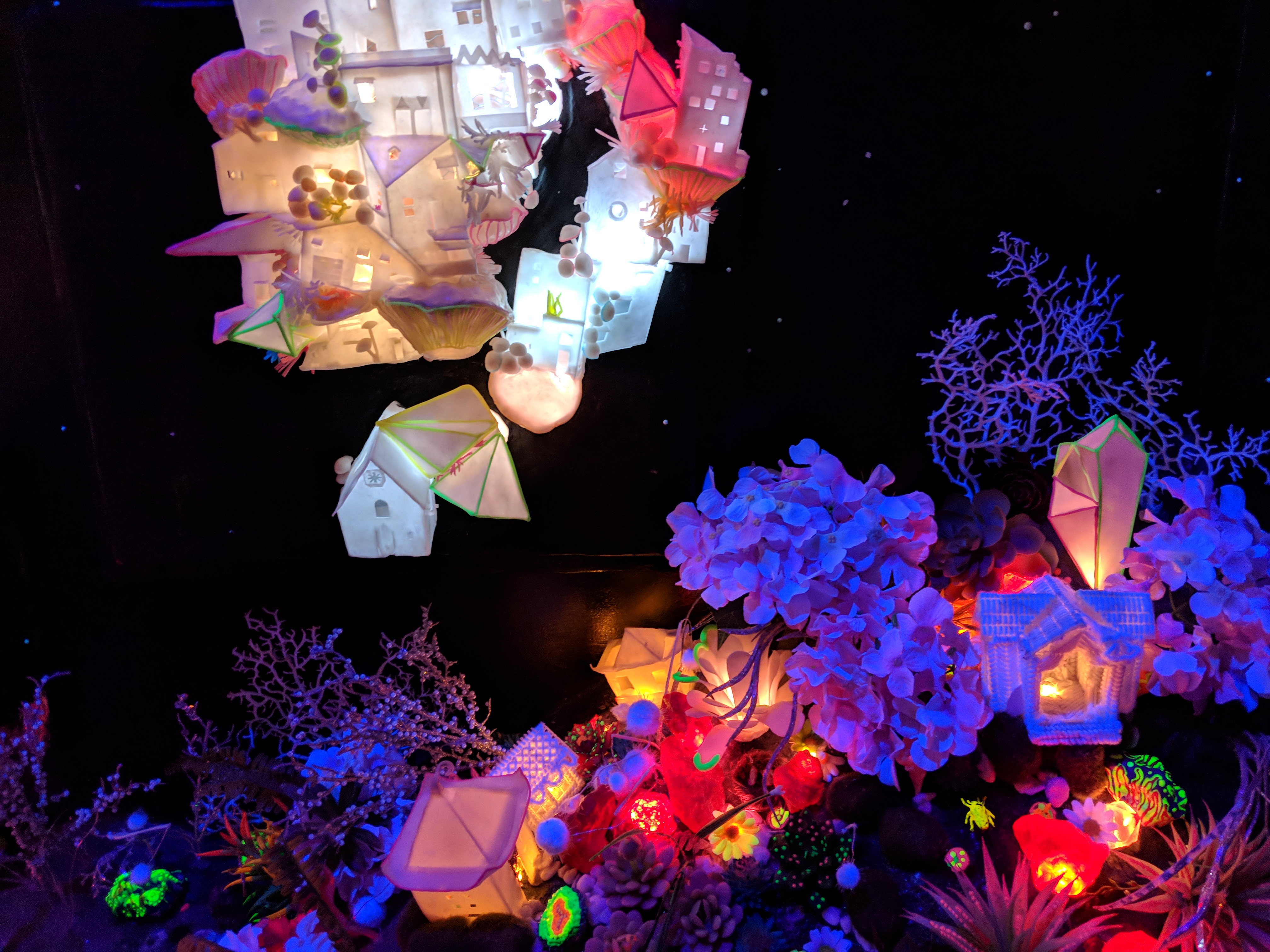
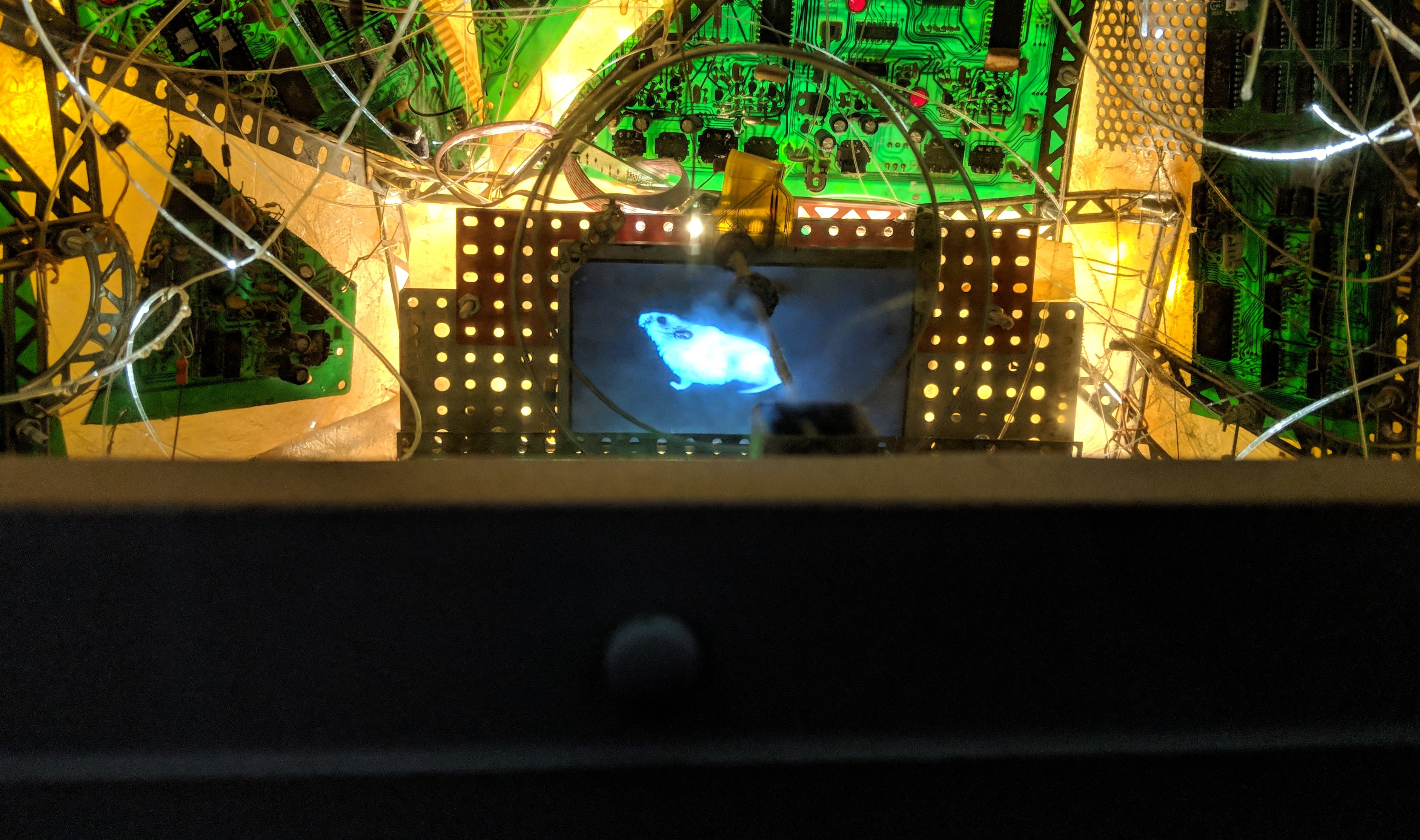
We spent a couple peaceful nights as forest creatures, then ventured back down into the city to do a little exploring. We wound up springing for tickets to Meow Wolf‘s House of Eternal Return, something we’d heard about from almost everyone we’d talked to since Marfa.
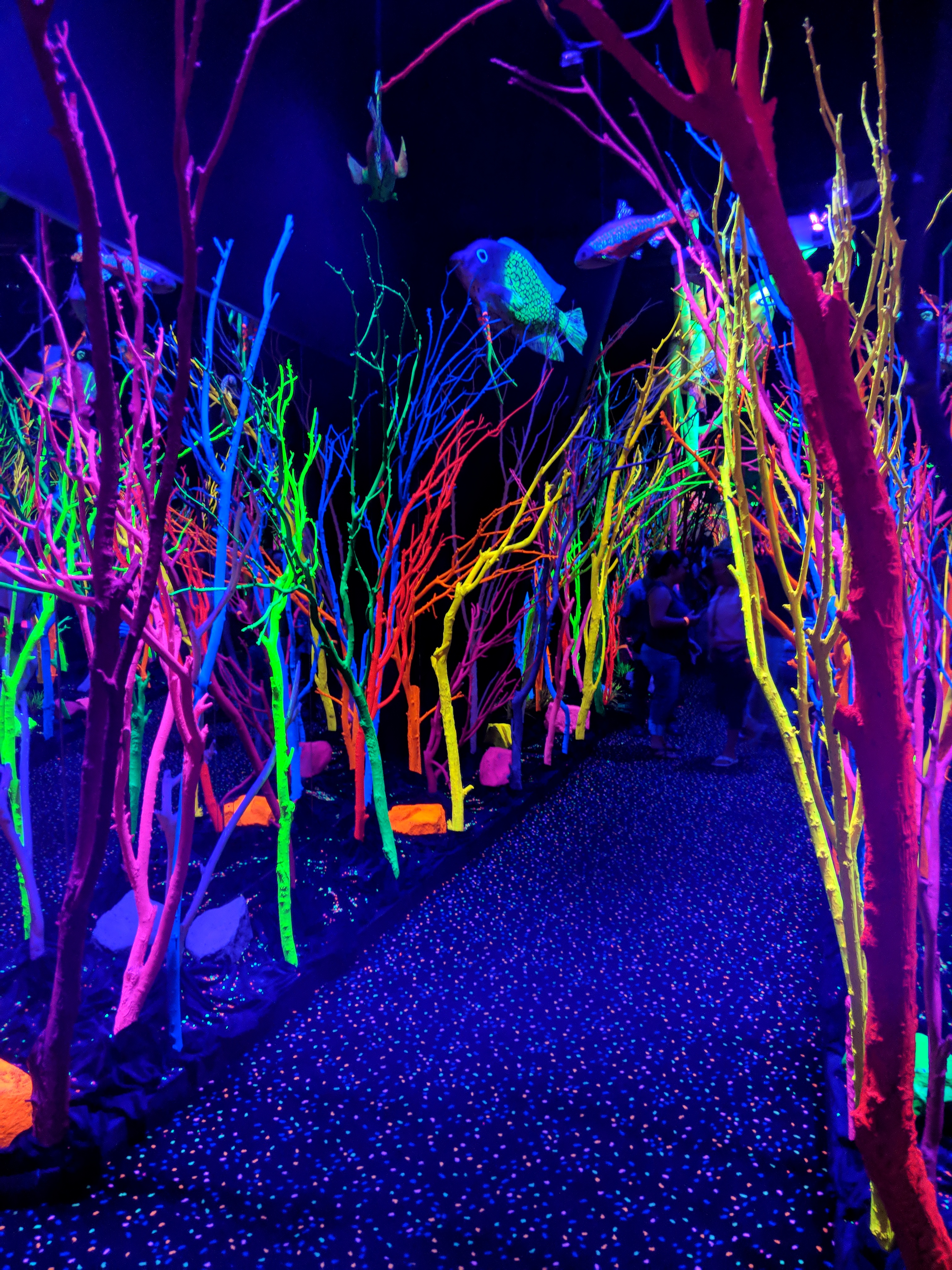
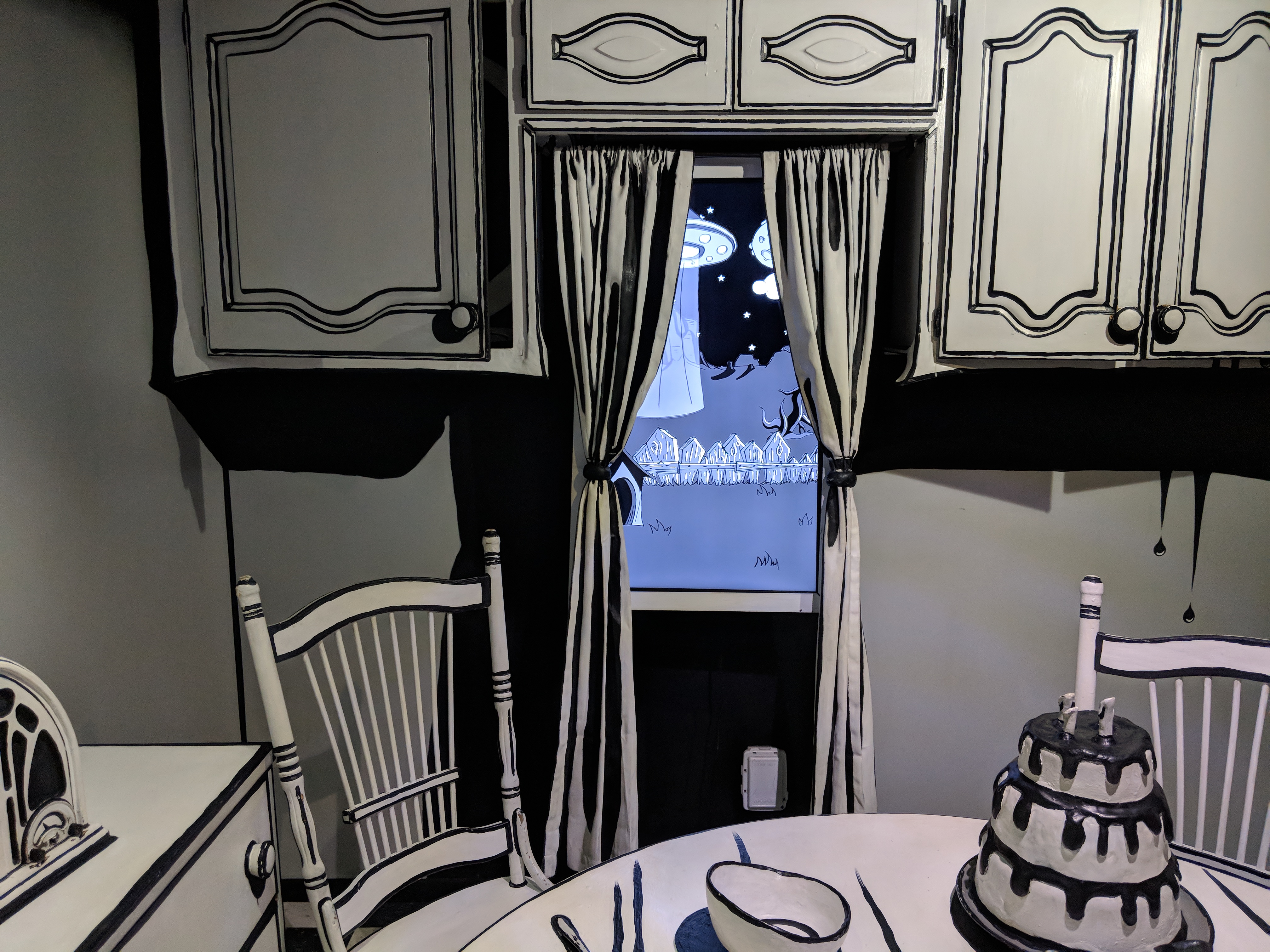
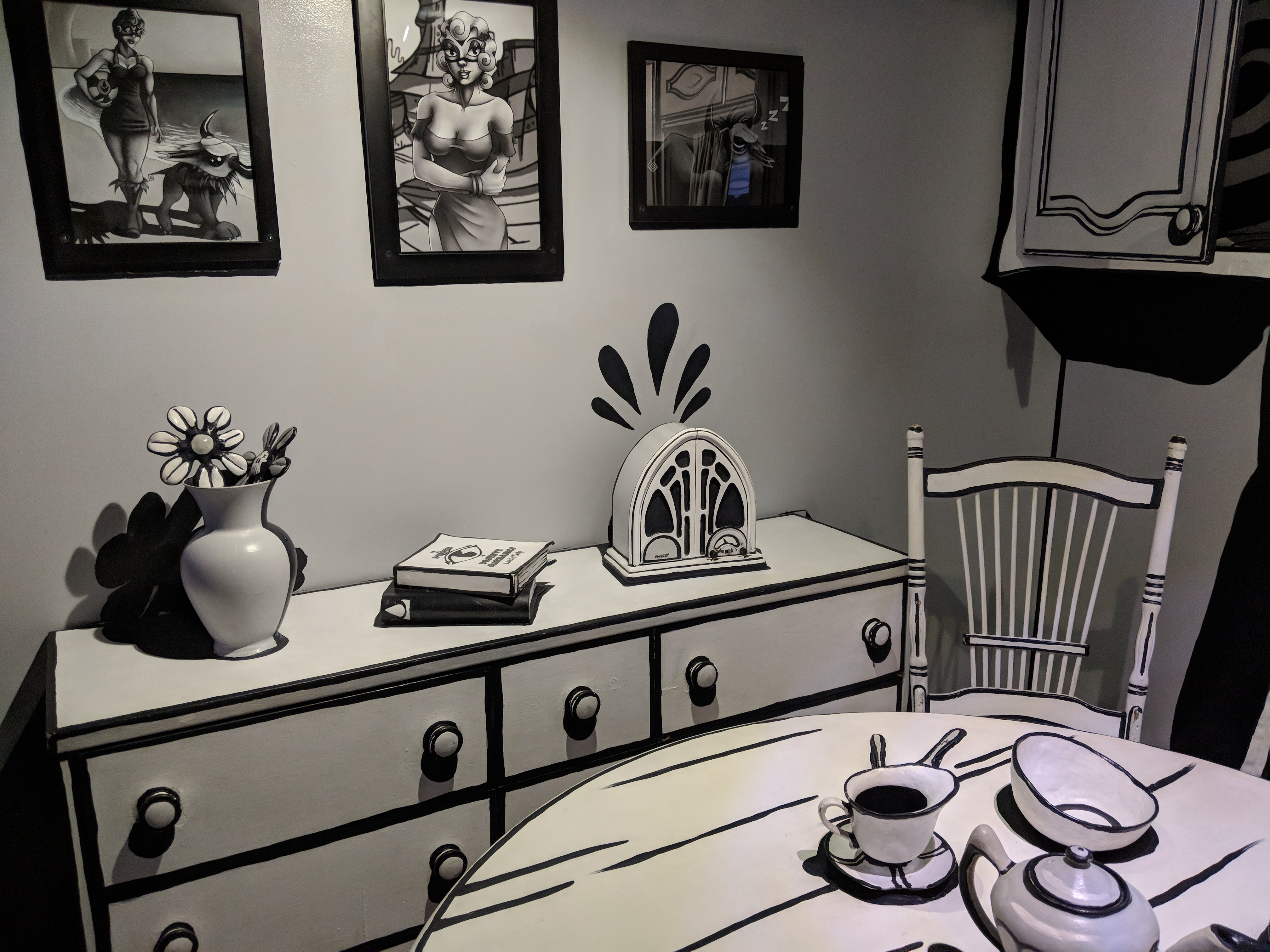
Built from an old bowling alley owned by George R. R. Martin, House of Eternal Return is something of a real-life choose-your-own-adventure story with a highly interpretable plot. The installation essentially has two layers: visitors start out exploring the very believable facade of an ordinary household, but crawl into the fireplace or hop through the fridge and you’ll find yourself in a kaleidoscopic wonderland of neon surrealism.
Unfortunately, even on a Wednesday morning the place was shoulder-to-shoulder with visitors. Any detail that called for more than a few seconds’ attention — a newspaper clipping on the fridge, a bedside journal, a computer full of mysterious documents — was quickly swarmed with impatient bodies vying for their turn. The place itself was also rife with narrow tunnels and stairs, so anyone with limited mobility would miss out on most of the good stuff.
Emerging back into the soothing palette of reality, our imaginations and retinas still aflame, Sean and I retired to a nearby brewery to plan the route to our next stop: Phoenix. There, we’d meet up with two different factions of Sean’s family as well as some friends of mine from when I came through on my solo epic roadtrip a few years ago.
Hopefully, the desert will continue to smile upon us.

 The Good Ship Watermelon